
What defines a strong trend
This lesson will cover the following
- Why you shouldn’t miss strong trends
- What signifies a strong trend
- General thoughts on positioning
Strong trends are easily spotted and you will definitely know one when you see it. When you look in retrospect, strong trends tend to extend from the bottom left part of your computer screen to the top right corner if it’s a bull trend, and vice versa. Here is an example of a strong bear trend.
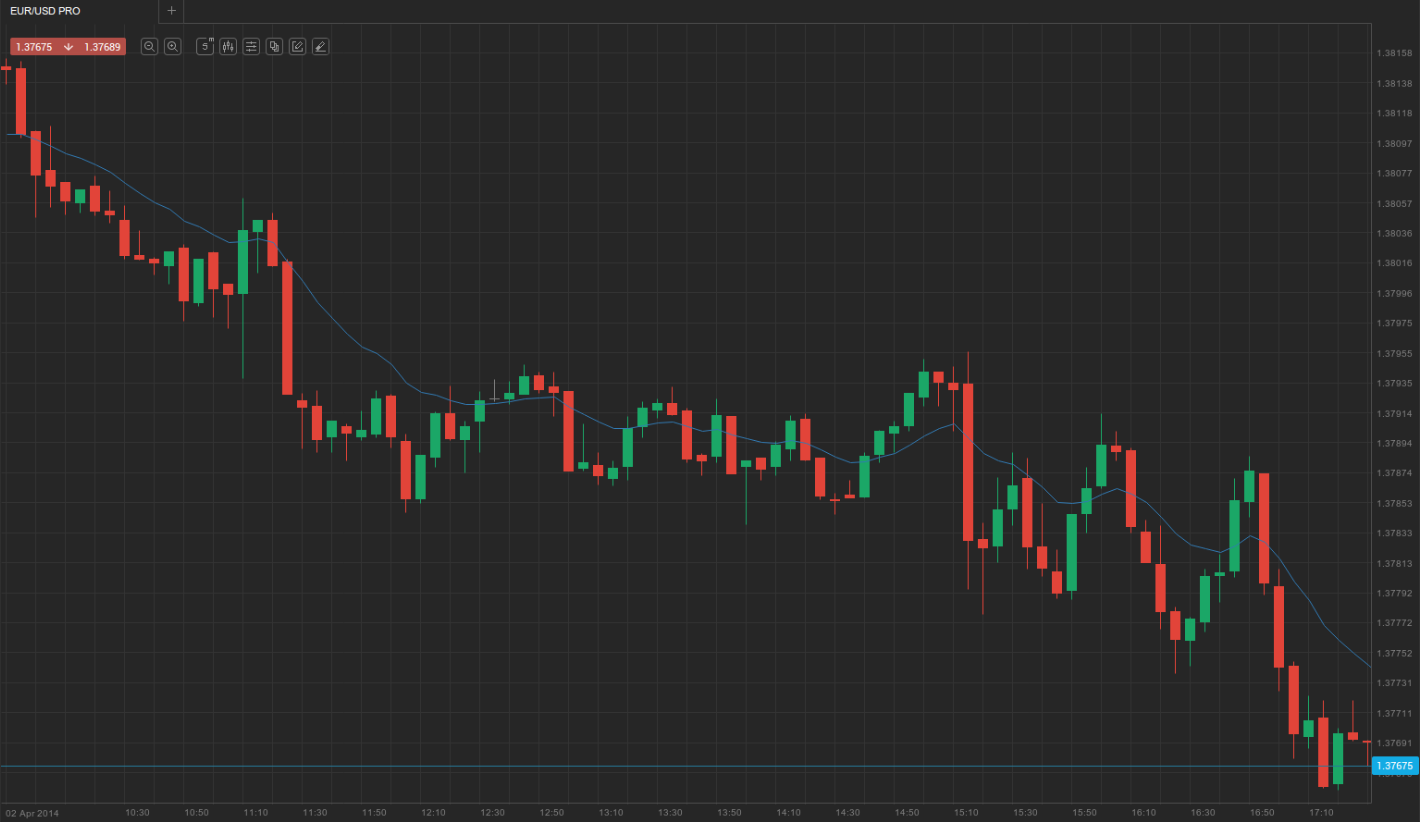
What is important when it comes to strong trends is being able to determine as early as possible that the market will be moving for a protracted period in a single direction. This would allow you to hop on the trend and ride it for longer, thus maximising your profits. In the current article, we will discuss the different characteristics that define a strong trend and provide general insight into what to do during one; later on, we will examine more thoroughly how to trade a strong trend. So let us begin.
Strong trends are your friend
 As we have mentioned before, the mere fact that the market is showing strong directional movement can be reason enough to enter a with-trend position, albeit with a small portion of your usual size. The more signs of a strong and sustainable trend are present, the more you should focus on with-trend positioning. As soon as you have determined that you are in the middle of a strong trend, you do not really need to look for a good or perfect setup; you can enter at any time with a relatively tight stop. Setups can only further reduce the risk.
Generally, strong and protracted trends rarely provide great with-trend signals, causing the market to be constantly chased by market players, which, in turn, makes it grind higher. In fact, during strong trends, the clearest signals with the best reversal bars are actually counter-trend, trapping traders who thought the strong trend had finally come to an end. This is why you should focus on with-trend entries and switch to counter-trend trades only after the market begins to produce strong with-trend entries, a sign that it may well reverse soon due to exhaustion.
Proof of strength
 There are a number of characteristics that strong trends exhibit, whose occurrence will allow us to position on time.
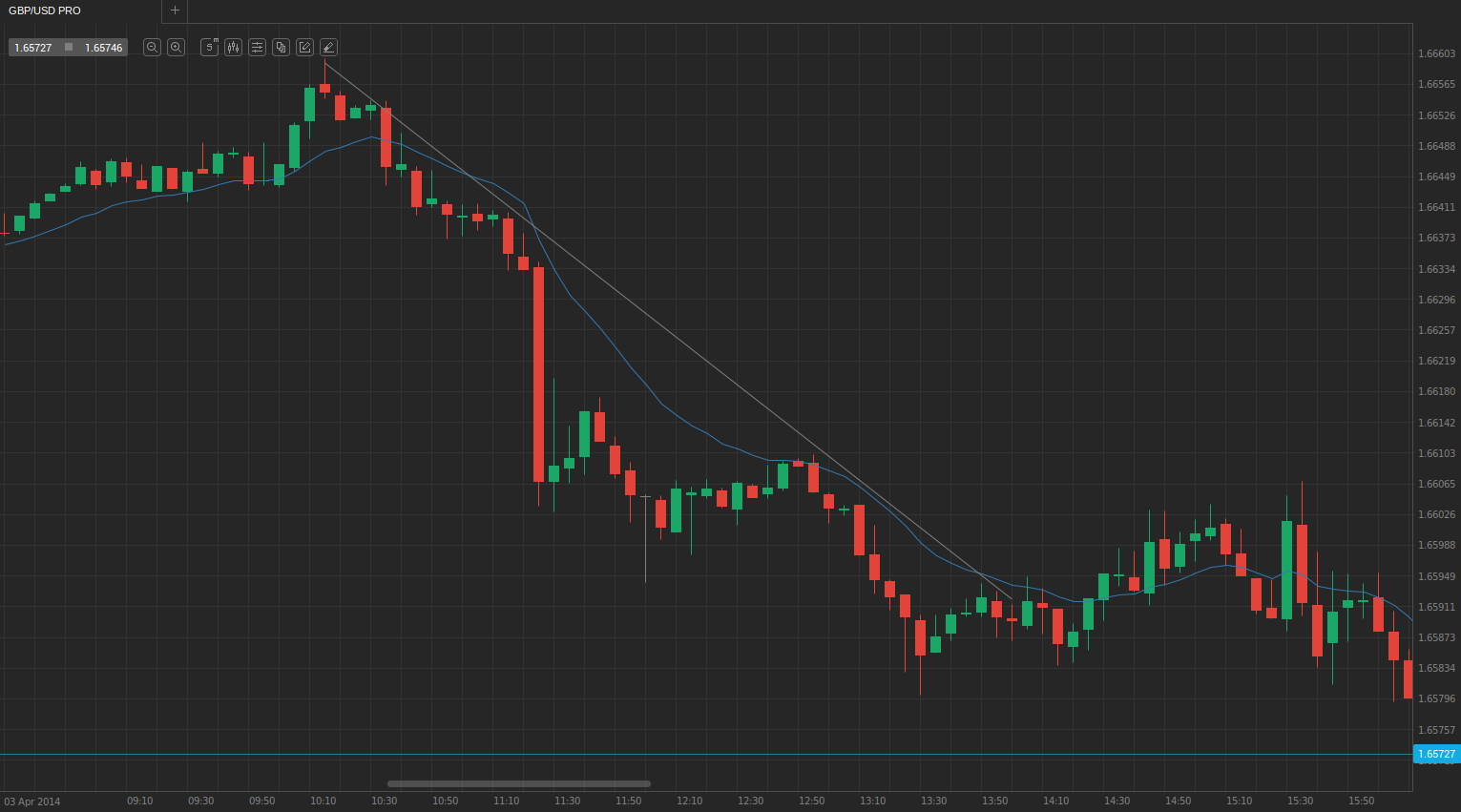
First of all, like any other trend, strong trends must have trending highs and lows. Moreover, as the trend progresses, it will clearly form more with-trend bars than counter-trend ones. Very often you will see strong trends displaying a sequence of 15 or more bars that haven’t touched the moving average. Additionally, if there is a penetration of the moving average, you will not see two or more consecutive closes beyond the MA (on its opposite side). Such an example is illustrated below.
Due to their length, strong trends tend to break several resistance or support levels by many ticks, including trend lines, moving averages and previous swing highs or lows.
Also worth taking into consideration is that, in order for a strong trend to be sustainable and last longer, it should not be showing climactic behaviour, which means that its bars should be smaller and gradually ascending.
As the trend grinds higher, there will be little overlap between the bars, meaning that, in a bullish trend for example, each bar opens at or only several ticks below the previous bar’s high. This signals that market players are chasing the market and are eager to buy because they are sure that the price will continue to edge higher with the next bar and they want to buy as low as possible. This results in the formation of wickless bars (shaved) and double-wickless bars.
Sometimes the trend will begin with a large trend bar, but as we said, long trends tend to lack big with-trend bars during their run. Instead, often the largest bars are counter-trend, trapping traders who thought the market might be reversing. Counter-trend trades during strong trends are very hard to execute and are almost impossible for novice traders to profit from.
Further signs
 An additional sign of strength is a gap between two bars, which are separated by a strong trend bar – the close of the previous bar is below the open of the following bar.
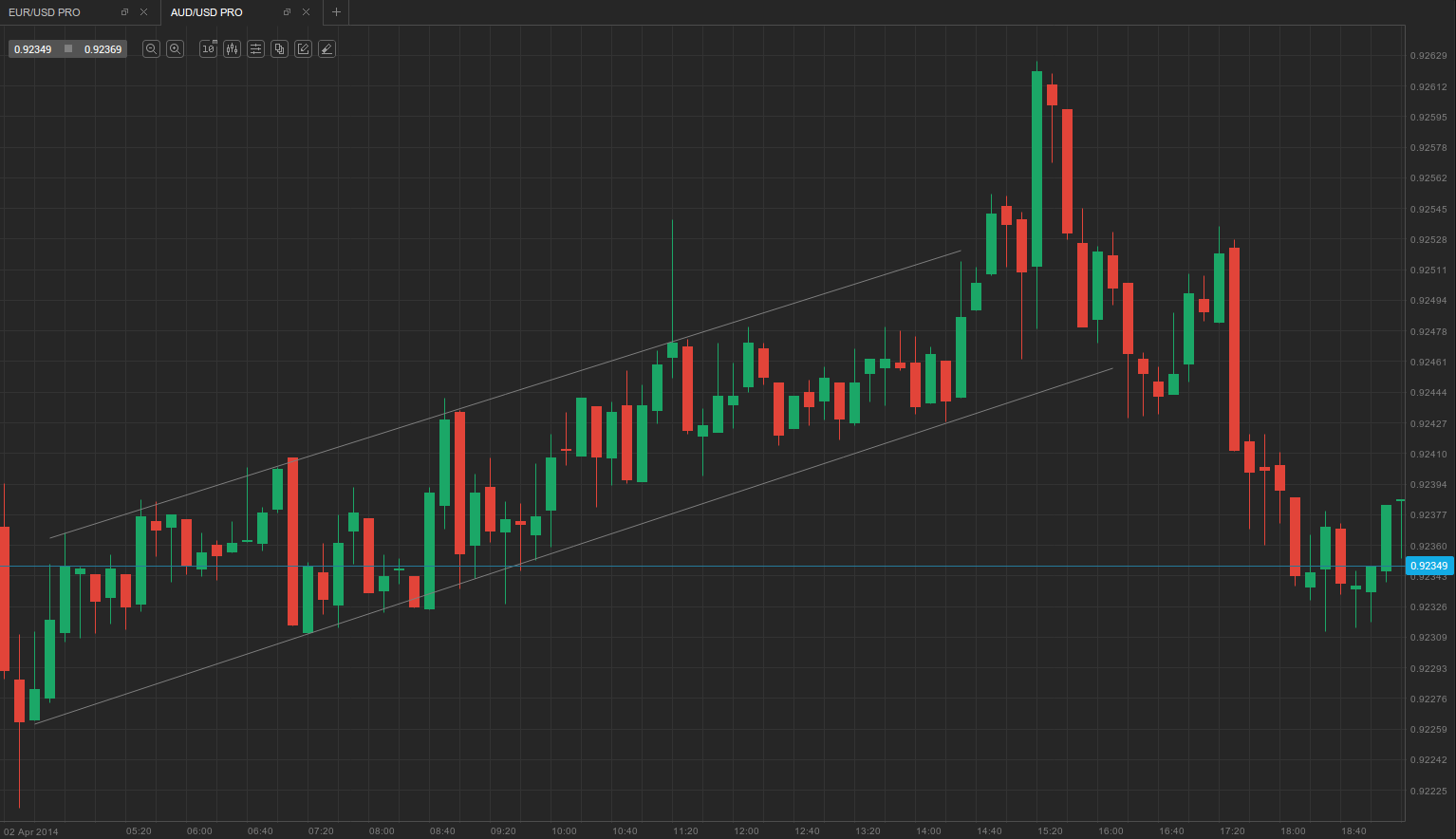
Moreover, because the market is steadily ascending and not showing climactic behaviour, there will be only minor trend channel line overshoots that will result in sideways corrections. Similarly, trend-line breaks do not result in counter-trend movement but rather sideways. Spikes against the trend commonly have no follow-through and are therefore deemed failed, becoming with-trend flags. Here is an example of a steadily ascending trend channel.
Pullbacks are rarely seen during strong trends and they are shallow and mostly sideways as well. Their depth usually does not exceed 15%-25% of the price’s daily range and they often occur no more frequently than once every 5-6 bars.
Market players are waiting for good pullback setups in order to enter the market, but these generally have weak signal bars. In a bull trend, for example, the signal bars for a higher-high long entry are the lows of bear bars that have formed a small 2-3 bar pullback. Repeated two-legged pullbacks are very often regarded as with-trend entries.