
Further talk on strong trends
This lesson will cover the following
- Additional details about strong trends
- Common mistakes
- General thoughts on positioning
Because strong trends don’t give traders good pullbacks for many bars, you can occasionally switch to lower time frames to initiate with-trend scalps while holding your swing position. However, using a time frame that is too small compared with your usual chart will also make trading harder.
First, you will have less time to make decisions; i.e., faster chart reading is required. Another drawback of smaller time frames is that they will now display counter-trend setups in addition to the with-trend ones you wish to exploit, thus further impairing your trading session. This is why switching down to lower time frames than those you usually use is not advised for inexperienced traders.
A key mistake that constantly drains novices’ accounts is betting against the market in a strong trend after a reversal bar has formed, when in fact they should place with-trend orders. Take a look at the following screenshot.
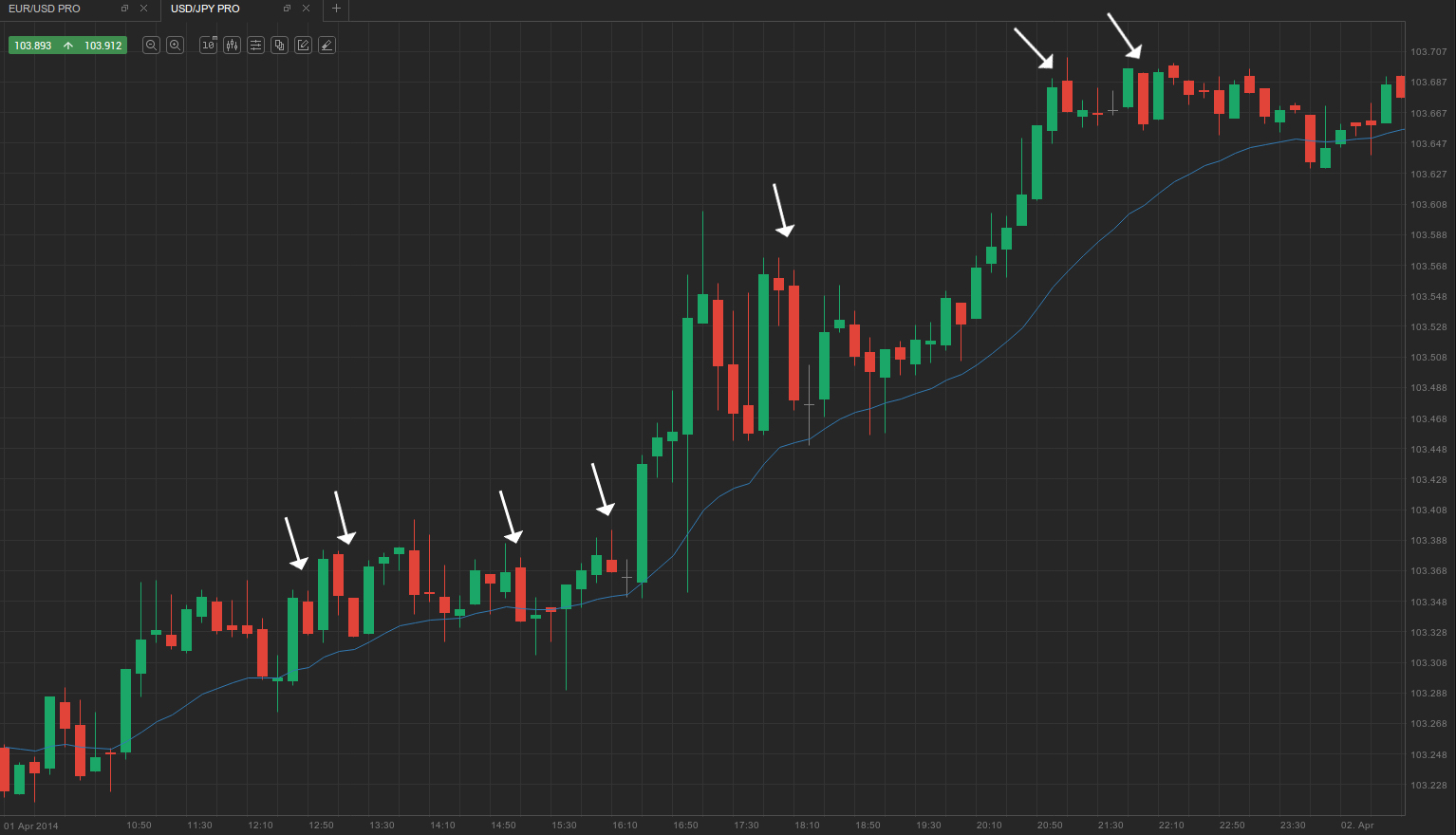
We said earlier that long trends last so long because they make traders chase them. In a bull trend, for example, bulls keep waiting for a strong signal bar so that they can enter with a full position, while trapped bears await further evidence that the trend is strong before deciding to exit. However, that evidence doesn’t come, yet both counterparts ignore the fact that the market is making only small pullbacks and remains well above the moving average.
Because what they wish for does not occur and both bulls and bears keep buying in small pieces while waiting for a decisive move, the market keeps grinding higher. At the same time, strong bulls see very clearly what is happening and buy aggressively, adding to the buying pressure, which pushes the market up.
During strong trends, powerful bulls (institutions), which typically possess enormous capital, want to buy huge amounts but at a lower price to maximise their profit. However, because that lower price does not come and they know the market will continue to edge higher, they are forced to buy at higher prices, but they do so in pieces.
By doing this, they steadily increase their positions at higher prices, confident that the market will continue rising. Moreover, by buying in pieces and not dumping all their buy orders at the same time, they protect themselves from causing a buy climax that could then turn into a reversal and push the market below their average entry price.
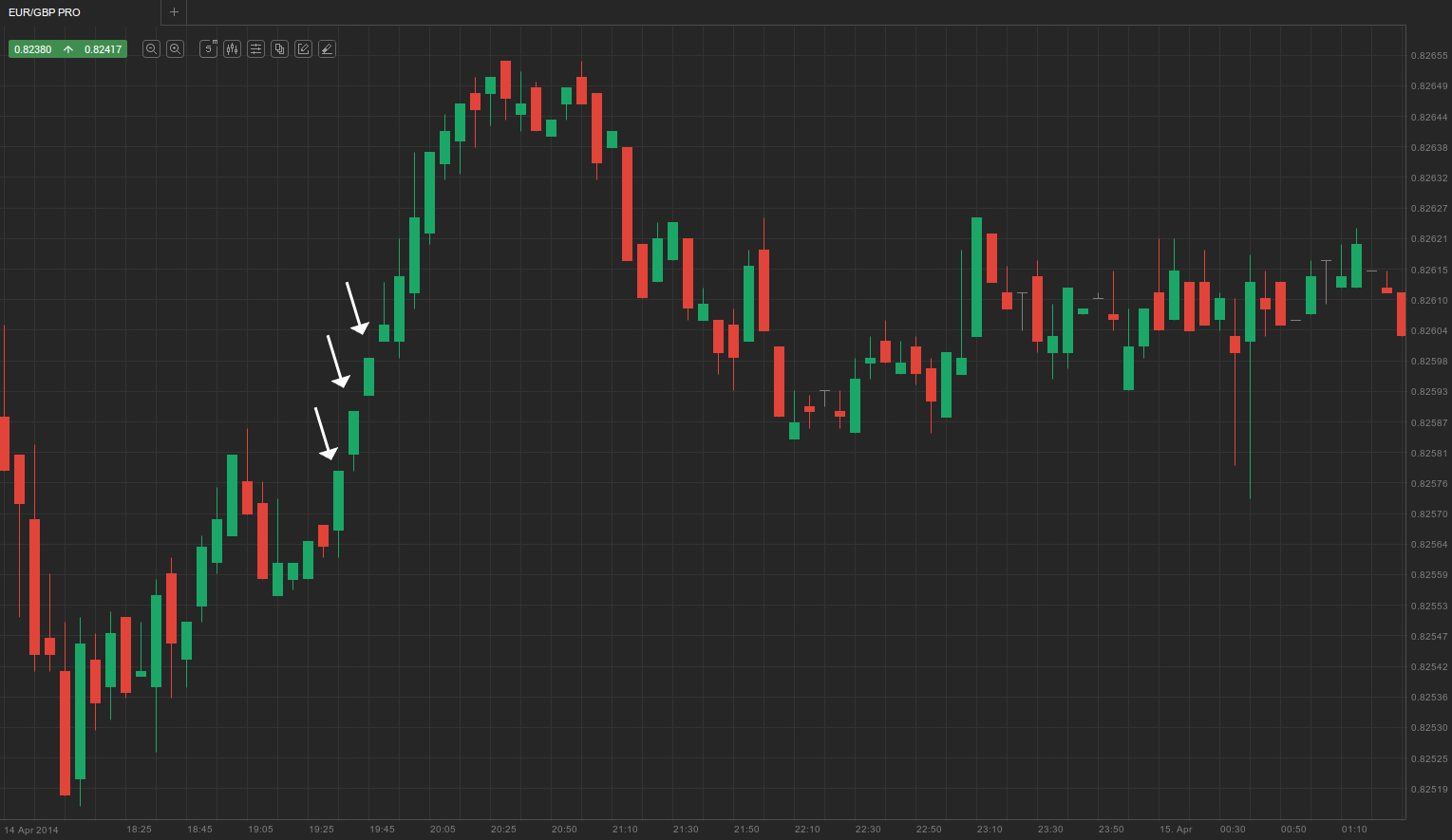
The strongest trends are defined by the absence of pullbacks, or by very shallow ones, reflecting the intense with-trend price pressure. A clear sign of strength is displayed when traders’ limit orders to buy or sell at the close of the previous bar don’t get filled.
For example, in a bull trend traders tend to place limit orders to buy at the close of the previous bar because they expect the price to drop in the first seconds of the new bar. However, constant buying pressure prevents the price from retreating, thus the limit order remains unfilled. Check out the following example.
Despite the decisiveness of a trend, it is bound to end at some point. It is important to read the signs as early as possible and prepare to reverse your positioning.
As the trend weakens, it will begin showing more signs of sideways trading and the characteristics of strong trends described above will fade away. In a bull trend, bulls will begin to lock in profits above the previous bars’ highs instead of adding to their positions, while bears will start shorting and scaling in higher instead of staying out. Read more on trend trading in the next article.