
 | Updated:
 Profile of the United Kingdom’s pound – important facts
This lesson will cover the following
- Important facts regarding the United Kingdom’s pound
- Liquidity
- Correlation with energy prices
Important facts regarding the United Kingdom’s pound

First of all, GBP/USD is among the most liquid currency pairs worldwide, with over 6% of all trading in the foreign exchange market involving sterling either as the base or the counter currency. One reason behind the pair’s liquidity is that UK capital markets are very well developed. Foreign investors seeking opportunities outside the United States relocate their money to the UK. In this case, they will need to sell their domestic currency and purchase British pounds.
 Second, the UK’s currency, also known as ‘Cable’, used to be heavily traded by speculators. Interest rates in the United Kingdom were among the highest in developed countries (with the exception of Australia and New Zealand, where rates were and still are higher, but capital markets are not as developed as those in the UK). Because of this, many investors who were already positioned, or intended to enter new carry-trade positions, often used the pound as the lending currency and bought it while selling currencies such as the yen, the franc or the US dollar. A carry trade involves buying a currency with a higher interest rate and borrowing or selling a currency with a lower interest rate. Almost a decade ago, carry trades became very popular, leading to increased demand for sterling. This can be observed on the weekly GBP/USD chart below.

- Trade Forex
- Trade Crypto
- Trade Stocks
- Regulation: NFA
- Leverage: Day Margin
- Min Deposit: $100
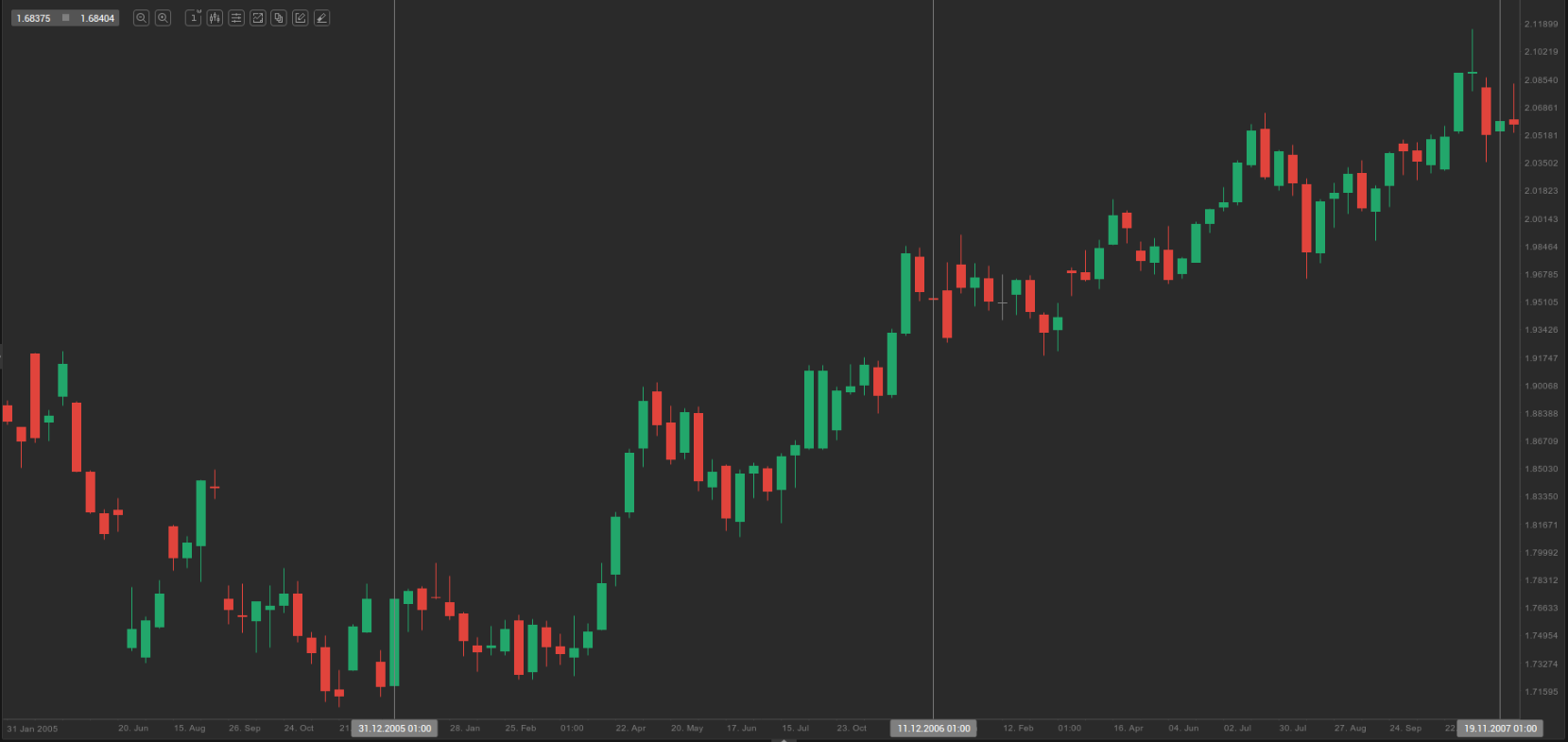
 Third, interest rate differentials between UK government bonds (also known as gilts) and US bonds, and differentials between UK gilts and German bonds, are often closely watched by traders in the foreign exchange market. Gilts versus US bonds can be indicative of GBP/USD flows, and gilts versus German bonds can be indicative of EUR/GBP flows. Interest rate differentials show the premium yield that UK fixed-income assets offer over comparable assets in the United States and the Eurozone. Such differentials signal potential capital flows in the currency markets because international investors are always in pursuit of assets offering the highest yields.
 Fourth, any statements or remarks by UK policymakers, or surveys focusing on the euro, usually have an impact on the foreign exchange market. Signals supporting adoption of the euro usually place selling pressure on sterling, while continuing opposition tends to support the pound. For sterling to come into line with the euro, interest rates in the UK would have to fall. Lower rates would prompt market participants to unwind their carry trades and sell the pound. Crosses such as GBP/USD would also lose value because adopting the euro would probably introduce a number of uncertainties.
 Fifth, the pound tends to correlate positively with energy prices. This is because the energy-production industry accounts for over 10% of the nation’s Gross Domestic Product. As several European Union countries import oil from the UK, higher oil prices cause them to obtain more pounds (which increases GBP’s value) to finance these purchases.