
 | Updated:
 Profile of Australia’s dollar – overview of the economy
This lesson will cover the following
- Economic overview
- Monetary policy authority
- Monetary policy tools
Economic overview
Australia is the 12th-largest economy worldwide, with a nominal GDP of US$1.564 trillion in 2012, according to the United Nations Statistics Division. In terms of purchasing power parity, Australia’s GDP is the 17th highest in the world (US$999.6 billion in 2013, according to the International Monetary Fund (IMF)). The nation’s gross domestic product at purchasing power parity per capita is the 10th highest worldwide (US$43,073 in 2013, according to the IMF).
 The Australian economy is service-oriented, with the services segment accounting for 68.8% of the nation’s total GDP. Major sectors include finance, tourism, media, education and logistics. Australia’s ‘Big Four’ banks were among the 50 safest banks in the world as of April 2012. These banks hold about 80% of the home-loan market in Australia, while their combined assets amount to A$2.66 trillion (about 200% of the nation’s GDP in 2011). This group comprises National Australia Bank (NAB), Commonwealth Bank (CBA), Westpac Banking Corp. and Australia and New Zealand Banking Group (ANZ).
The Australian Securities Exchange is the largest stock exchange in Australia and in the South Pacific region, while being the ninth in the world and the fourth in Asia by market capitalisation (US$1,215.6 billion as of June 2012).

- Trade Forex
- Trade Crypto
- Trade Stocks
- Regulation: NFA
- Leverage: Day Margin
- Min Deposit: $100
The Australian industrial sector accounts for 27.3% of total GDP, while 21% of the country’s labour force is employed in this sector. The manufacturing sector peaked during the 1960s, contributing 25% of GDP, but its share has since fallen below 10%.
The agricultural sector accounts for 4% of total GDP, while 3.6% of the nation’s labour force is employed in it.
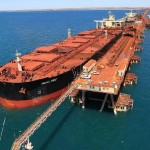 Australia has run consistently large current-account deficits for more than 50 years. In 2011 iron ore contributed 24% of the nation’s total exports, coal briquettes 18%, gold 6%, petroleum gas 5%, copper ore 2%, etc. In general, the economy and the exchange rate of the national currency are very sensitive to changes in commodity prices. The majority of the nation’s imports comprises machinery and transport equipment, telecommunications equipment, crude oil and petroleum products. The country was the 19th largest exporter and the 19th largest importer in the world in 2010. During the same year the total value of exports was US$210.7 billion, while total imports amounted to US$200.4 billion.
Australia has a number of free-trade agreements (FTAs) with countries such as the United States, Singapore, Chile and Thailand, with the most prominent being the Australia-New Zealand Closer Economic Relations Trade Agreement (ANZCERTA), which came into force in 1983. However, the nation’s economic development in recent years has been strongly influenced by trade relations with China, as China became Australia’s largest export partner in 2009 (before 2009 the largest export market was Japan).
According to the CIA World Factbook, in 2012 Australia’s largest export partners were China (29.5% of overall exports), Japan (19.3%), South Korea (8.0%) and India (4.9%).
At the same time, in 2012 the nation’s largest import partners were China (18.4% of overall imports), the United States (11.7%), Japan (7.9%), Singapore (6.0%), Germany (4.6%), Thailand (4.2%) and South Korea (4.1%).
Monetary policy authority – Reserve Bank of Australia (RBA)
 The Reserve Bank of Australia is Australia’s central bank and derives its functions from the Reserve Bank Act 1959. Its main objectives are to ensure the stability of the national currency, full employment, and the economic prosperity and welfare of the country. To achieve these goals, the central bank has set an informal consumer price index target of 2%-3% a year over the medium term. This target disciplines monetary policymaking, guides private-sector inflation expectations and increases the transparency of the RBA’s activities. Controlling inflation preserves the value of money and supports strong and sustainable economic growth in the long term. If the rate of inflation or inflation expectations exceeds the target, the central bank is likely to tighten monetary policy by raising interest rates.
The Monetary Policy Committee of the RBA comprises the Governor, the Deputy Governor, the Secretary to the Treasurer and six other independent members, who are usually appointed by the Australian Government. The Committee changes monetary policy by consensus.
Monetary policy includes setting the interest rate on overnight loans in the money market, known as the cash rate. The cash rate influences other interest rates in the economy, which in turn affect the behaviour of borrowers and lenders and overall economic activity. It is the rate at which banks can borrow from and lend to each other on an overnight basis. Any change in the cash rate affects sentiment towards the national currency.
 In order to keep the cash rate close to the target, the Reserve Bank of Australia conducts open market operations daily. If the central bank intends to lower the cash rate, it will usually increase the supply of short-term repurchase agreements at an interest rate below the cash rate (which will therefore fall). If it intends to raise the cash rate, it will usually reduce the supply of such agreements at an interest rate above the cash rate (which will therefore rise). A repurchase agreement involves a cash borrower, a commercial bank, selling securities to a cash lender, the RBA, and agreeing to buy back securities of the same type and quantity at a future date. These agreements usually have short maturities – from one day to several weeks. The cash borrower is obliged to pay the cash lender interest, as with secured loans.
The Reserve Bank of Australia also operates in the foreign-exchange market on a regular basis in order to meet the foreign-exchange needs of its clients and to facilitate domestic liquidity management. The bank may enter the currency market to respond to disorderly conditions or significant misalignments in the value of the national currency.