
Choosing currency pairs according to their components’ strength differential
This lesson will cover the following
- The importance of examining factors that may influence both currencies within a pair
- Taking a look at the FOMC policy decision on 18 December 2013
When it comes to trading in the Forex market, you should already know that a currency is bought or sold against another. This means that it is not only the relative strength of the base currency that is important, but also that of the quote currency. You can learn some of the basic terms in Forex by reading our article “Forex Trading Terms“.
Many traders make the mistake of focusing on the events influencing only one of a cross’s two currencies, without taking into account what is happening with the other. This can have a negative impact on market players’ performance, as factors supporting the quote currency could diminish the effects of positive developments for the base currency or completely offset them, thus confounding your expectation that the latter will appreciate. And even if the base currency gains ground against its counterpart after a series of favourable economic data, the strength of the quote currency is likely to determine how long the base currency’s rally will continue and how far it will extend.

- Trade Forex
- Trade Crypto
- Trade Stocks
- Regulation: NFA
- Leverage: Day Margin
- Min Deposit: $100
Therefore, neglecting the economic conditions or other factors that can play a role in a traded currency’s valuation can greatly reduce the probability of success for a trade and even turn it into a loser. When going long against a well-performing economy, there is a higher chance of failure, as each economic indicator can produce a positive or at least better-than-expected value, even if analysts’ forecasts have pointed to a weak reading. Thus, your currency of choice would either gain less than projected or not gain at all, incurring losses. Consequently, going long on a strong-economy/weak-economy cross (or short on a weak-economy/strong-economy pair) presents you with the best chance of maximising profits while minimising risk.
Example

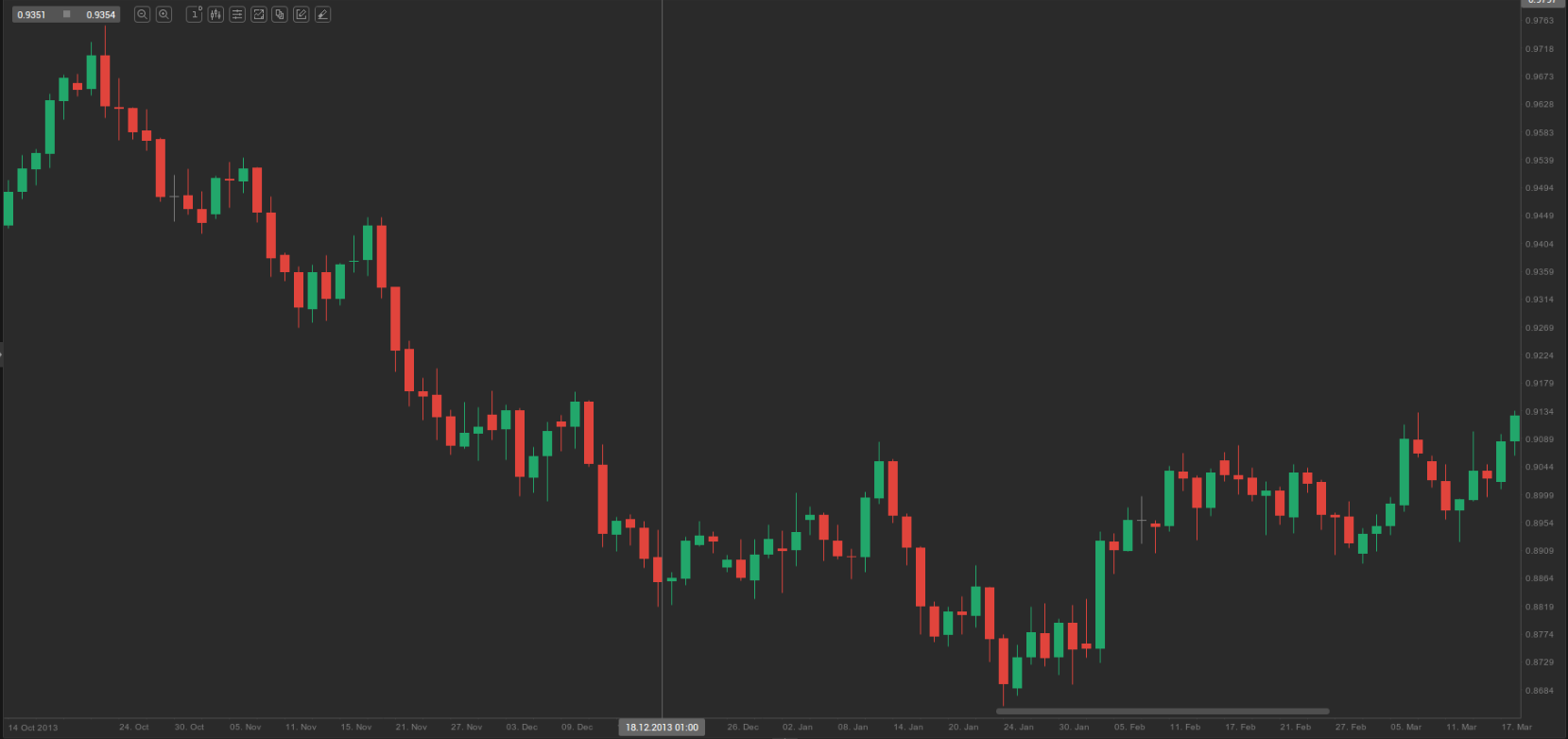
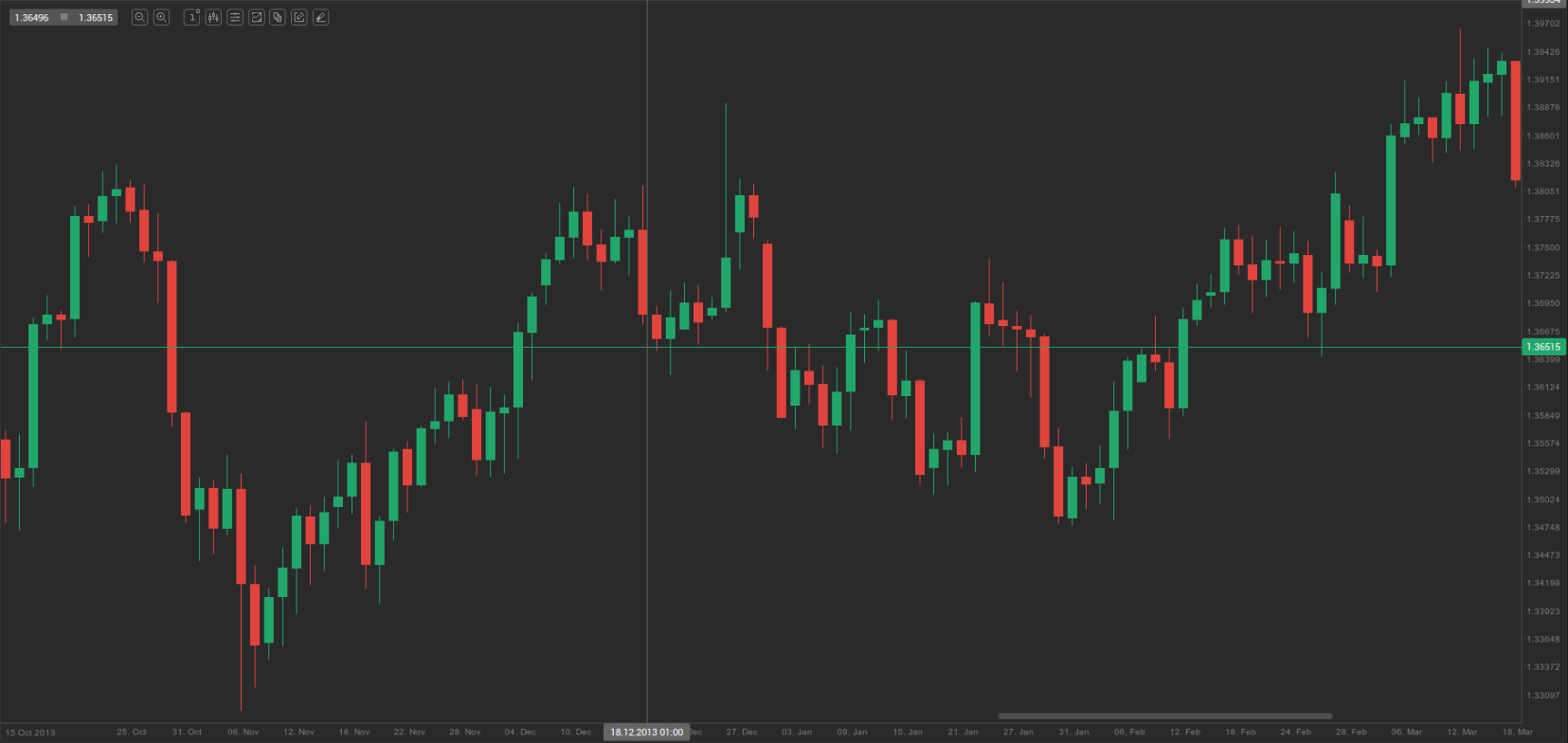
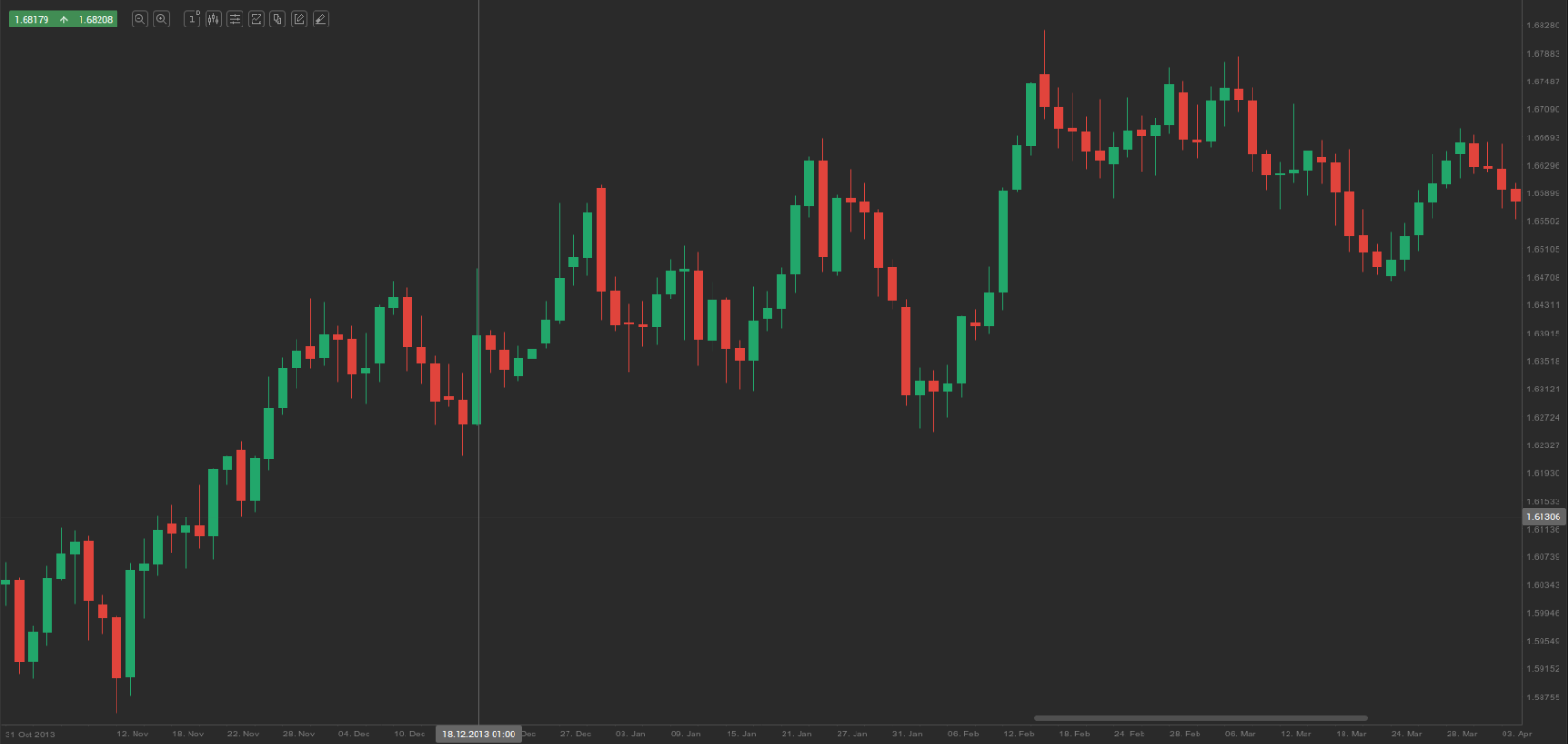
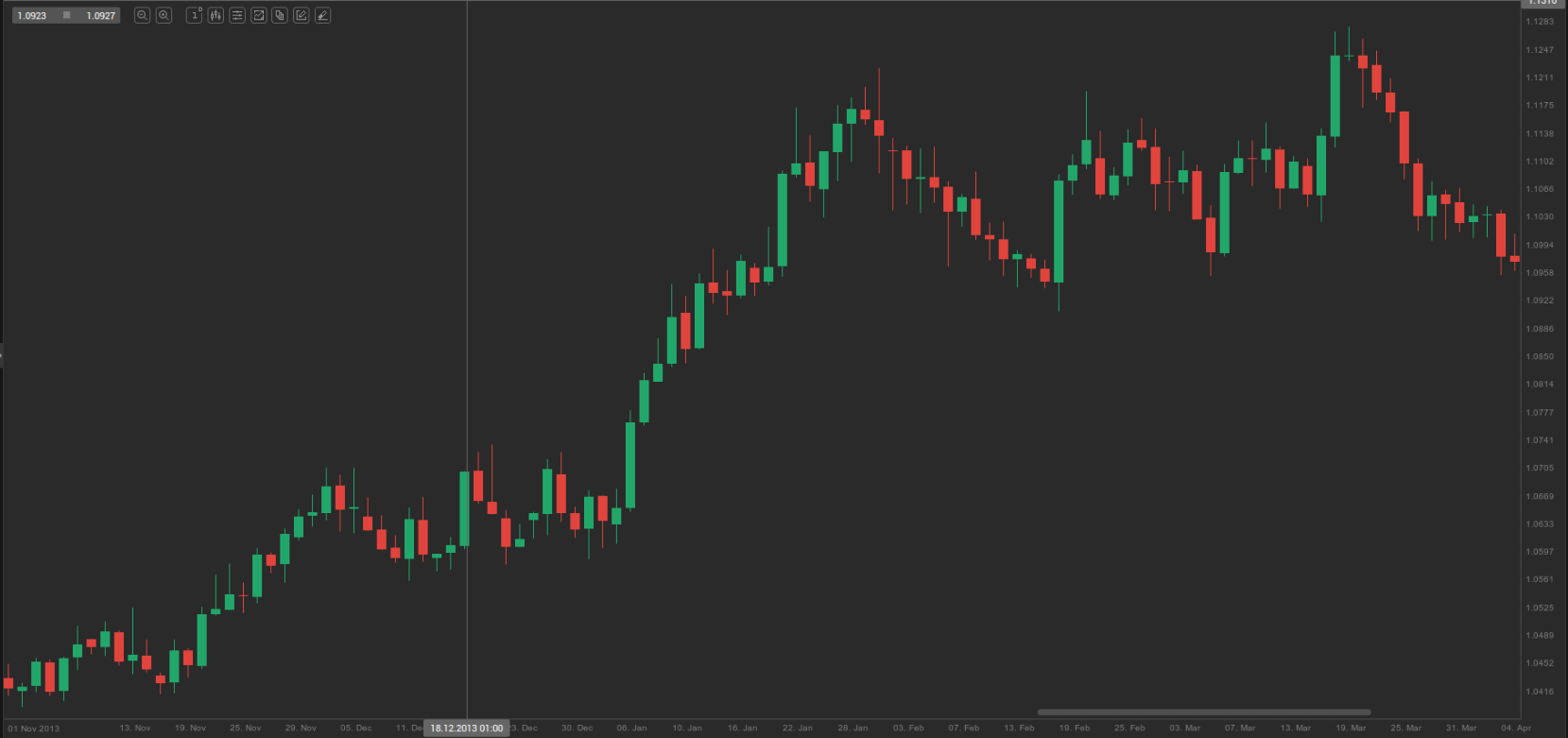
Let us take a look at the following example. On 18 December 2013 the Federal Open Market Committee (FOMC) unexpectedly decided to begin scaling back its unprecedented quantitative easing programme, citing underlying economic strength. Policymakers’ decision caught market players off guard, as only a very small number of economists had anticipated such a move, given the recent federal government shutdown, the 7% unemployment rate in November and Janet Yellen taking over as Federal Reserve chair. Let us examine the performance of some of the major currency pairs following the FOMC policy decision on 18 December 2013. All of the following charts are daily.
AUD/USD
EUR/USD
GBP/USD
USD/CAD
USD/JPY
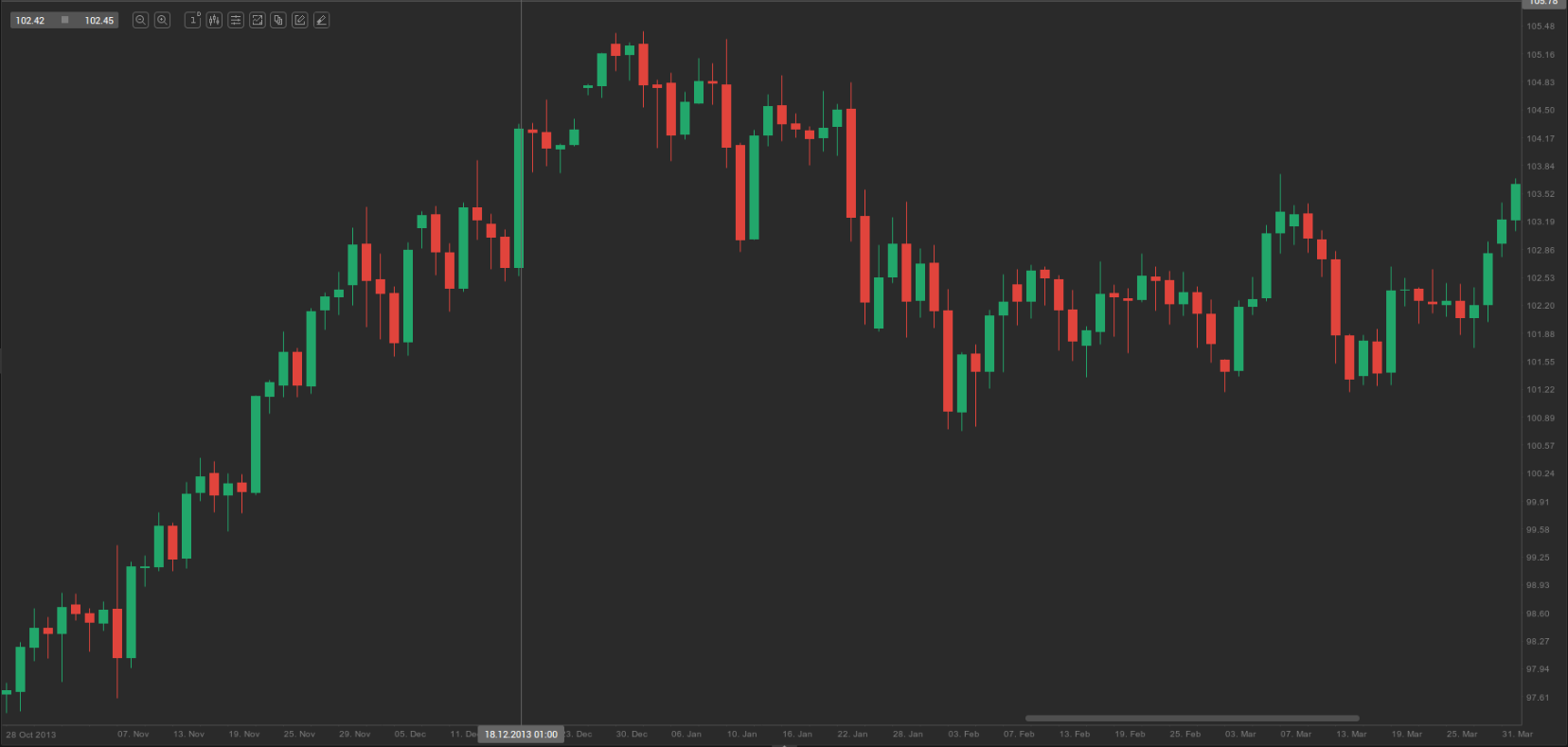
USD/CHF
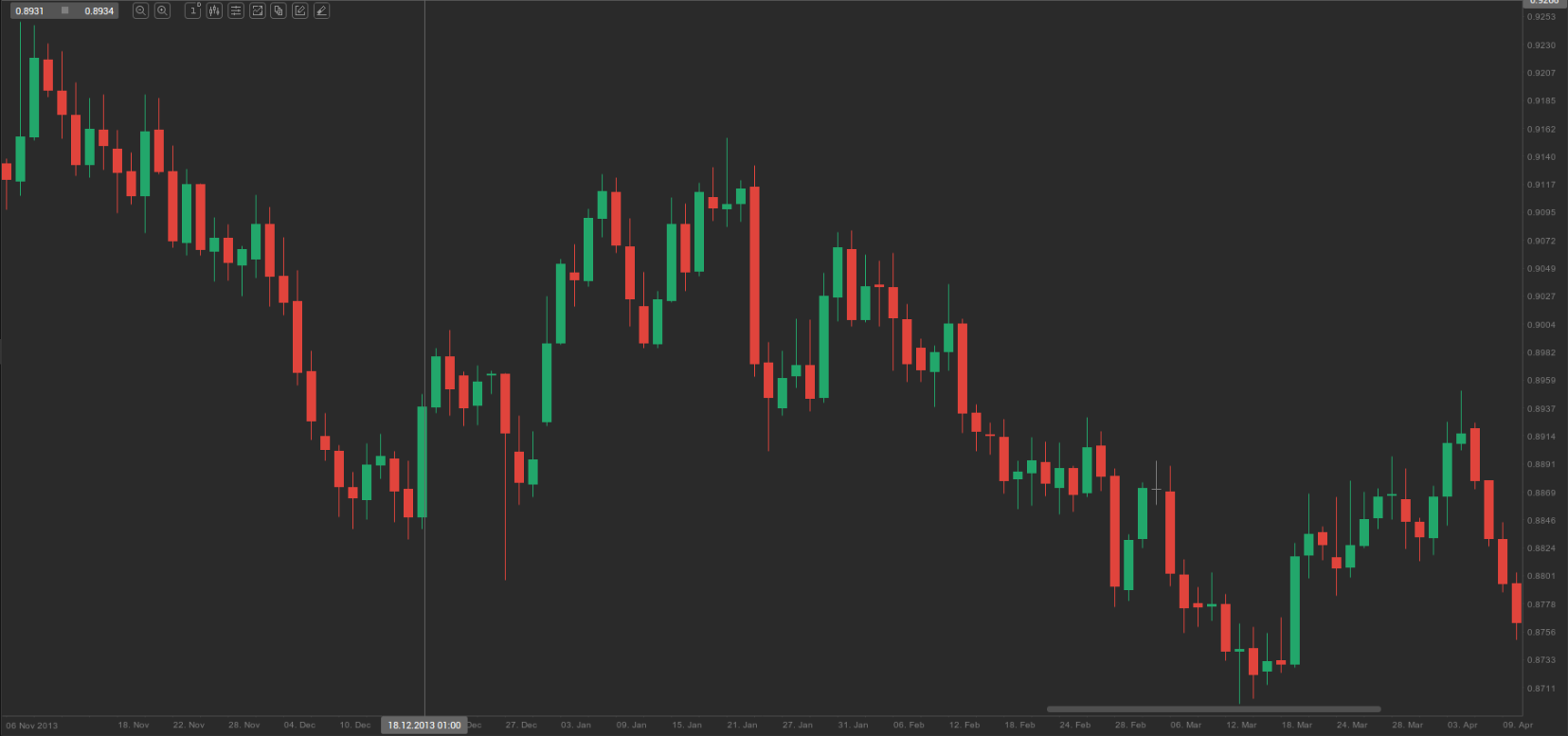
USD/MXN
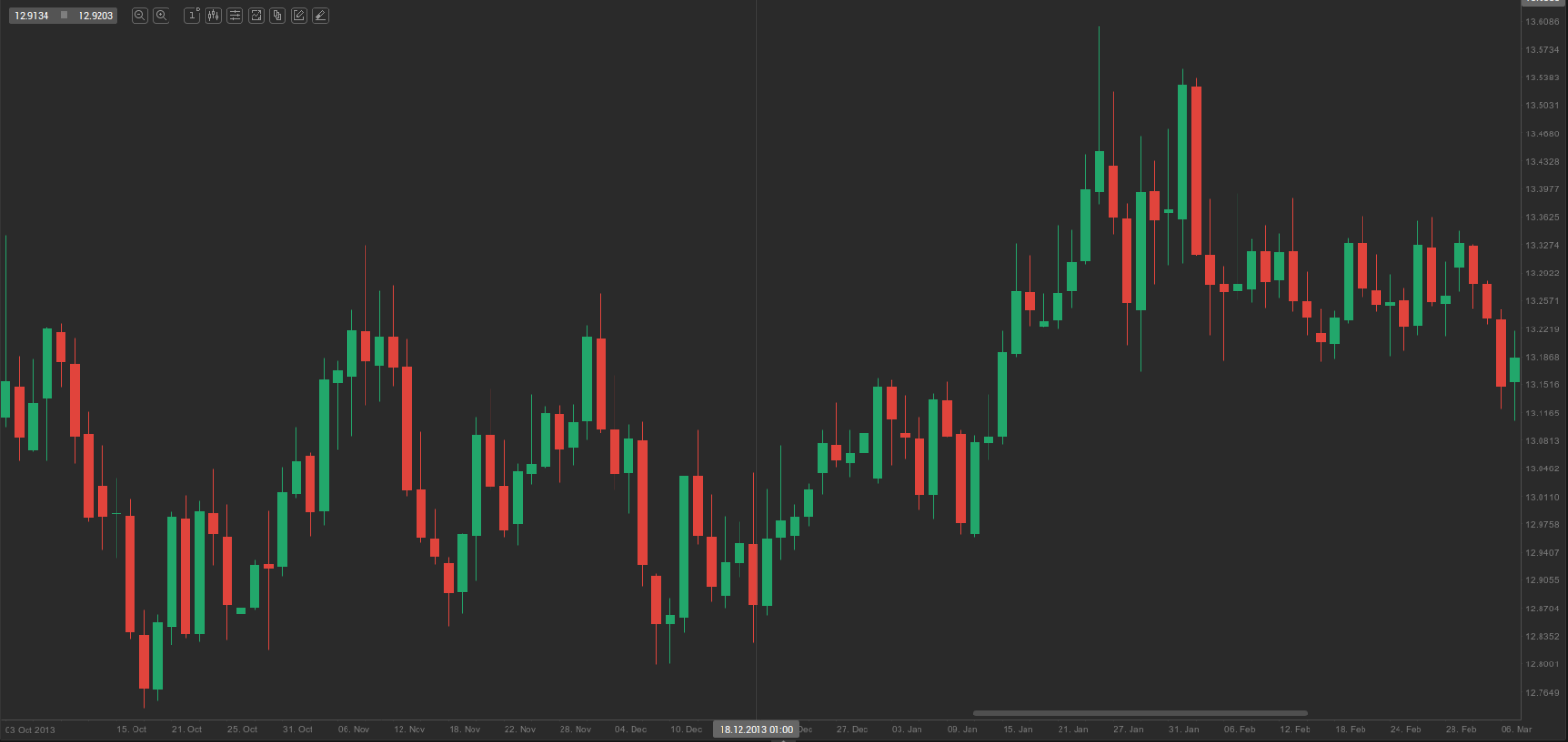
USD/CAD, USD/JPY and USD/MXN advanced more noticeably compared with USD/CHF, while EUR/USD and GBP/USD showed resilience. At the time, the Bank of England had been keeping monetary policy on hold, while the European Central Bank had introduced a rate cut of 0.25 percentage point to a new record low of 0.25% at its meeting in November, after the annualised harmonised CPI in the Eurozone fell to 0.7% in October – the lowest level since January 2010 – boosting concerns over deflation in some countries in the region. AUD/USD had been falling steadily for a few months, as the Reserve Bank of Australia kept its benchmark interest rate unchanged, while on several occasions the bank’s Governor, Glenn Stevens, made remarks regarding the Australian dollar’s strength.