Three-bar reversals
This lesson covers the following
- What three-bar reversals are
- Tips on what to look for and what to avoid
Having covered double-candle reversals in the previous article, it is now time to turn our attention to triple-candle reversals. A triple-candle reversal is simply a variation of the double-candle reversal. It comprises three candles: the first and third essentially form the elements of a double-candle reversal, while the middle one is very small and might even be a doji.
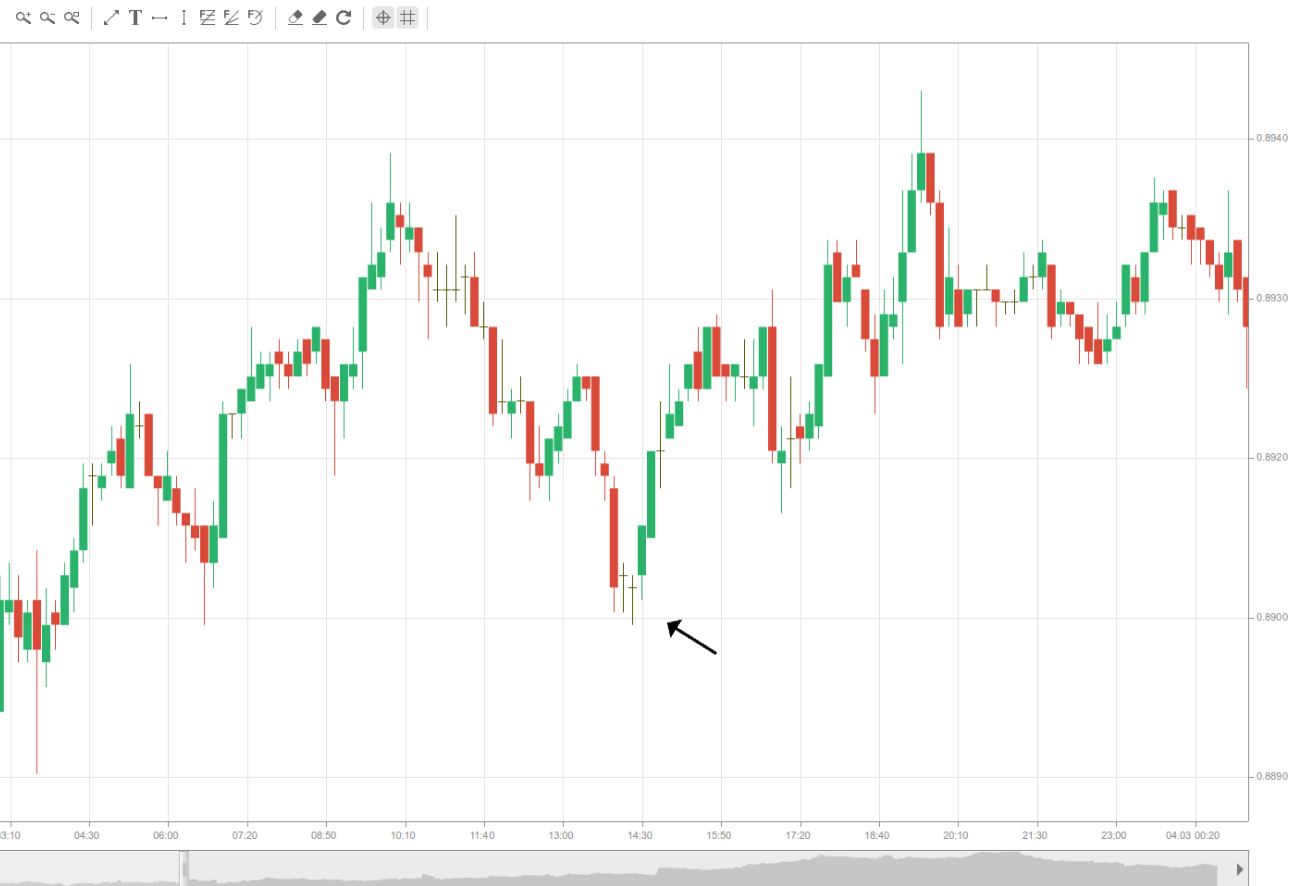
Just as a double-candle reversal on a 5-minute chart appears as a single reversal candle on the 10-minute chart, a triple-candle reversal produces a reversal candle on the 15-minute time frame, provided their closes coincide. As soon as the third candle closes and the 15-minute reversal candle is formed, additional market participants trading the 15-minute time frame are likely to join. This should make you more confident about your trade, because a reversal signal on a higher time frame implies a larger move, thus allowing you to aim for a wider profit target. However, many experienced tutors suggest that triple-candle reversals should be traded as double-candle reversals and that you should disregard whether they create a solid 15-minute reversal candle. Below you can see a three-bar reversal on a 10-minute graph, with a doji bar between the two outer bars.
The reverse is not always true
 You should keep in mind that although 15-minute reversal candles can be seen on 5-minute time frames and a match between their close levels generates a stronger signal, some triple-candle setups on the 5-minute chart do not result in good reversals on the 15-minute chart.
As mentioned above, a reversal on a higher time frame usually leads to a larger move, enabling you to widen your profit target when you are trading on the lower time frame. Moreover, it is worth looking for a trend candle that is followed within the next few bars by an opposite trend candle whose close is near the open of the first, thereby forming a reversal. This setup will look like a double-candle reversal on a higher time frame and a reversal candle on an even higher time frame.
However, the opposite is not always true. Some triple-candle reversals on the 5-minute chart do not create optimal reversal candles on the 15-minute time frame, because the pattern’s third candle may close, for example, at the 20th or 25th minute of the hour instead of the 30th minute. When this occurs, the larger time-frame signal does not display the same strength as the triple-candle pattern, which means that you won’t benefit from the inflow of traders who trade off the 15-minute chart, as in the previous case.

- Trade Forex
- Trade Crypto
- Trade Stocks
- Regulation: NFA
- Leverage: Day Margin
- Min Deposit: $100
Rare occurrence
 However, as we’ve already said, traders should not waste too much time looking for the perfect triple-candle reversals that build a 15-minute reversal candle, because that pattern may occur only a couple of times per day. Spending so much time in search of those would cause you to miss other, more common setups, such as double-candle reversals. After all, your ultimate goal is to clearly identify each suitable price reversal and take advantage of it once you believe there will be a follow-through, rather than chase more complicated setups and miss profit opportunities.
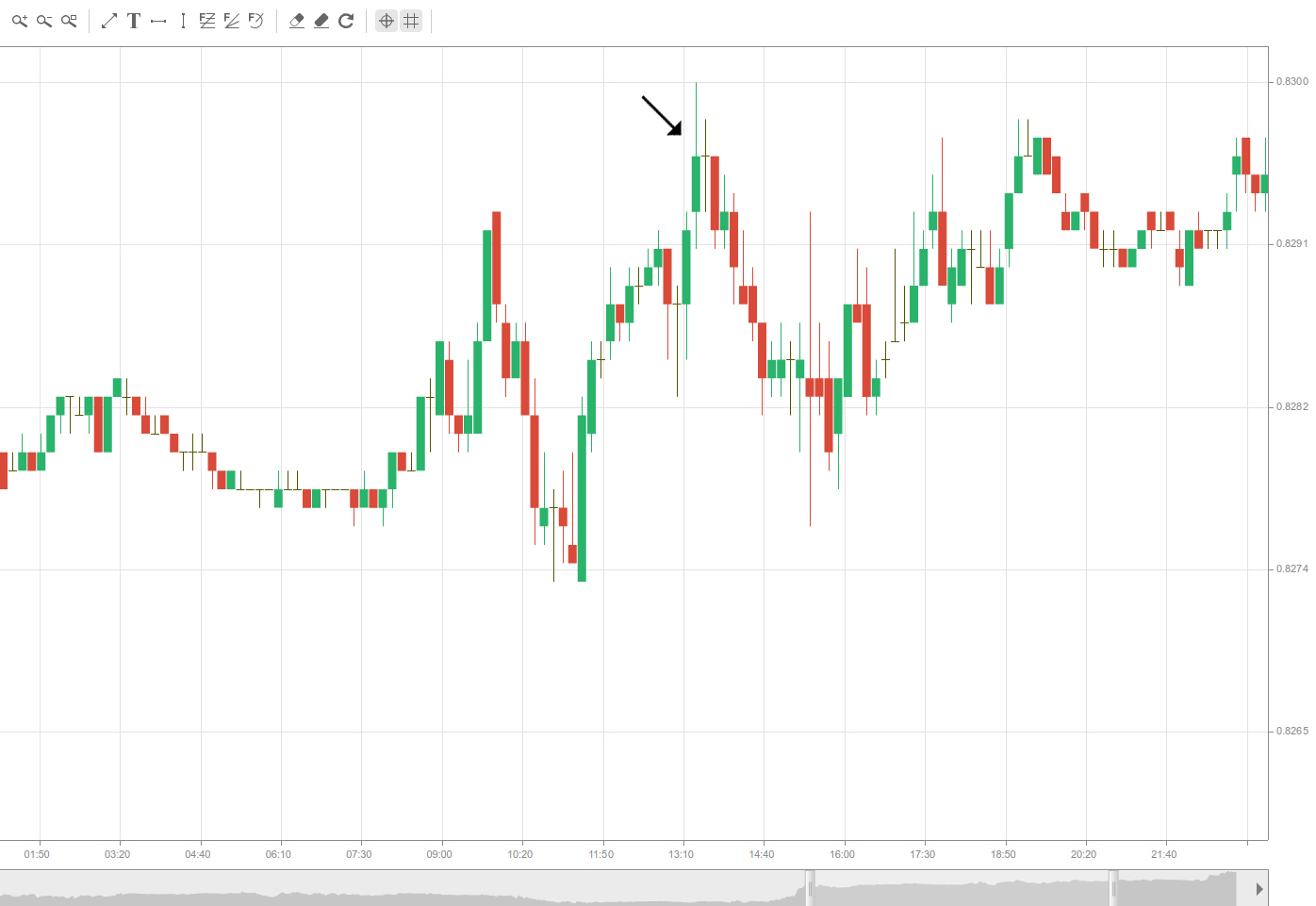
There are other variations of the double-candle reversal setup, such as four-candle reversals, but these should also be regarded primarily as double-candle reversals. Although it is not a perfect example, below you can see a four-bar reversal comprising two doji bars in the middle.