
 | Updated:
 Trading ranges that lead to trend reversals and large moves to the upside and downside
This lesson covers the following
- Some ranges may cause a reversal
- A large up move and a large down move – how to interpret such a situation
Trading ranges that lead to trend reversals
 Trading ranges that lead to trend reversals can often be spotted during trending trading range days, because a reversal usually occurs from the final trading range during the final 1-2 hours of the trading day. At times, the low extreme during a bear-trend day is formed by a small trading range made up of large bars or bars with long wicks. Trading ranges that lead to reversals can also be viewed as other setups (a double-bottom pullback, for instance).
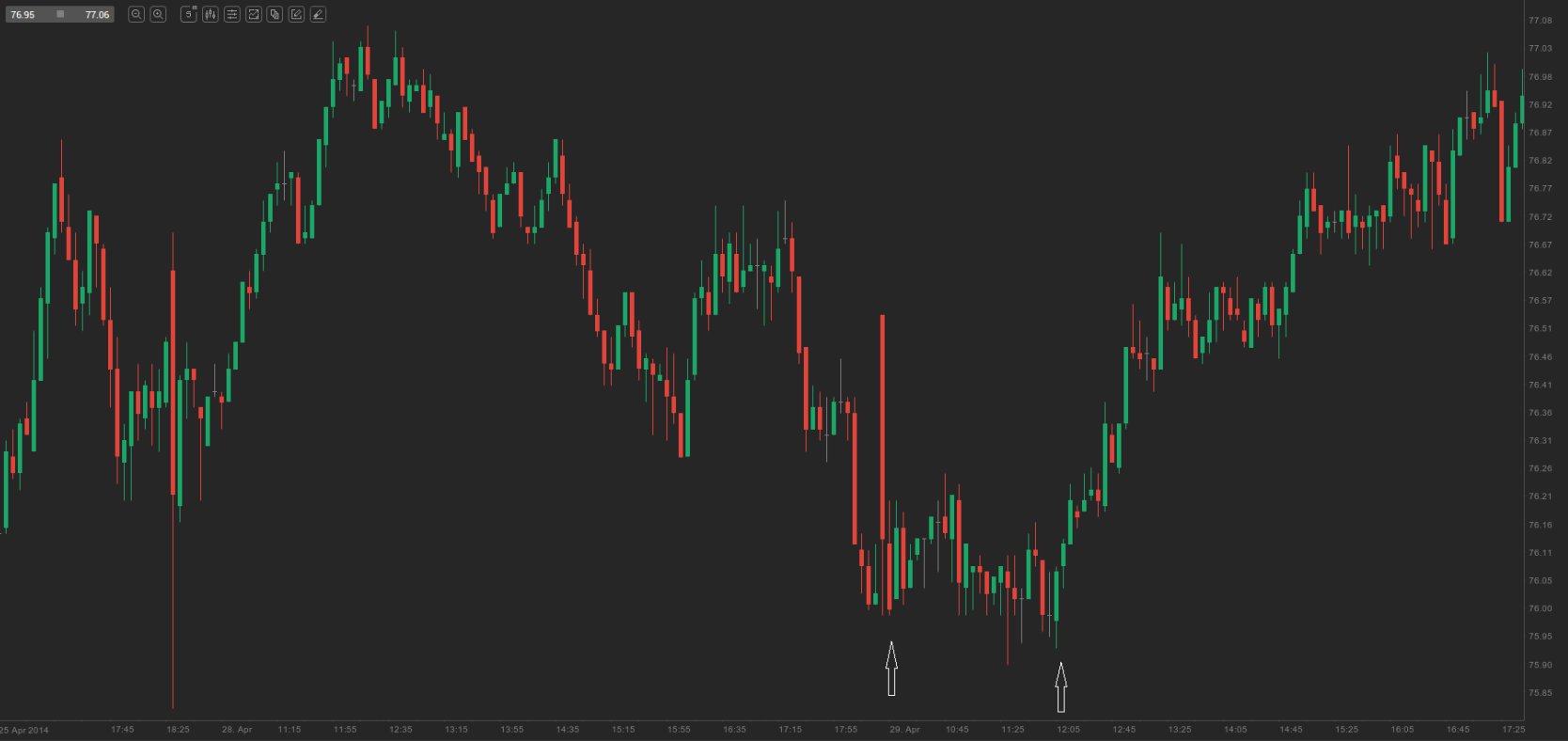
On the 5-minute chart of ADS above there was a considerable sell-off, followed by a trading range made up of large trend bars and bars with long wicks, which led to a reversal. This setup formed a double-bottom pullback pattern.

- Trade Forex
- Trade Crypto
- Trade Stocks
- Regulation: NFA
- Leverage: Day Margin
- Min Deposit: $100
Large moves to the upside and downside
 A trading range may form when the price makes a large move to the upside followed by a large move to the downside that retraces almost the entire upward move. However, such a scenario can also lead to a new trend rather than a range. In this case, a trader should look for a reversal formation after the second move ends. If a reversal occurs, it will usually be sufficient at least for a scalp. If no reversal is present, the second move can simply continue to trend, with its first measured target probably being at least twice the height of the first move.
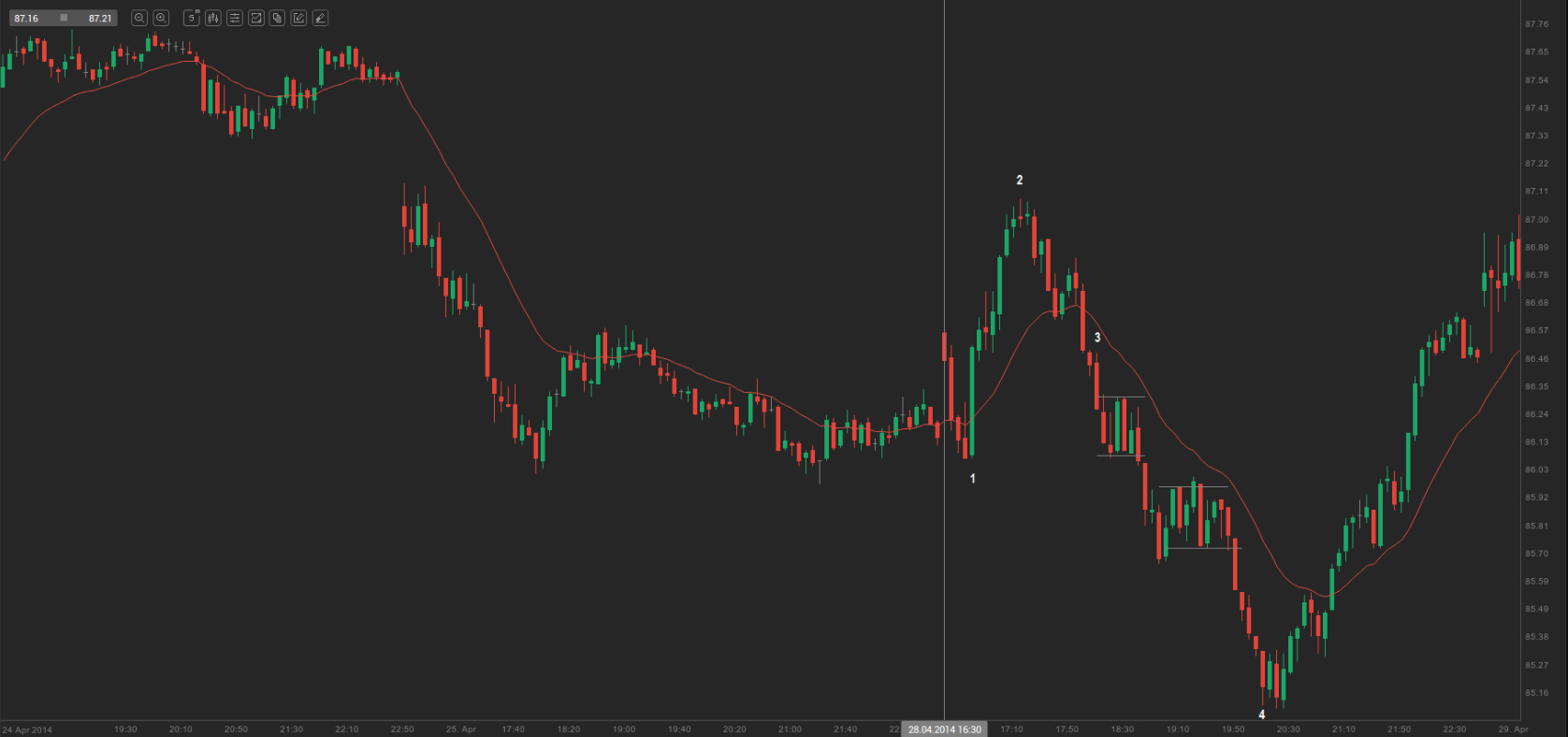
On the 5-minute chart of QQQ above, there was a sharp move to the upside, which ended at bar 2 and marked a new daily high. It was followed by a sharp move to the downside. This sequence often implies indecision in the market and is usually followed by sideways trading. In our case, there was a small trading range, then a breakout and another trading range. After the second range was breached, the move to the downside continued to bar 4, but it could not be considered a measured move of the first one.