
Outside bars
This lesson will cover the following
- What are outside bars?
- When can you use them as entry points?
- Outside bars as trend bars?
- What is the inside-outside-inside pattern?
Outside bars are relatively complicated formations to trade. An outside bar is one whose high is above the previous bar’s high, while its low is below the previous bar’s low. It basically engulfs the previous bar.
Outside bars are difficult to interpret because they depend greatly on the context in which they occur. Because the outside bar is larger than the previous one, it suggests that both bulls and bears were in control at different points during that period and were pushing more aggressively. This increases the chance of further reversals over the next few bars. If the outside bar closes near its middle, it is effectively a one-bar trading range. Such bars are highlighted on the screenshot below.
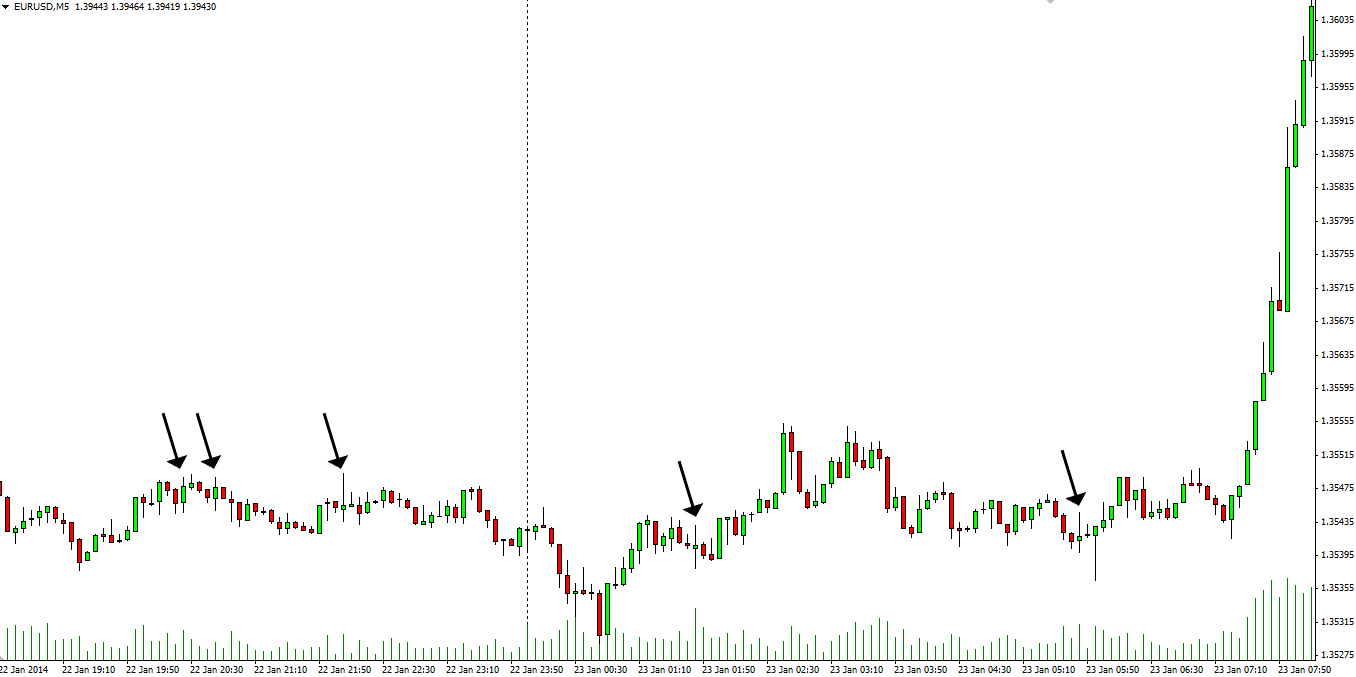
As you can see from the example, a decent number of outside bars can be seen on a chart at any time, but they alone do not tell us much, especially if the market is in as distinctive a trading range as pictured above. You can see several outside bars indicated by the arrows; they close near their middle and are essentially one-bar trading ranges, which adds to the overall sideways movement. Most of these outside bars even form inside-outside-inside patterns (we will discuss those later in the article), but, because of the trading range, they do not provide sufficiently reliable entry signals.
Because outside bars indicate that the market is moving sideways – encouraging everyone to sell near the top of the range and buy near the bottom – it is unwise to use them as entry points unless they are followed by a small bar near their high or low that signals a breakout attempt. If the market breaks out in either direction, you should consider entering against the breakout, because outside-bar breakouts usually fail within a few bars.
Entry bars
 Outside bars are very useful as entry points when the preceding bars provide a reliable signal. For example, if you expect a major reversal during a bullish trend and a strong bearish bar appears but the next bar trades higher, you should keep your sell stop in place. If the market then suddenly reverses and forms an outside bar, your order will be executed, thereby making it an entry bar.
An outside bar can act as an entry bar at the bottom or top of a correction. Take a look at the following screenshot.
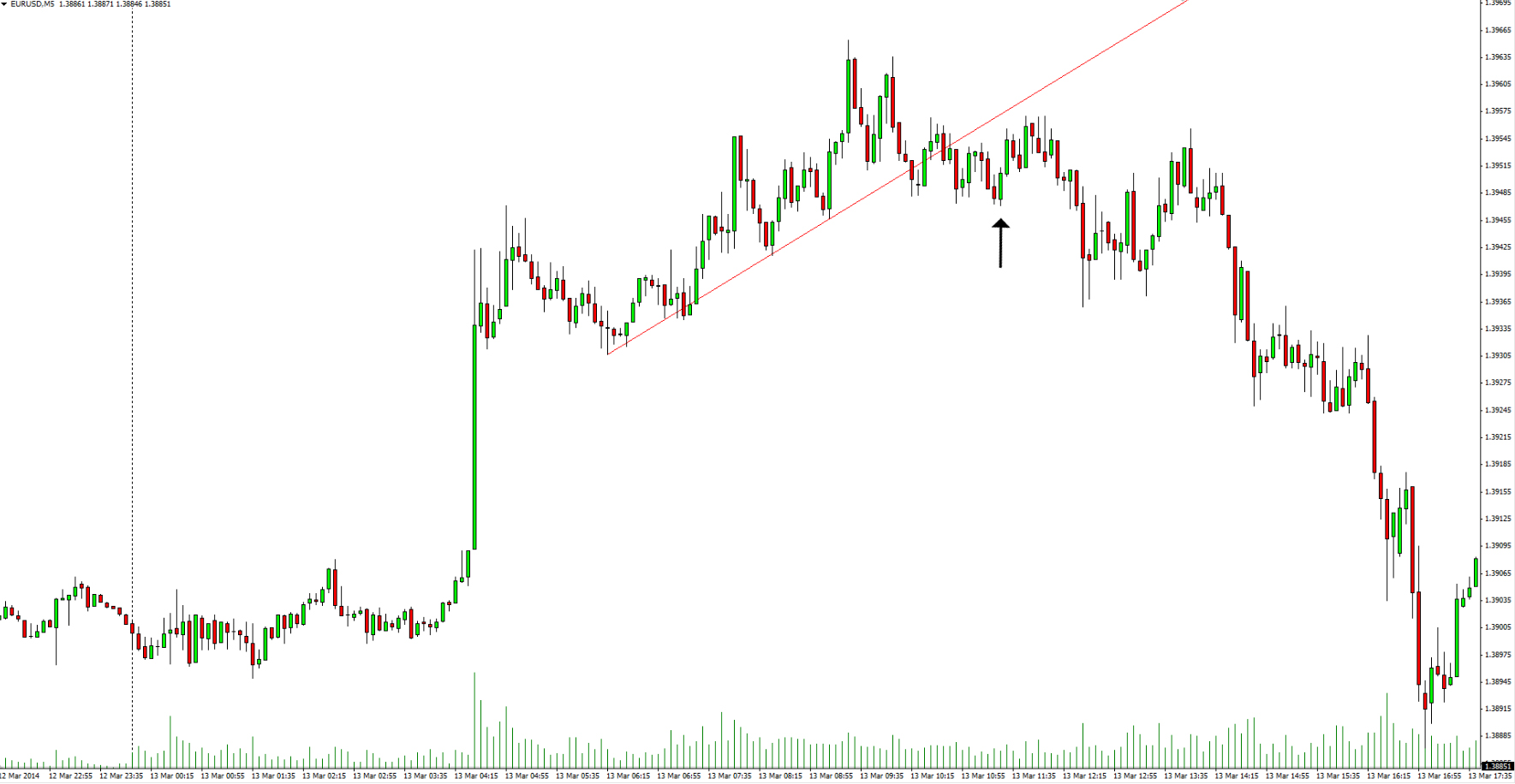
You can see in the example above that an outside up bar formed after a two-legged correction in a strong uptrend, providing a reliable long entry signal. Moreover, several bullish candles appeared immediately beforehand, which added further strength. In addition, the bar closed near its high while opening close to its low, suggesting the bulls were pushing the market upwards. Traders may therefore go long as soon as the outside bar moves beyond the previous bar’s high, or wait for it to close and buy above its own high.

- Trade Forex
- Trade Crypto
- Trade Stocks
- Regulation: NFA
- Leverage: Day Margin
- Min Deposit: $100
Outside bars as trend bars
 In certain cases, outside bars can be seen as strong trend bars rather than range bars. This occurs when a with-trend outside bar appears at a reversal following a strong trend.
If, for example, a bearish trend is followed by a strong upward correction, market participants will be looking for further price rises. Fewer traders will sell below the previous bar’s low and more will buy above its high, as it marks a higher low. If they feel particularly confident, bulls may act even more aggressively and buy below the previous bar’s low instead of above its high, thereby increasing bullish sentiment. This will push the current bar’s high above the prior bar’s, creating an outside up bar. Once that happens, trapped bears who shorted below the previous bar’s low will cover their positions, pushing prices even higher, and will stay out of the market for some time.
With bears exiting the market and overall sentiment predominantly bullish, the market will continue to rally. If the reversal is sufficiently strong, it will form a second leg up after a pullback. There are usually two legs up from the bottom of the outside bar.
The strength of such a reversal can be explained by the impatience of both bulls and bears. As the price reverses upward after bears have shorted below the previous bar’s low and become trapped, some bulls are kept out because they dislike entering during the formation of outside bars. Both sides want the price to fall so that bears can reduce their losses and bulls can enter long positions and profit now that sentiment has turned bullish. However, because all participants want the same thing, it is unlikely to happen; instead, both groups will impatiently buy as soon as the price declines by a few pips, rather than waiting for it to fall for one or two bars. This buying pressure pushes the price even higher, leading to the strong move described above.
Inside-outside-inside pattern
 In the next article we will discuss the inside-inside pattern and its more reliable version, the inside-inside-inside pattern. If an outside bar lies between the two inside bars of an inside-inside pattern, we have an inside-outside-inside pattern.
This formation signals an entry in the direction of the breakout of the second inside candle. However, to trade it safely you must be confident that the market will move far enough to reach your profit target. As we’ve already mentioned, outside bars are tricky, so patterns that include them cannot be interpreted straightforwardly either.
If, for example, the second inside bar is large and near the middle of the outside bar, this signals that the market is still in balance and you would be better off waiting for a stronger setup.
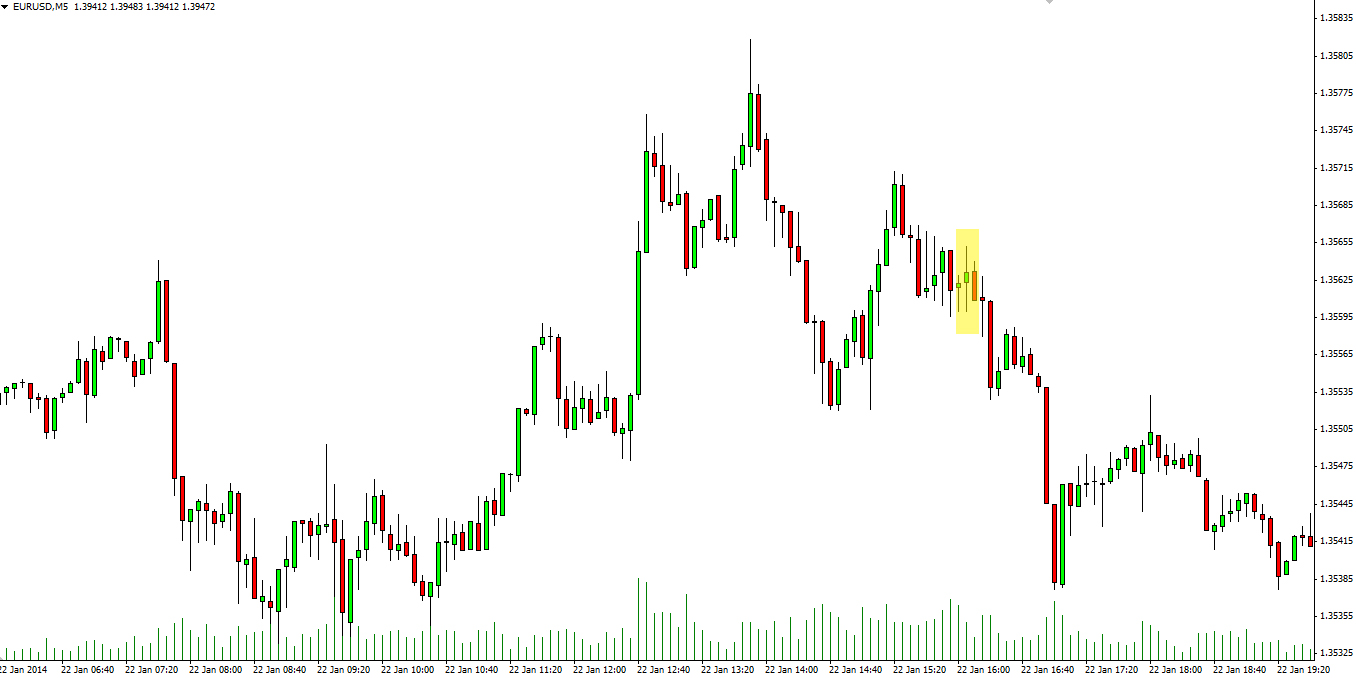
In the example above you can see an inside-outside-inside pattern forming several bars after a two-bar bearish reversal. Although it resembles a trading range that includes a couple of doji bars, the market is clearly producing lower highs and lower lows. Moreover, the highlighted inside-outside-inside pattern ends with a bearish bar with a shaved bottom – an indication that the bears are pushing the market down. A short entry below the bearish bar, or even below the whole pattern for extra safety, would therefore be reasonable.
A stronger setup can occur when the inside-outside-inside pattern forms at a new swing high or low and the second inside bar closes near its low or high respectively, suggesting that a breakout is likely.