How to avoid one of the biggest wallet drainers
This lesson will cover the following
- What is ‘barbed wire’
- Why you must avoid it
- What you can do if you ultimately decide to risk your money
In previous articles, we discussed trading ranges, how you should position yourself, and what to avoid. This article will discuss the worst kind of all – the ‘barbed wire’ type of range. In fact, this scenario is so tricky that it is considered one of the biggest money sinks in trading; thus, we strongly advise you to avoid placing any orders at all costs when the market is in this condition.
 The ‘barbed wire’ pattern is, in essence, a trading range that develops near the moving average and consists of three or more bars that mostly overlap each other, one of which is a doji. As you know, dojis are single-bar trading ranges that indicate bulls and bears are in equilibrium – as one side pushes the price away from the open, the other reverses that move before the close. Looking at the entire trading range, the largely overlapping two-sided trend bars reflect the same fact – bulls and bears are equally matched.
Moreover, because the price action is close to, and in most cases matching, the moving average, guessing where the market will head next becomes nearly impossible. Most experienced traders avoid this type of market equilibrium at all costs; probably only a few can profit from it consistently. Logically, this leaves inexperienced traders with almost a 0% chance of finishing with a profit, unless they are lucky once or twice.
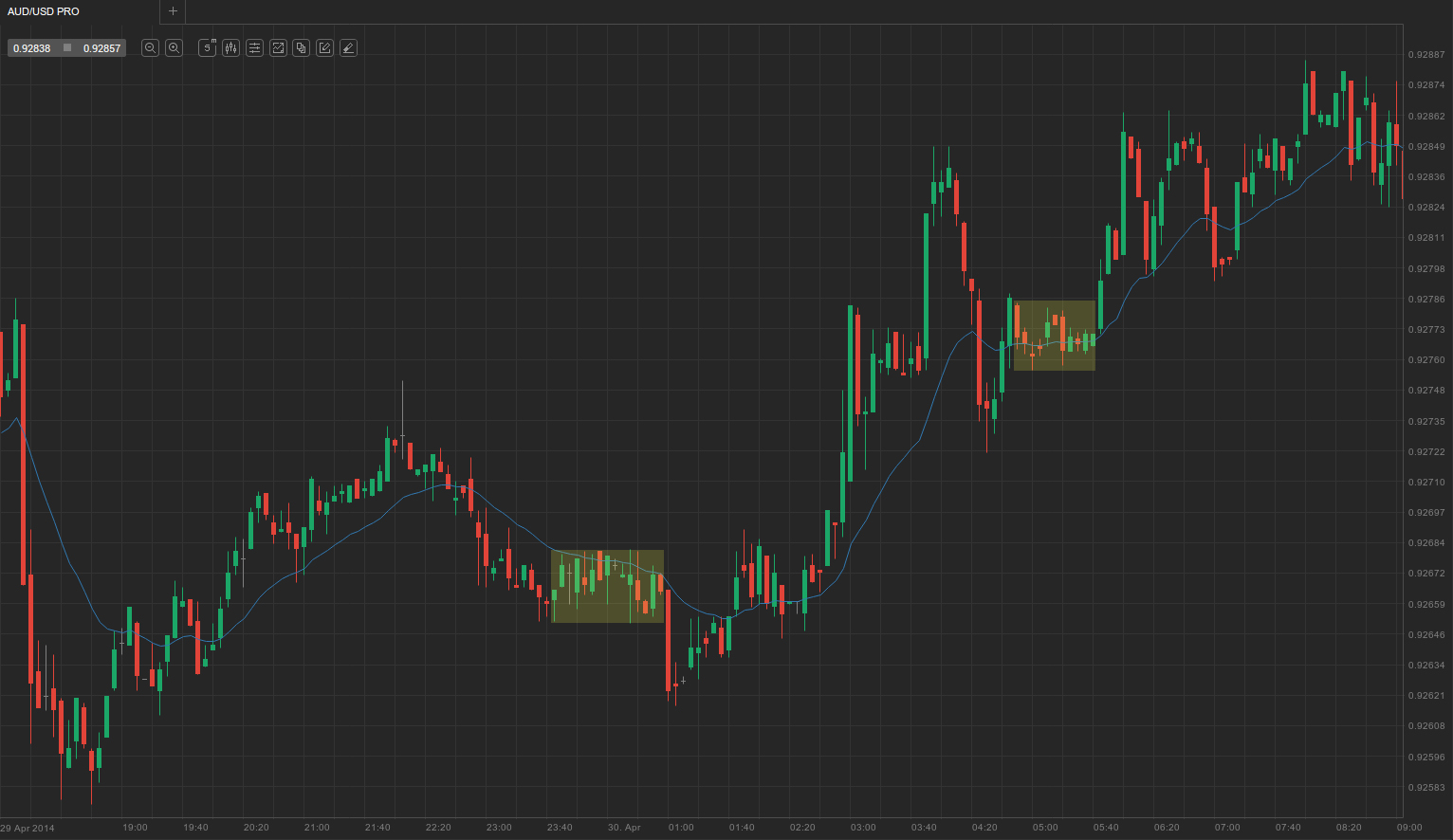
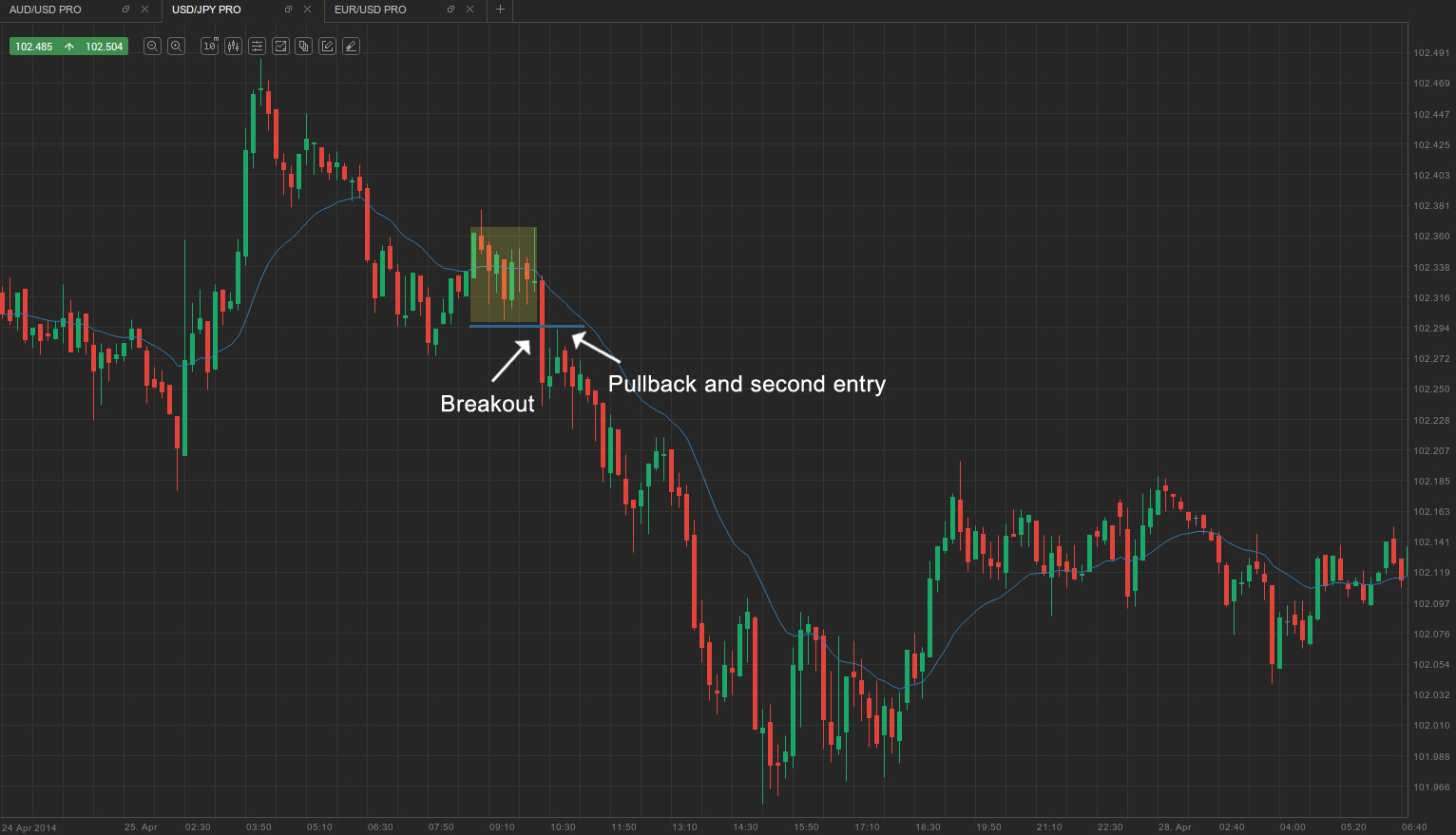
In the screenshot above, you can see examples of the barbed wire pattern. The first pattern ended with a selling climax that broke out of the trading range. The price’s downward momentum ended with an almost-doji bar that failed to break through the most recent swing low from around six hours earlier. The market pulled back to test the breakout point and retested it five times, which led many traders to believe this was a good second short entry that usually has a higher chance of success. However, selling pressure was not enough and the market re-entered the trading range, only to break out upwards later. This is yet another indication of how tricky this pattern is.

- Trade Forex
- Trade Crypto
- Trade Stocks
- Regulation: NFA
- Leverage: Day Margin
- Min Deposit: $100
The second barbed wire on the screenshot did not contain a perfect doji bar but, as we know, ‘close to perfect’ should be traded as perfect, and there were two bars closely resembling a doji. There was a with-trend breakout that continued the day’s trend.
If you ultimately decide to risk it…
If, despite all warnings, you are eager to trade barbed wire, there are a couple of rules you can follow to improve your chances of success.
A common way to trade any trading range is to wait for a breakout trend bar and enter in that direction. However, this is a low-probability trade and naturally has a low success rate. Because control over the market has been so evenly distributed up to that breakout, it is more likely to fail. What you can do is bet against that breakout trend bar after it closes. For example, in a bull trend, if a bar closes higher outside the trading range, you can go short below its low, and vice versa.
In some cases, however, even this breakout failure will fail (it becomes a breakout pullback) and your short entry will be at a loss. When this happens, you can buy above that bar’s high because it is far less likely for a second entry to fail. After the market moves away from the ‘barbed wire’ area, it should start forming trending bars, meaning either bulls or bears have regained control. You can see a similar scenario in the screenshot below, but in a bearish trend.
Alternatively, you can place orders within the trading range and aim for scalps. You can counter-trend by betting on small bars at the boundaries of the ‘barbed wire’ pattern. If there is a small bar at the bottom of the range, you can scalp a long position by entering above the high of that bar. A general rule of thumb is that you shouldn’t buy when the barbed wire is mostly below the moving average, and, logically, don’t sell if it is mostly above the MA. If you don’t feel certain about taking those low-probability trades, you will be better off standing on the sidelines and waiting for a better, more reasonable setup to develop.
Session extremes
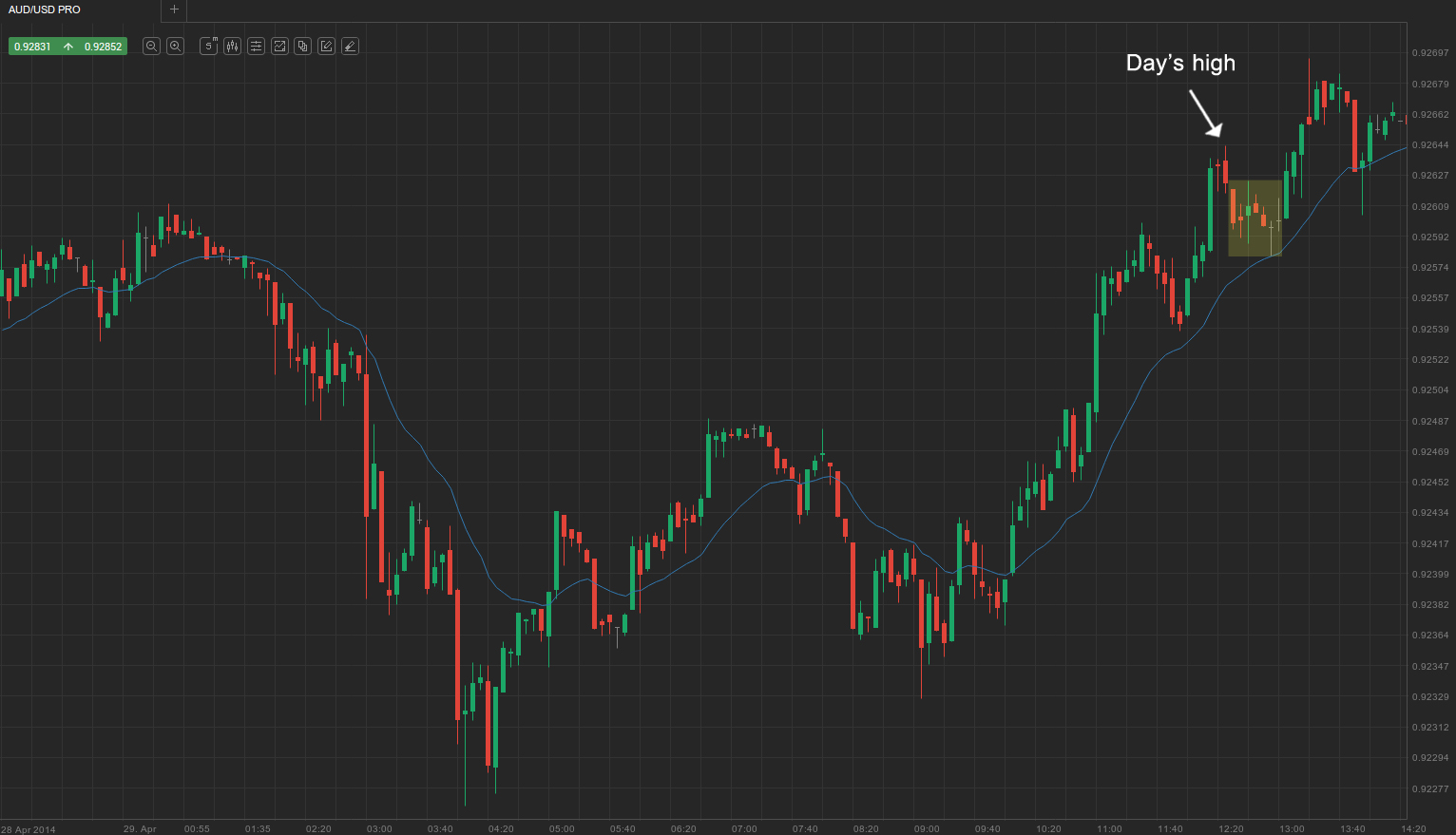
The ‘barbed wire’ pattern also occasionally occurs after a breakout that has produced a session high or low, often providing traders with with-trend setups. The previous advice regarding positioning applies here as well, and if the second entry (breakout pullback) fails, it is best to wait for additional market information.
Usually, tight trading ranges forming at the session’s extreme are continuation patterns, meaning you should have a with-trend entry in mind, which commonly comes after a failed breakout. A similar scenario is shown in the following screenshot.