Further talk on trending ranges in stock trading
This lesson will cover the following
- Additional details on trending trading ranges
- Infrequent market moves
- Final hour breakouts
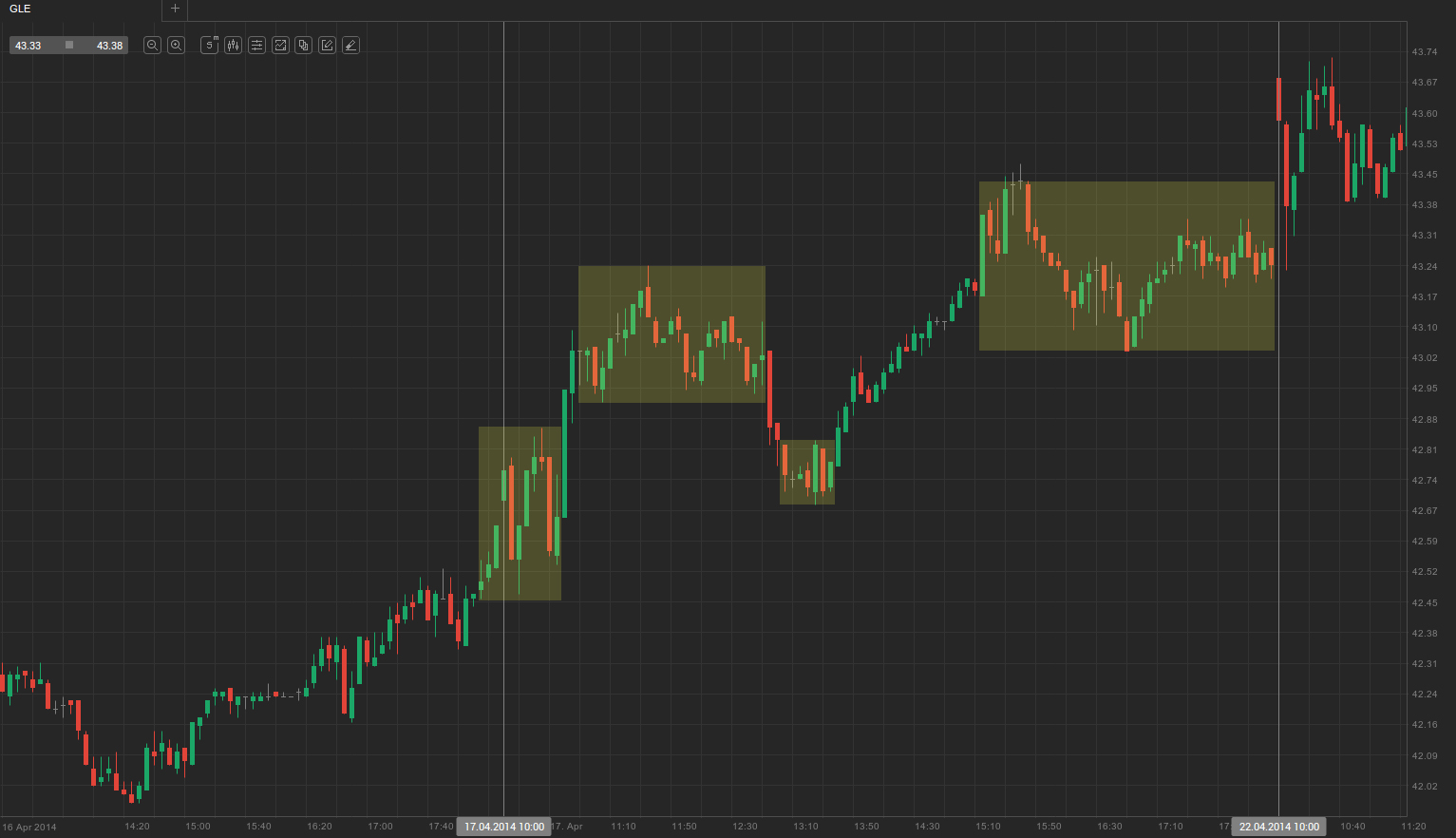
Sometimes the trend components (the trading ranges) are not easily defined. A general rule of thumb is that if the market is trending (forming higher highs and higher lows or lower highs and lower lows) but the trend is not easy to spot, you usually have a trending trading range day.
Trending range days warn you in advance that a breakout should be expected. Even as the market holds within a certain range, as soon as it begins to form trending highs and lows, it is only a matter of time before the majority of market participants recognise this and position themselves accordingly, which will lead to a breakout.
However, it is not always the case that the day’s initial trading range, which matches the description noted above, will break out and complete a measured move towards the average daily range. In about 30% of cases, a breakout from the range will reverse and break out of the range’s opposite side, extending it. When the daily range grows to near or above the average it commonly results in a calm range trading day rather than a trending range day.
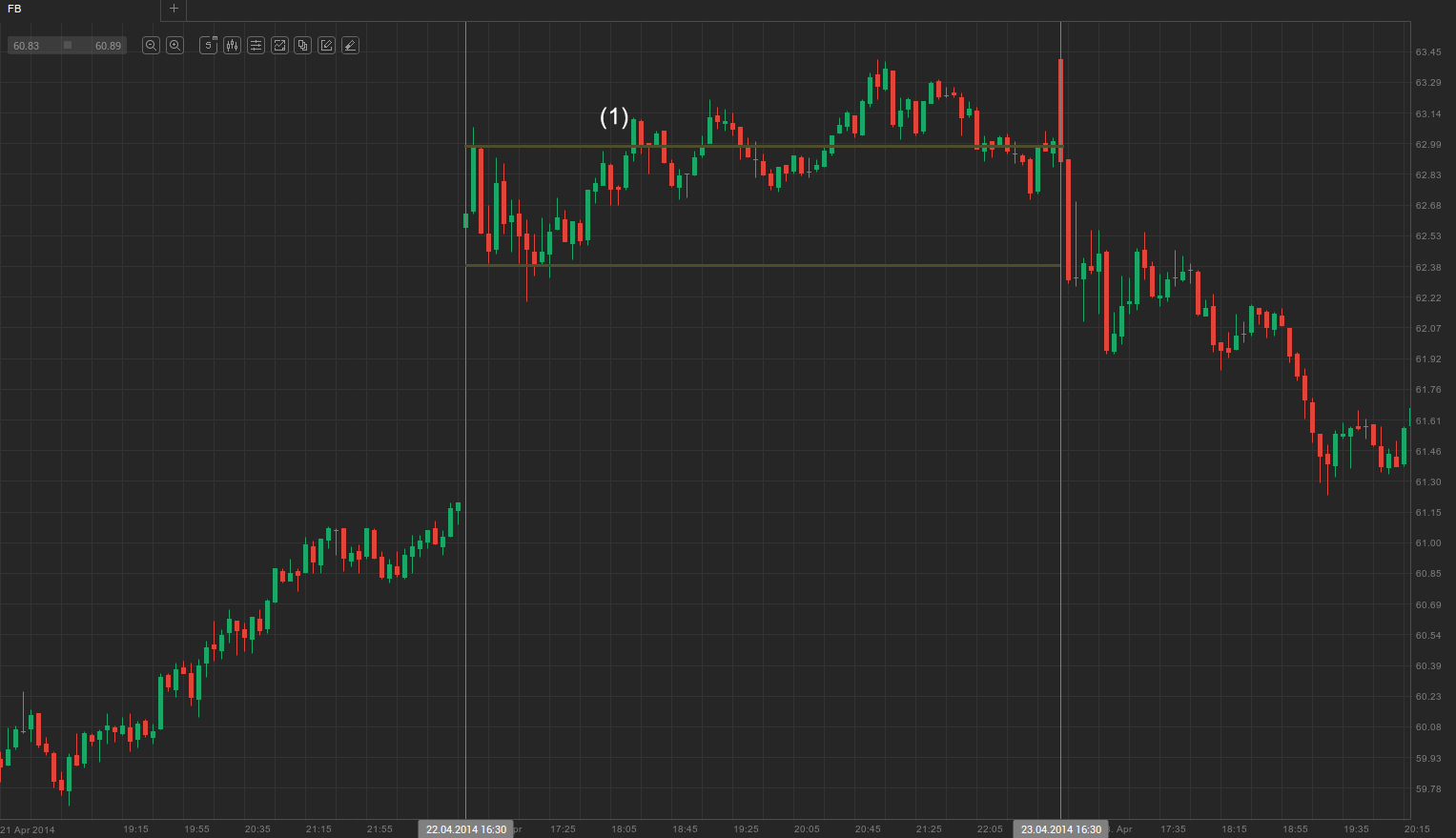
As you can see in the example shown above, there was a breakout through the bottom of the day’s initial trading range to a new daily low, before which the range was about half of the average daily range. After the breakout, the price attempted to edge lower two more times, but since there wasn’t enough selling pressure, it rebounded to test the range’s top boundary. It broke out above the initial trading range at (1), further expanding the day’s range, before returning into the trading range. A second new daily high formed later, followed by a pullback into the trading range, and then a third daily high was reached before the price pulled back. During the final trading hour, the market found itself within the same initial trading range, only to settle several cents higher after a two-bar reversal.
Typically, because there is no agreement on market direction during the day’s initial trading range and there are a number of entry possibilities, it doesn’t matter whether you go long or short. When determining your profit target, start with a modest objective; if the market does not pause in that area you can aim for a wider target, etc.

- Trade Forex
- Trade Crypto
- Trade Stocks
- Regulation: NFA
- Leverage: Day Margin
- Min Deposit: $100
Occasional trading range reversals
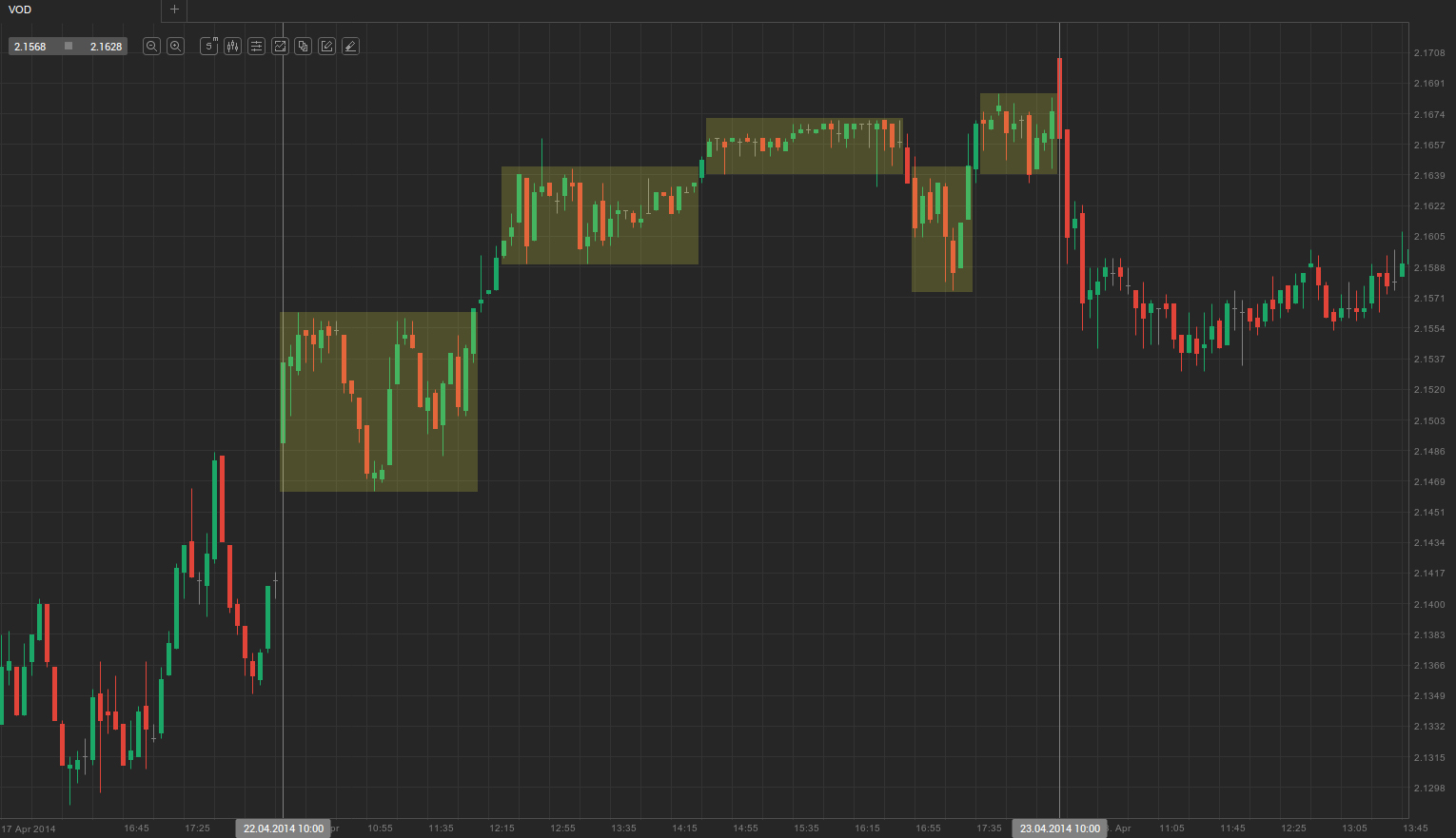
Another peculiarity of trending range days is that, because sideways trading has dominated the entire session, the market is often observed to reverse through at least one of the trading ranges in the last two hours of the day. This is due to the trading range vacuum effect. Such a scenario is illustrated in the screenshot below.
Late breakout
Sometimes the initial trading range continues throughout most of the day. Although it displays the characteristics of a typical opening trading range during a trending range day, the breakout does not occur until the final hour or two. Although there may not be enough time for the market to establish a higher or lower range, the move still fulfils the breakout setup of a trending range day anticipated by market participants. See the screenshot below.
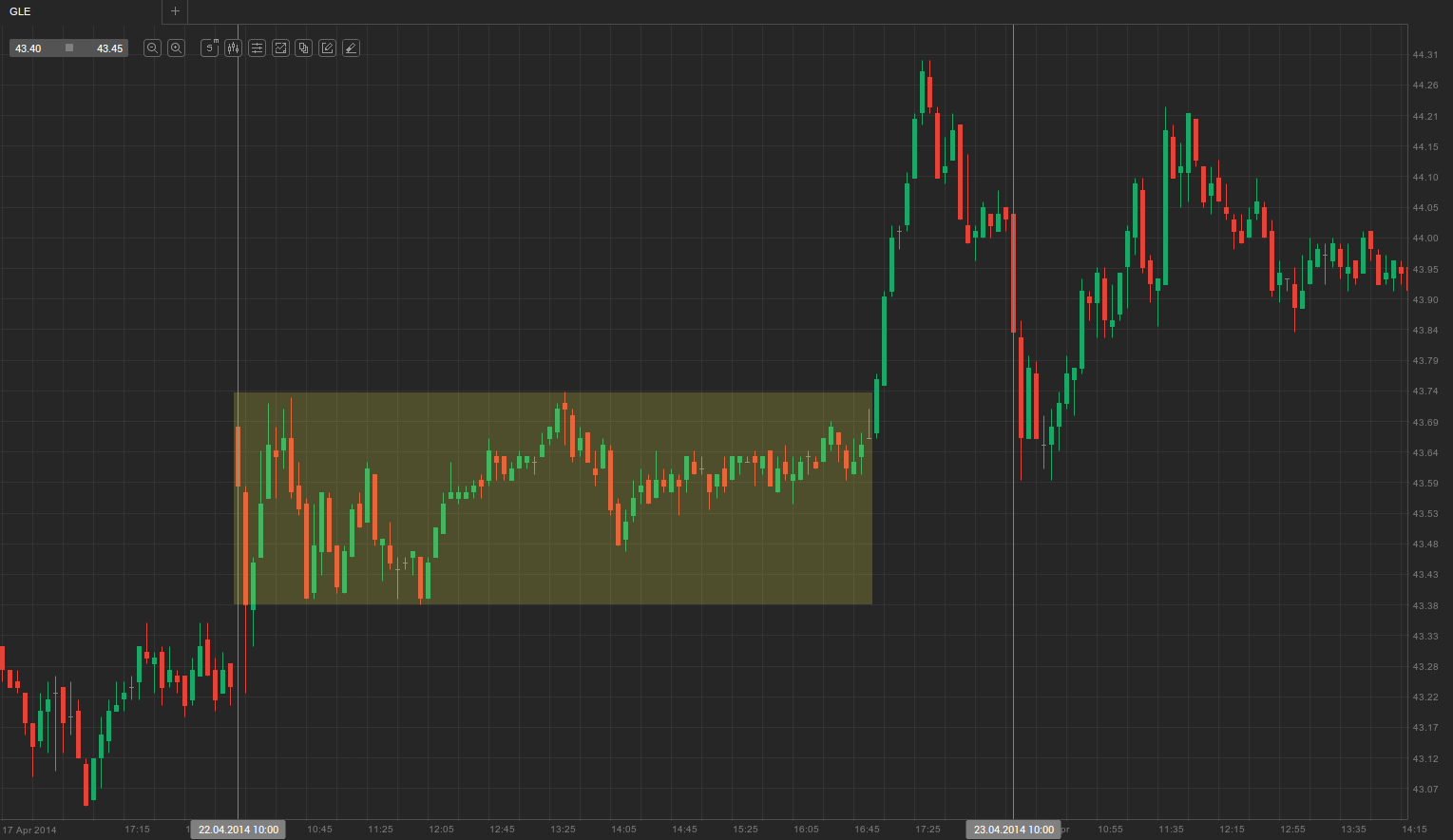
Because the market remained in a trading range about half the recent day’s average price fluctuation, traders expected a breakout, either up or down, to occur. The price tested the bottom of the trading range, including a couple of undershoots, after which it rebounded towards the upper half of the average range. There was a large number of bullish bars as bulls applied buying pressure, suggesting an upward breakout from the range was likely.
Sometimes, however, when the market breaks out from a trading range in the final hours of the session, it may enter another trading range that continues into the next day. As the next trading day begins, it may become a trending range day, the initial trading range of which was partially or fully formed the day before. Such a scenario is illustrated in the example below.