
Two-bar reversals
This lesson will cover the following
- Why two-bar reversals are important
- What two-bar reversals consist of
- Typical two-bar reversals
In previous articles, you were introduced to candles that indicate a shift in market momentum, known as reversal candles. Here, we will discuss reversals formed by two candlesticks.
Double-candle reversals are important because they are among the most common reversal setups and represent a scenario in which the market makes a strong move in one direction followed immediately by an equally strong move in the opposite direction. These moves have many variations and are present in nearly every reversal, which is why it is essential to identify them so you can place an order when a strong move is about to occur.
As you analyse bars, candles and other graphical representations of market movement, remember that each figure is composed of a number of smaller figures on lower time frames. Conversely, several such figures combine to form a single figure on a higher time frame. For example, a basic reversal candle on a higher chart may appear as a double-candle reversal on a lower time frame, and so on.
By extension, we can safely assume that every reversal candle, double-candle reversal and climactic reversal forms part of every trend reversal – you simply need to examine the different time frames. One of the most important skills to develop is recognising when a reversal is occurring and in what form it will appear.
Formation
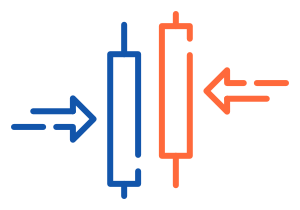 The perfect double-candle reversal consists of two consecutive trend bars that possess evenly sized bodies but move in opposite directions. A bullish reversal will start with a bear trend bar acting as a sell climax, followed immediately by a bull trend bar acting as a bull breakout. Conversely, a bear setup consists of a bull trend bar playing the role of a buy climax, followed by a bear trend bar of relatively equal size, which marks a downward breakout.
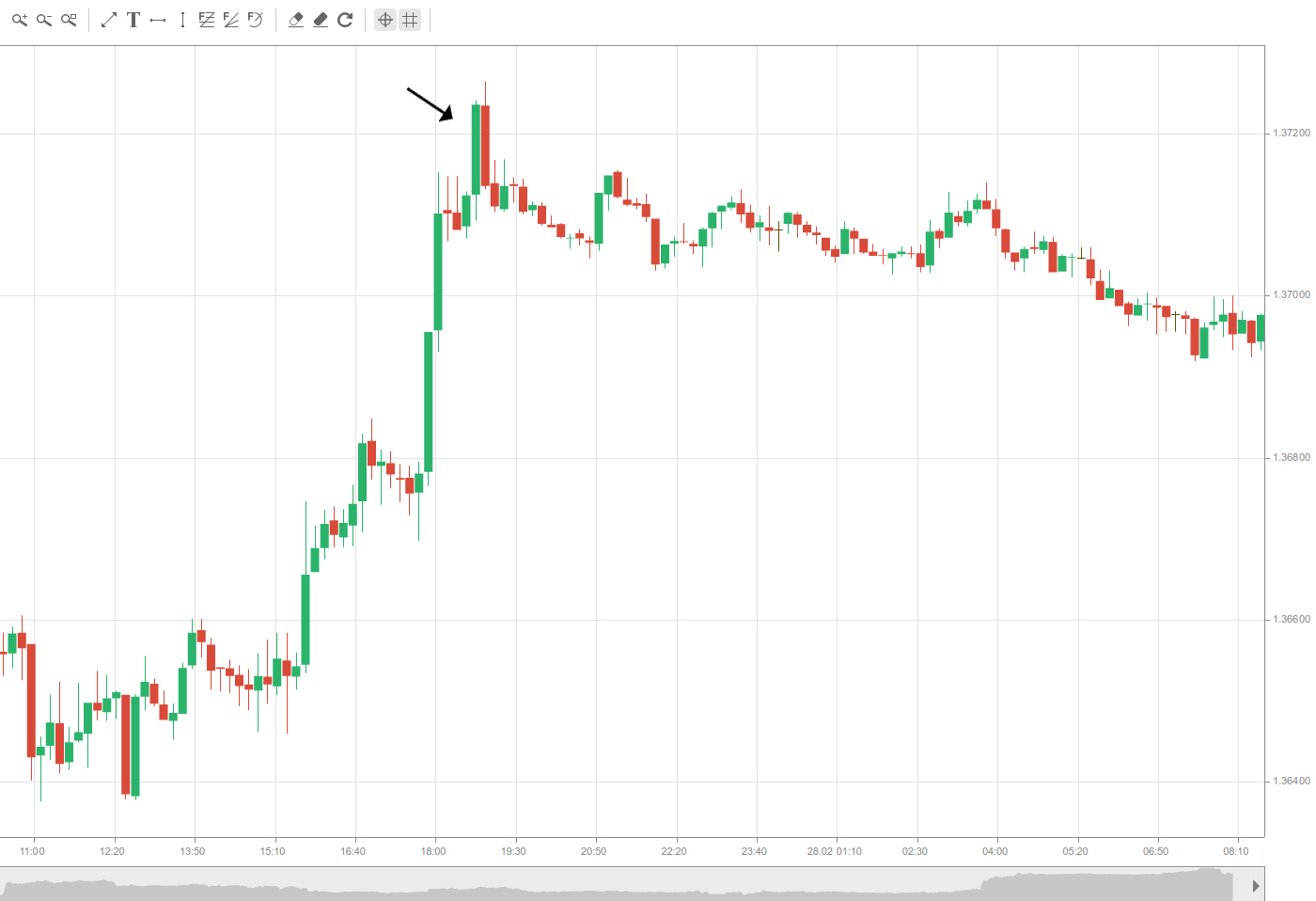
One question that may arise is the difference between a reversal candle and a double-candle reversal, given that the latter comprises a trend candle and a reversal candle. Generally, if the reversal candle is at least 75% the size of the previous trend candle, you should treat the setup as a double-candle reversal.

- Trade Forex
- Trade Crypto
- Trade Stocks
- Regulation: NFA
- Leverage: Day Margin
- Min Deposit: $100
Picture the following situation. Very often, when a bear reversal candle forms in an uptrend and its low doesn’t drop below the bull trend candle’s low, it creates a bear trap. This is because, when you interpret the single reversal candle, you compare the current price action only with it. On the next (entry) candle, the market often slips several pips below the reversal candle but not below the preceding bull-trend candle, and then rebounds to a new high.
However, if you regard the setup as a double-candle reversal, you will want the entry bar to drop below the lows of both candlesticks (the bull trend and the bear reversal) rather than just the latter, which increases your chance of success.
 Here is another piece of advice worth considering. If the bear reversal candle falls below the bull trend candle, you should regard it as an outside bar, even if its high does not exceed the trend candle’s high. If you want to go short and bet on that reversal, it would be better to wait for a pullback to a lower high before shorting. Selling at a much lower point raises the risk of finding yourself near a support zone such as the bottom of a trading range, which increases the probability of a rebound that could trap you.
Another approach is to wait for the market to fall to a new low and then short. When the reversal candle overlaps the trend candle by too much, they form a double-candle trading range whose breakout entry point should be beyond the entire range.
There is a specific setup in which a double-candle reversal usually fails, signalling you to trade with the trend. If a double-candle reversal overlaps one or more previous candles and touches the moving average, there is a good chance that the breakout will fail. For example, if you see a double-candle bullish reversal forming directly on the moving average and the setup overlaps some previous candles, you shouldn’t buy above the signal bar. Experienced traders are likely to short-scalp at or above the high of the bull signal candle because the market has entered a small trading range.
Double-candle reversals after a climax
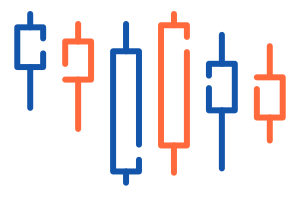
Double-candle reversals are particularly successful after a climax, especially after a steep drop that follows a series of climaxes, which suggests an unsustainable directional movement. The screenshot below illustrates such a scenario.
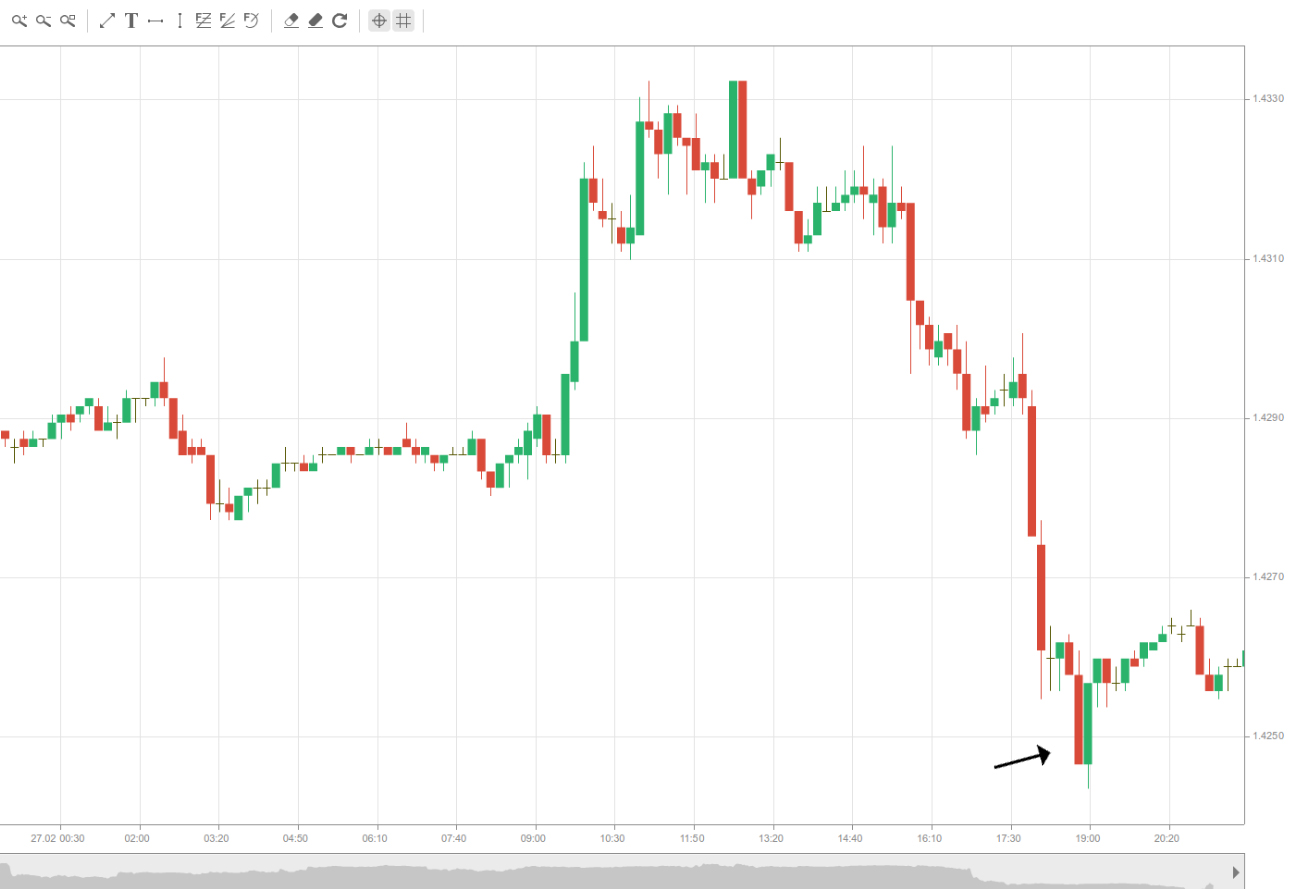
As shown in the example above, the market formed a two-bar reversal bottom after several sell climaxes, signalling an impending exhaustion of the bear trend. The highlighted bear trend bar was the first in the two-bar reversal pattern. Although it is usually risky to buy the first reversal attempt in a distinctly strong trend, the recurring signs of climactic behaviour and the very strong two-bar reversal should give you enough confidence to go long above the bull trend bar. Additionally, the formation draws strength from the fact that the bull trend bar closed at its high (shaved top), indicating that buyers were aggressively pushing the market up.