
 | Updated:
 Double bottom bull flags and double top bear flags
This lesson will cover the following
- Overview of these patterns
- How to trade these patterns
Overview
 When the market demonstrates a significant move of one or more legs, and especially if there is a single very strong move, it often trades sideways for a few bars before the trend resumes. This sideways movement may last for several hours and may feature large swings. The move usually starts and ends with spikes, while the extreme levels of these spikes can be close in price. The first spike is usually a key level because it causes the market to pull back. In this way, a trader can assess whether the pull-back is strong enough to avoid triggering the stops placed beyond the first spike. If the pull-back is indeed strong, it may provide a good setup to enter in the direction of the trend.
In an uptrend, two pull-backs create a double bottom bull flag. In such a case, the first bottom lures bulls to enter the market. When the price falls to that level again, the bulls may once more overpower the bears. Because the market has failed twice to move lower, it is likely to rise. In a downtrend, the two pull-backs create a double top bear flag.
These formations resemble the large pull-back to the start of the channel in spike plus channel trends, because this pull-back often forms a double top or double bottom flag.
Another possibility is that these formations represent the right shoulder of a head and shoulders reversal pattern. Experienced traders know that if the right shoulder fails, the pattern is not a reversal but a continuation. Such traders will therefore defend their entries to the exact pip or tick. The retest of the first extreme may undershoot or overshoot slightly, but this does not invalidate the pattern.
Trading double bottom bull flags and double top bear flags
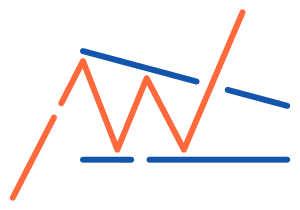 A bull flag gives a trader the opportunity to go long via a stop order placed one tick above the high of the bar that formed the second bottom. The protective stop should be set one tick below the low of that bar. Once the entry bar closes, the stop should be moved to one tick below the low of the entry bar.

- Trade Forex
- Trade Crypto
- Trade Stocks
- Regulation: NFA
- Leverage: Day Margin
- Min Deposit: $100
A bear flag gives a trader the opportunity to go short via a stop order placed one tick below the low of the bar that formed the second top. The protective stop should be set one tick above the high of that bar. Once the entry bar closes, the stop should be moved to one tick above the high of the entry bar.
Although double top and double bottom formations signify reversals, the flags within them can be used as setups for entries in the direction of the prevailing trend.
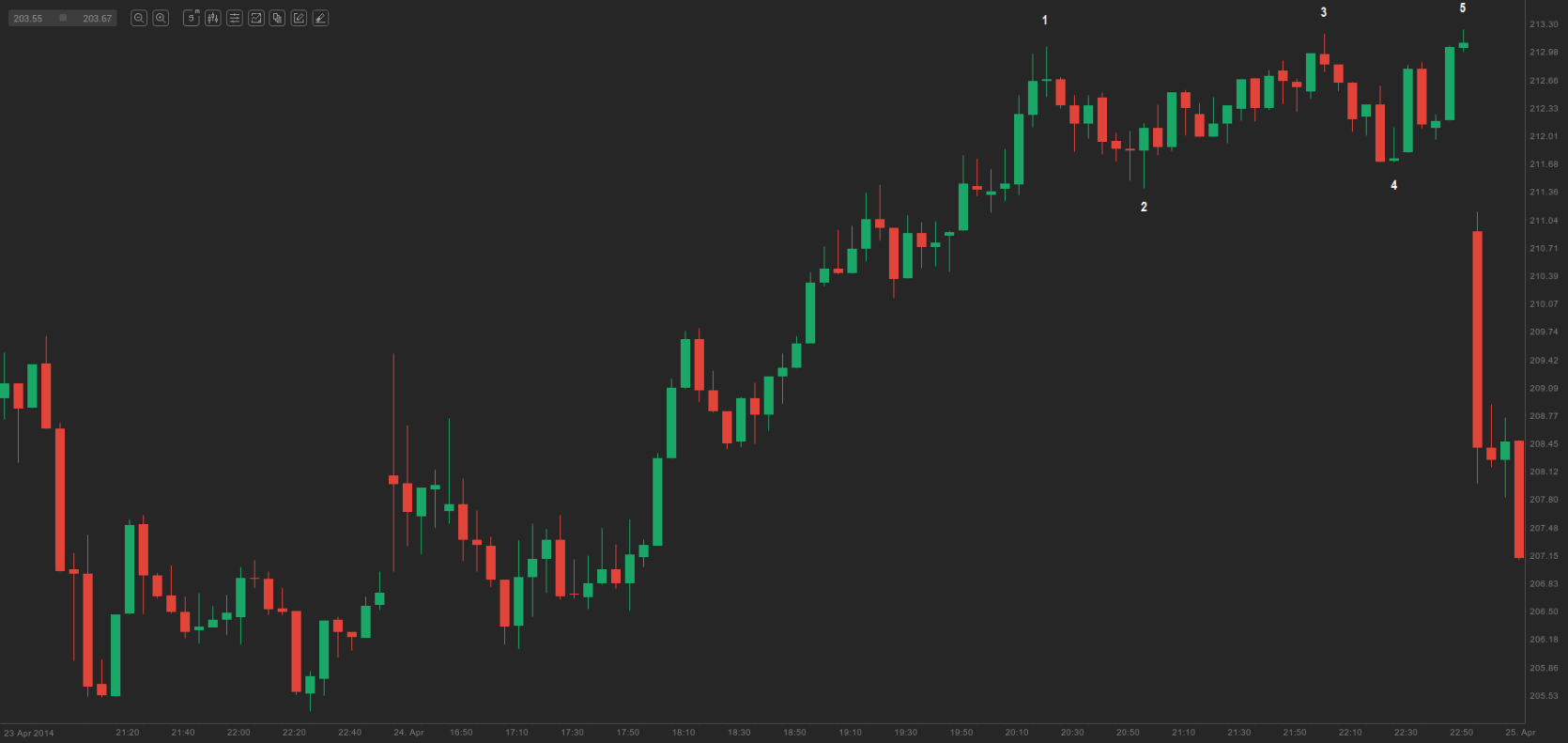
On the 5-minute chart of WYNN above, bar 2 and bar 4 formed a double bottom bull flag, while bar 3 produced a higher high. Bar 2 marked the last higher low in the uptrend, whereas bar 4 was the first swing low in the new downtrend. In any event, a double bottom bull flag offers a good opportunity for at least a scalp trade.
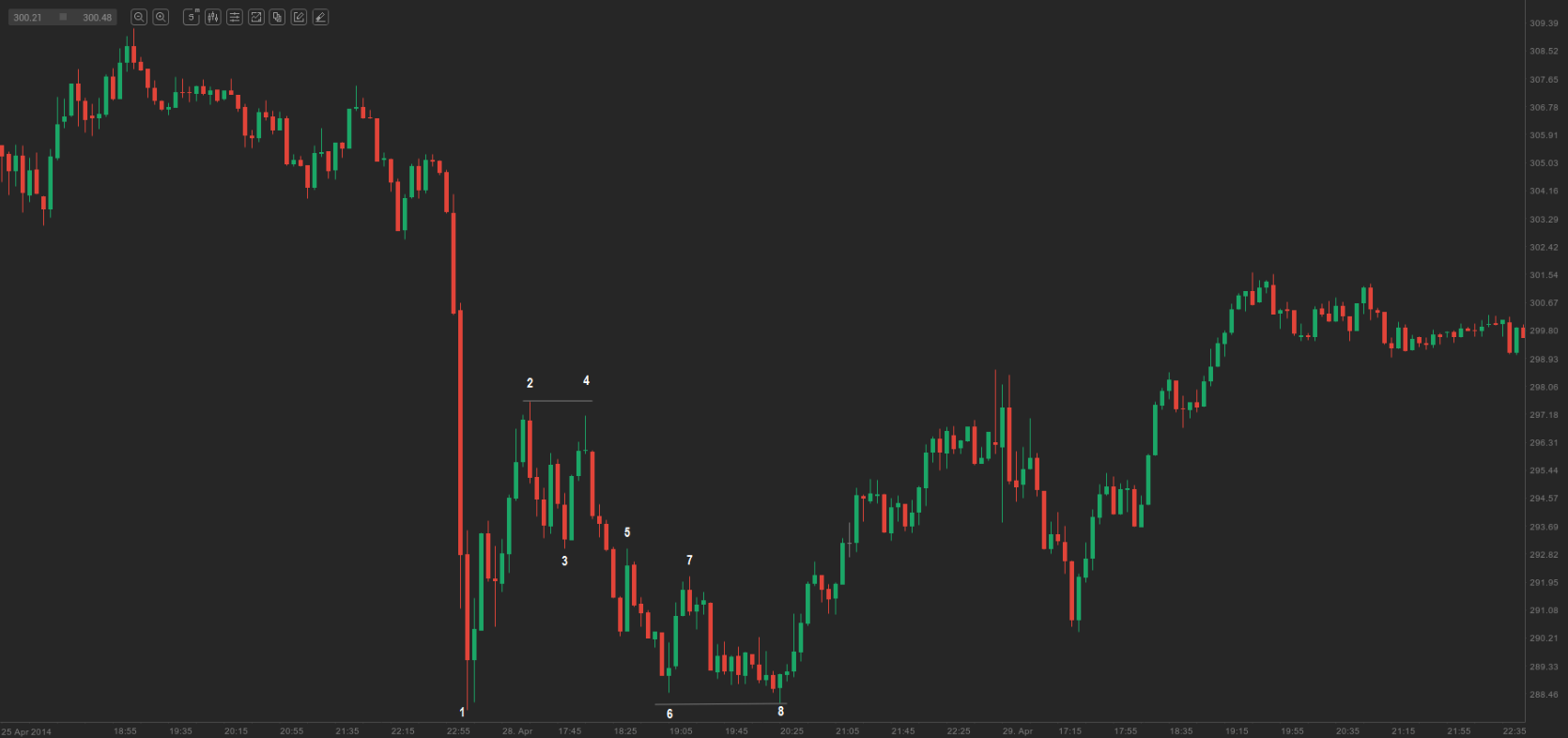
On the 5-minute chart of AMZN above, bar 6 and bar 8 formed a double bottom bull flag, while bar 2 and bar 4 formed a double top bear flag. Bars 4 and 6 undershot their first legs, showing that patterns are not always perfect. Had the double bottom bull flag appeared closer to the trend low (bar 1), the so-called spike plus trading range bull reversal setup would have been present. In our case, however, the double bottom bull flag was sufficient to prompt long entries. Likewise, the double top bear flag was enough to trigger short entries.