
 | Updated:
 Patterns including two candlesticks
This lesson will cover the following
- What are these patterns?
- What information can they present?
In the previous article you were introduced to various single candlestick patterns. Before we proceed to long-term chart patterns, we will acquaint you with the remaining popular short-term formations – double and triple candlestick patterns.
Double patterns
In the next few lines, we will cover the following double candlestick patterns – Engulfing, Dark Cloud Cover, Piercing Line, Tweezers and Harami.
Engulfing pattern
The engulfing pattern is a two-bar/candlestick formation which, particularly in its ideal form, is a very strong reversal signal. However, because the pattern is intended to indicate trend reversals, it logically requires the market to be trending in order to work. Therefore, during a trend, a bearish engulfing pattern signals that the market is at a peak and that a bearish move might follow, whereas a bullish engulfing pattern implies that the market has bottomed and a bullish trend may soon develop. Here is what they look like.
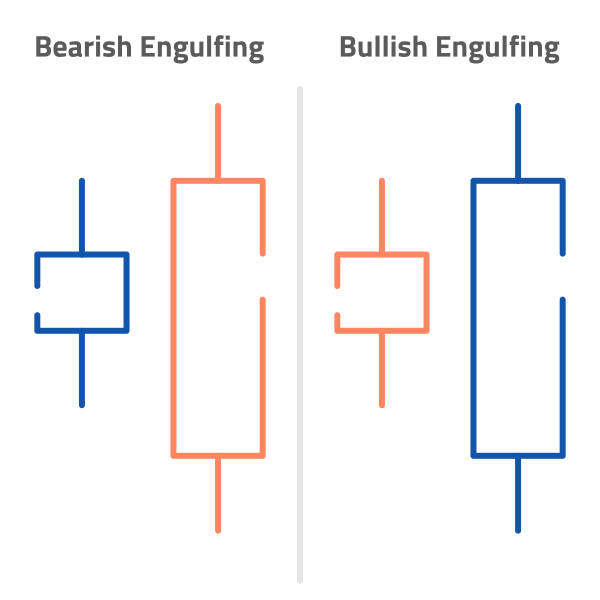
There are several criteria that need to be met for an engulfing pattern to be recognised:
1. As mentioned above, the market must be in a confirmed trend, whether long- or short-term. Sideways price action does not work for the engulfing pattern.
2. The two candles must be of opposite type, i.e. one should be bullish and the other bearish. For example, if the first candle is bearish, the second must be bullish and will complete a bullish engulfing pattern, and vice versa.
3. The body of the first candlestick / bar must be smaller than that of the second. It is not necessary for the second candlestick / bar to engulf the wick of the first, but its high-low range must at least equal, or preferably exceed, that of the first candlestick.
The ideal engulfing pattern requires that the body of the second candlestick engulfs the entire first candlestick, including its shadows. If the engulfing pattern forms after a Doji candlestick, it becomes even more powerful.
 The general rule is that the smaller the first candle and the larger the second, the stronger the engulfing pattern. The smaller the difference between the two, the weaker the signal. When both candles are almost equal, the pattern becomes largely irrelevant and may lead to sideways trading rather than a price reversal.
An engulfing pattern is considered to have failed if the market closes below the low of a bullish engulfing pattern or above the high of a bearish one. A close in the opposite direction confirms its success.

- Trade Forex
- Trade Crypto
- Trade Stocks
- Regulation: NFA
- Leverage: Day Margin
- Min Deposit: $100
Dark Cloud Cover and Piercing Line
Another double candlestick pattern signalling a trend reversal is the Dark Cloud Cover and its opposite – the Piercing Line.
The Dark Cloud Cover is a two-candle pattern that forms at a market top and signals a bearish reversal. The first candle is large and bullish, while the second is also large but bearish. The second candle should open above the upper wick of the first, thereby forming an upward gap, but the price should then move lower and close within the body of the first candle, preferably below the 50% level. The deeper the penetration, the stronger the pattern; a complete penetration becomes an engulfing pattern. See the picture below.
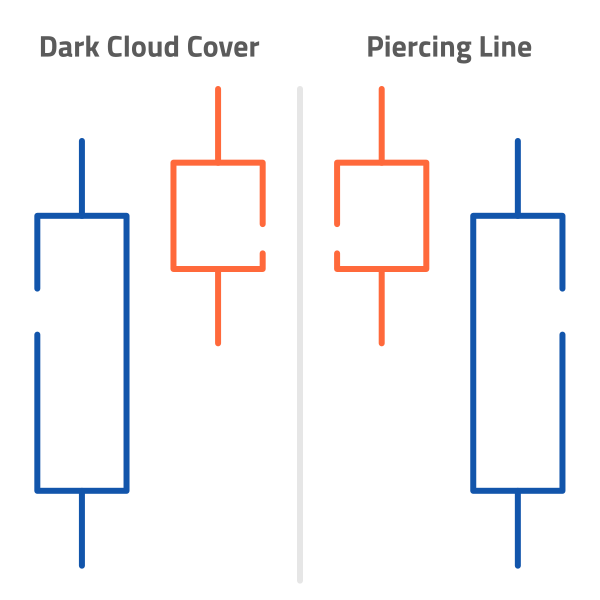
Essentially, the pattern illustrates a strong upward move, shown by the first large bullish candle, which initially continues into the second period, as evidenced by the upward gap between the two candlesticks. However, at that point the bears regain strength, overpower the bulls and push the price lower, closing it within the body of the previous candle.
The ideal Dark Cloud Cover requires that the second candle closes below the midpoint of the bullish candle’s body. However, in highly liquid markets such as Forex, the criteria can be more flexible. For example, the bearish candle may open above the close of the bullish one rather than its high, and its close may not penetrate as deeply. Nevertheless, if the second candle’s close does not reach at least the midpoint of the previous candle’s body, the pattern is deemed inconclusive.
The Piercing Line pattern is the opposite of the Dark Cloud Cover. It forms after a strong downward move and can signal that a support has been reached, providing an early indication that a retracement is due or even that a bullish trend may develop. All the rules for the Dark Cloud Cover apply to the Piercing Line pattern, but in reverse. Here is what it looks like.
Tweezers
Tweezers are another double candlestick pattern that signals a price reversal. As with the previous patterns, there are bearish and bullish versions, called Tweezer Tops and Tweezer Bottoms. The former suggest that an uptrend is coming to an end and are therefore bearish, while the latter suggest the opposite. Here is what they look like.
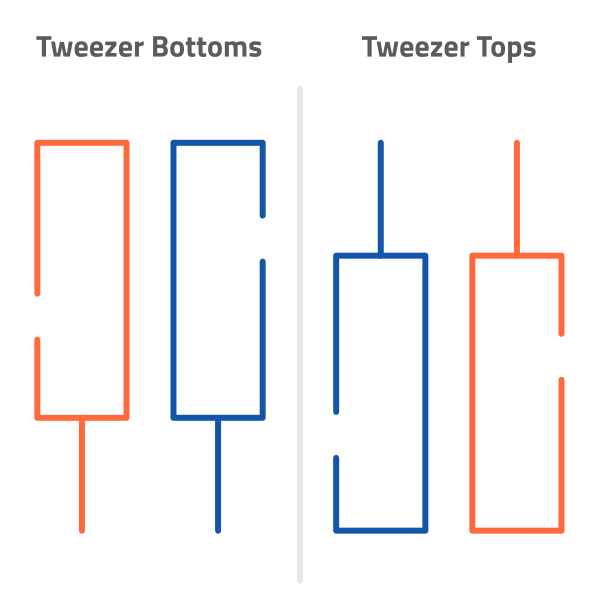
Tweezers are formed by two opposite candles, one bearish and one bullish, which have matching highs or lows. Like the previous two double-candle patterns, they require the market to be in a distinct short- or long-term trend.
Essentially, the pattern indicates that at the wick of the first candle in an uptrend, buyers were overpowered by sellers. The second candle’s shadow then shows another attempt by buyers to push the price higher, but the sellers have gained control of the market and, after two failed attempts by buyers, manage to drive the price lower.
 The general requirement for the formation of tweezers is that their highs or lows match, regardless of whether it is their bodies or their shadows that coincide. For example, you could have an engulfing pattern whose two candles share the same highs or lows – this would still qualify as a tweezer. Moreover, more than two candlesticks can participate in a tweezer formation, provided they all have matching highs or lows.
The ideal Tweezer formation assumes that the size, tops/bottoms and shadows of the two candles are very similar. The pattern is even more powerful when the candles are virtually identical.
There can also be variations. For example, the first candle does not necessarily have to align with the prevailing market direction (bullish in an uptrend or bearish in a downtrend), just as the second candle is not required to be opposite to the trend. However, if this is the case, the pattern becomes stronger.
The bodies of the two candles do not need to be the same size, and even the matching highs or lows may differ slightly, but the more precise the match, the higher the probability of a price reversal.
Harami
The Harami is another double candlestick pattern. It comprises a large candle of either colour followed by a small candle whose body is completely contained within the body of the previous candle. Here is what it looks like.
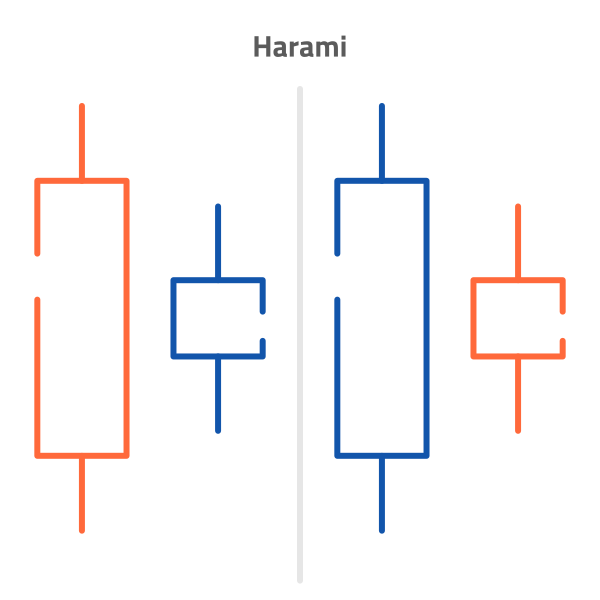
The second candle is called a spinning top and can be a Doji, Hanging Man, Shooting Star or a Hammer. The only requirement is that its body must be within the body of the first candle. The spinning top’s shadows do not necessarily need to fall within the range of the first candlestick; the relationship is body to body. Therefore, it is the open-close range, not the high-low, that determines whether the pattern plays out.
The Harami pattern can be interpreted in two ways. The small-bodied second candle indicates a fall in volatility which, in the short term, is often followed by a volatility spike and the emergence of a new trend. Consequently, the Harami can signal either a trend reversal or an acceleration of the current trend; it all depends on the direction in which the price breaks.