
 | Updated:
 Patterns including three candlesticks
This lesson will cover the following
- What are these patterns?
- What information do they carry?
In the previous two articles, we described some of the most common single and double candlestick patterns. This article will be devoted entirely to triple candlestick patterns and will cover the Evening and Morning Star patterns; Three Black Crows and Three White Soldiers; Three Inside Up and Three Inside Down; and Three Outside Up and Three Outside Down.
Evening Star and Morning Star
Evening Star and Morning Star, as you can guess, are two opposing patterns that aim to predict a trend reversal. We will describe all the peculiarities of the Evening Star pattern and leave the Morning Star aside, as it is identical but viewed from a bullish perspective. Both patterns are generally regarded as very reliable and have very few drawbacks.
The Evening Star is a bearish pattern that occurs at market tops and very often marks the end of an uptrend. It consists of three candles. The first is a solid bullish candle, followed by a small candle known as a “star” – this is where the pattern derives its name. The formation of the star implies an opening gap, just like the Dark Cloud Cover pattern; however, as the price then falls and its body forms, it should not cross the body of the first bullish candle. The middle candle can be either colour. See the picture below.
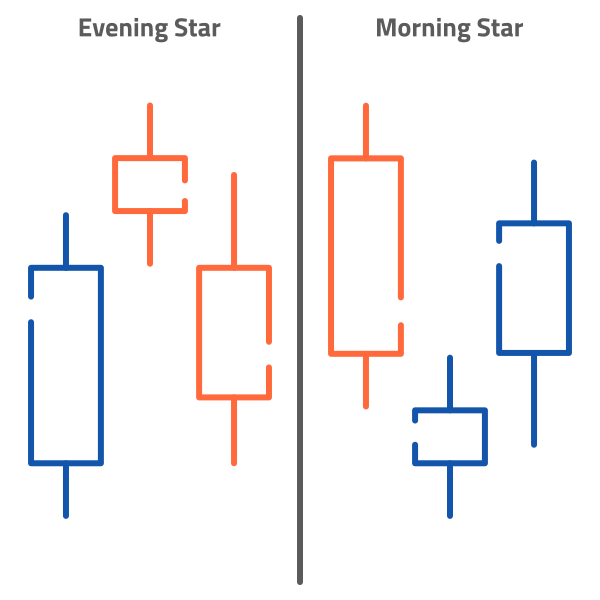
The middle candle can also be a Doji, and such a pattern is known as an Evening Doji Star. Even if it’s not a Doji, the middle candle is always similar to it, representing a sudden halt in market movement and a battle between bulls and bears.
For this pattern to play out, the third candle needs to be a solid bearish one, representing the victory the sellers achieved over the buyers during the plotting of the “star”. The third candle’s body should also not cross the star, which, however, rarely occurs and is not a mandatory condition for the pattern. The most important requirement, however, is that the bearish candle must deeply penetrate the body of the bullish one; the degree of penetration is the most significant factor – the third candle’s body should extend to at least 2/3, or even ¾, of the first one’s height.
The pattern is considered to have failed if the market closes above its high and is deemed triggered if it closes below the pattern’s low.
The interpretation is straightforward. We have a clear uptrend dominated by the buyers, as visualised by the first solid bullish candle. Suddenly a turnaround begins, with the “star” reflecting the buyers’ inability to push the price higher as bears regain strength and grow in number. The third candle (a solid bearish one) then marks the sellers’ victory.

- Trade Forex
- Trade Crypto
- Trade Stocks
- Regulation: NFA
- Leverage: Day Margin
- Min Deposit: $100
Three White Soldiers and Three Black Crows
As you can guess from their names, these are two opposite patterns, each of which consists of three identically coloured candles. They serve as reversal patterns, with the Three White Soldiers indicating a bullish reversal, while the Three Black Crows signal a bearish one. We will discuss the Three White Soldiers and skip the Crows, because they are identical to the Soldiers but from a bearish point of view. Here is what the Three White Soldiers pattern looks like.
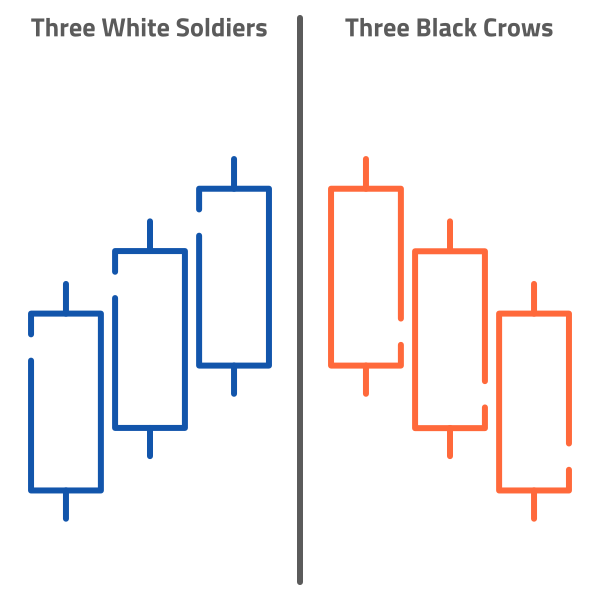
The Three White Soldiers pattern comprises three consecutive bullish candles of similar size, which form after a downtrend. Preferably, the second candle should be larger than the first and the third should be at least the size of the second. This is important because if the third candle is significantly smaller than the previous two, it would indicate that the bulls are not in complete control of the market. Such weakness could prevent a trend reversal.
You should be cautious with over-extended bodies, because the market could become overbought or oversold, which can lead to a correction.
The candles are preferably long and have small or almost no upper shadows, which means they close at or near their highs. Generally, you don’t need to look for perfect wick-less candles (Marubozu), but if the shadows are too long and even equal to or exceed the length of one of the bodies, you should remain wary, as the bears are still fighting.
The candles should open within the body of the previous candle or at its high.
Drawback
 However, one distinct drawback of the Three White Soldiers pattern is that its recognition requires time, which means that a large portion of the newly formed and confirmed trend has already unfolded. Many professional traders consider the second candle to be the best entry spot and believe it’s best played on a pullback or throwback.
The pattern is regarded as stronger if the opens of the second and third candles coincide with the closes of the preceding candles (the first and second). It will also carry more weight if it occurs not immediately after a long downtrend but following a sideways consolidation that separates the downtrend from the pattern.
Three Inside Up and Three Inside Down
These two opposite patterns are also of a reversal nature. The “Up” pattern is bullish and occurs at market bottoms, while the “Down” pattern is bearish and forms at peaks. We will discuss the Up pattern and skip the Down because they are the same apart from the bullish/bearish perspective.
The Three Inside Up pattern forms at the end of a downtrend, often coinciding with a support level. However, it does not necessarily indicate that a reversal is about to happen; it can also precede merely a pause or retracement.
The first candle has a large bearish body, while the second, smaller candle is a bullish spinning top or a Doji, forming a Harami pattern. The smaller candle should close at least at the midpoint of the previous one’s body.
After that, a third bullish candlestick breaks upward and closes above the body of the first large bearish candle. The signal would be even stronger if it closes above the high of the first candle. Here is how it looks.
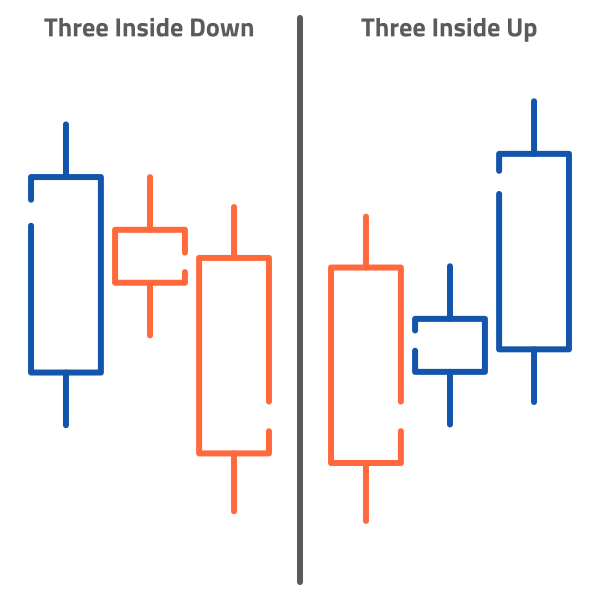
This pattern is considered one of the most powerful triple candlestick patterns. It is very similar to the Evening and Morning Stars, but it is even stronger because the middle candle has not managed to score a new high or low before the opposing counterpart (bears or bulls) takes control. Moreover, by the beginning of the third period, the new masters are already in complete dominance and have pushed the price even further, compared with the movement in the Evening and Morning Stars, where we needed the third candle to have penetrated 2/3 or 3/4 of the first candle’s height.
Three Outside Up and Three Outside Down
The Three Outside Up and Down are another set of trend-reversal patterns, consisting of three candlesticks, with the Up being the bullish and the Down the bearish one.
The Three Outside Up pattern occurs at market bottoms. Its first candle is a bearish (matching the recent price movement) spinning top, while the second candle is large, bullish and engulfs the first one. You can see it illustrated below.
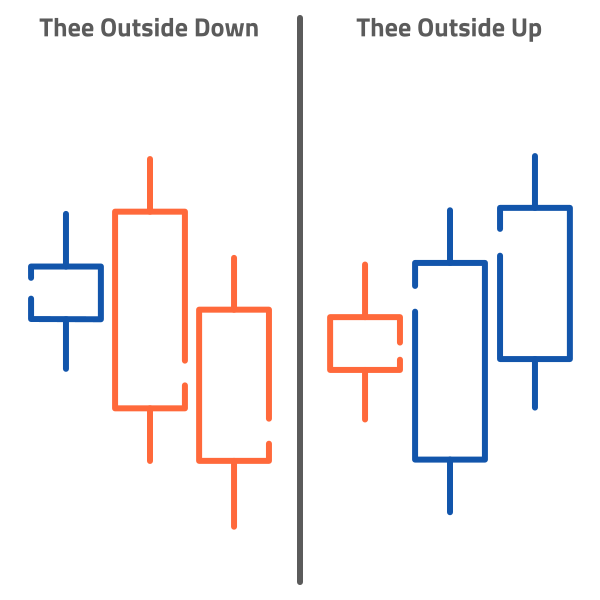
Just as the Three Inside Up pattern starts with a Harami, the Three Outside Up begins with an Engulfing. The pattern is then completed with the plotting of a third bullish candle, which closes above the second one and hits a new high that extends above the Engulfing pattern’s high.
Generally, this pattern is considered less reliable than the rest because outside candles/bars are less predictable and less profitable than inside ones, like the Morning and Evening Stars and Three Inside Up and Down. This is because volatility has already risen at the beginning of the pattern (after the first candle) and is likely to contract much sooner than in the other patterns.