
Economic Sentiment
This lesson will cover the following
- Why does sentiment matter?
- Consumer Confidence
- How does it affect Forex trading?
- University of Michigan Confidence
- ZEW Economic Sentiment
Business or economic sentiment is measured by indicators that reflect the optimism or pessimism that business managers or households feel regarding the economic outlook of a country or region. It also provides an overview of how people foresee the economy. Three of the most important economic sentiment indicators will be discussed in this article.
Consumer Confidence
 The Conference Board research group publishes this indicator on a monthly basis. Consumer Confidence represents a composite index based on the results of a survey of almost 5,000 households in the United States. Participants are asked about the current and future economic conditions in the country, business conditions and the availability of work opportunities.
Consumer Confidence gauges the optimism of the average US consumer regarding economic conditions. Traders who use fundamental analysis look at the confidence index readings in an attempt to determine the probability of increased consumer spending. This is because, as mentioned earlier in the guide, consumer spending is indicative of the future pace of economic growth.
On the other hand, Forex traders, small businesses, large transnational organisations, including banks, manufacturers and retailers, as well as the United States government, monitor the survey results to inform their decisions on production, interest rates, lending rates and tax policies.
How does it affect Forex trading?
 The consumer confidence survey belongs to the group of economic indicators that measure financial confidence among consumers. The more confidence in economic conditions consumers have, the more inclined they will be to spend money, which in turn stimulates the economy.
Although Consumer Confidence is measured and reported in other countries, affecting their local currencies, the US CB Consumer Confidence reading exerts the greatest influence on fundamental analysis of the Forex market, primarily because of its impact on the US dollar. For its part, the greenback holds the status of the world’s reserve currency and is included in most currency pairs.
 Better-than-expected survey results usually signal that consumer optimism has strengthened, which may lead to higher spending in the country. These better results tend to provide support to the US dollar against its peers worldwide.
However, a reading that falls short of expectations tends to put selling pressure on the US dollar because it implies possible future economic weakness resulting from lower consumer spending (as confidence has weakened).
Additionally, consumer confidence provides clues as to how the public assesses its ability to obtain employment and how income will be spent. If the indicator declines, it may suggest that consumers will refrain from making large, expensive purchases, which in turn could hit manufacturers of luxury goods, such as automobiles.
Banks and governments could also be affected by reduced confidence. Lending activity may diminish and the number of mortgage applications may drop. Central banks may feel compelled to cut their benchmark interest rates, while governments may introduce tax rebates to spur economic activity.

- Trade Forex
- Trade Crypto
- Trade Stocks
- Regulation: NFA
- Leverage: Day Margin
- Min Deposit: $100
University of Michigan Confidence
 It assesses consumer confidence regarding personal finances, business conditions and purchasing power, based on hundreds of telephone surveys. Especially valued for its quick turnaround, the University of Michigan Confidence survey is considered one of the most important indicators of US consumer sentiment. The survey polls a smaller sample of consumers and is less established than the Conference Board Consumer Confidence Index.
Declining consumer confidence levels usually accompany any decline in income or wages and precede drops in consumer spending. A low or falling sentiment value is considered an early indicator of an economic downturn. As a result, investors, retailers and traders alike watch the figure for insight into the general health of the economy.
Michigan Confidence (Preliminary)
 The University releases an early assessment called the Preliminary Michigan Confidence reading. This preliminary figure incorporates approximately 60% of the responses included in the final reading and is revised at the end of the month. The preliminary results are not intended for wide release but are regularly leaked to the press and often available to the financial community.
The following graph illustrates the effect of the Michigan Confidence data release on the EUR/USD pair. As you can see, the release at 13:55 GMT triggers an upward movement, which means the USD is depreciating because the Michigan Confidence reading of 75.2 disappointed relative to the forecast of 77.
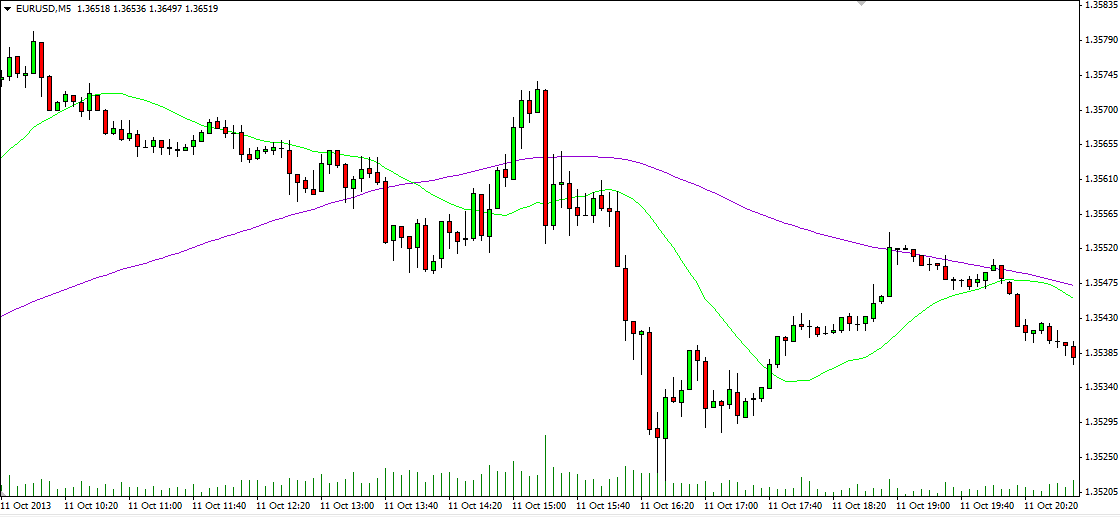
Source: MetaTrader 4 by MetaQuotes Software Corp.
ZEW Economic Sentiment
 It is a monthly economic survey. The ZEW Economic Sentiment is a compilation of the sentiments of approximately 350 economists and analysts regarding the economic future of Germany for the next six months. The survey shows the balance between analysts who are optimistic about Germany’s economic future and those who are not.
The ZEW Economic Sentiment survey also covers economic expectations for several other countries. It includes analyst opinions for the Eurozone, France, Italy, Japan, Great Britain and the US. An index value greater than zero indicates optimism, while a value below zero indicates pessimism.