Key Moments
- EUR/USD traded around 1.1230 in early European dealings on Monday as selling pressure persisted.
- Fiscal and political strains in Europe kept the Euro under pressure, while reduced Fed hike expectations limited losses.
- Technical picture stayed bearish below the 100-day SMA, with initial support at 1.1151 and resistance near 1.1270.
Euro Under Pressure Amid European Political and Fiscal Concerns
EUR/USD was weaker around 1.1230 in early European trade on Monday, with the pair remaining in negative territory. Concerns over France’s fiscal outlook and broader political instability across Europe continued to weigh on the Euro (EUR) against the US Dollar (USD). Market participants were also awaiting remarks from European Central Bank (ECB) Executive Board member Frank Elderson later in the day.
France experienced the largest of several demonstrations reported across the region, with Belgium, Italy and Portugal also seeing disruptions. According to the Guardian, young people have been taking to the streets to protest about dissatisfaction with the state of schools and the broader cost-of-living crisis. The expansion of these protests has the potential to add further downward pressure on the common currency in the near term.
Fed Outlook Tempers Euro Losses
On the U.S. side, waning expectations for additional Federal Reserve (Fed) rate hikes offered some support to EUR/USD and helped curb more pronounced downside moves. Fed Chair Kevin Warsh expressed confidence in the strength of the U.S. economy but did not provide specific guidance on the future path of interest rates.
Data from the CME FedWatch Tool showed that markets were assigning an 83.9% probability that the Fed would leave rates unchanged later this month, up sharply from 49% a month earlier.
Scotiabank: Euro Sensitivity to Spreads and Policy Outlook
Strategists at Scotiabank noted that the Euro’s reaction to bond market movements has been inconsistent, stating that “the EUR’s relationship with Eurozone sovereign spreads tends to be episodic and other factors appear to be a more significant influence on FX currently.” They pointed out that Fed Chair Warsh’s “dovish by omission comments on the policy outlook earlier have allowed for a minor narrowing in front-end EZ/US spreads and lifted the EUR.”
On the policy front, Scotiabank argued that “at the margin, OAT tensions help tilt ECB risks away from hiking at the end of the month but are unlikely to influence the December decision (a 25bps hike is all but fully priced in).” The bank also stated that “we estimate EURUSD fair value at 1.1285.”
Scotiabank Technical View: Potential for Bullish Weekly Reversal
From a technical standpoint, Scotiabank characterized the broader setup as “bullish,” citing “a solid rebound from long-term retracement support in the low 1.11s (50% retracement of the EUR’s 2025/26 rally from the 1.01 area) earlier this week and gains through noted resistance at 1.1240/50” that “are setting the EUR up for a potentially bullish weekly reversal.”
The analysts cautioned that this constructive backdrop depends on the Euro holding its late-week gains into the close, adding that “this will be contingent the EUR sustaining late week gains through the close of business today,” with “intraday support is 1.1245/50” flagged as an important short-term level.
Warsh Speech: Growth, AI Risks and Policy Uncertainty
Fed Chair Warsh delivered a cautious but generally positive assessment, earning a 5.6/10 rating on the FXS Speechtracker, below the 6.1/10 historical average and indicating slightly softer conviction relative to prior benchmarks. His remark about being “over-scarred from the global financial crisis” underscored an ongoing preference for caution, even as he pointed to a structural upswing in growth and investment fueled by “good policies.” By declining to pre-commit on outcomes for the October and December meetings, Warsh left the Dollar sensitive to upcoming economic data.
Warsh also stressed that AI is likely to affect the demand side of the economy before the supply side, noting unclear short-term implications for employment. This framing highlighted upside risks to growth and inflation that could, depending on incoming figures, support a more forceful policy stance.
The FXS Fed Sentiment Index was unchanged following the speech, with a 0.00-point move keeping the index at 127.51, a level described as firmly hawkish despite the slightly softer FXS Speechtracker reading. The persistently elevated index suggested that markets viewed Warsh’s caution, along with his focus on financial stability and AI-related tail risks, as consistent with a Fed still inclined toward restrictive policy rather than preparing for an imminent pivot.
EUR/USD Technical Picture: Bias Stays Negative Below 100-Day SMA
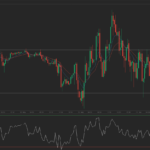
On the daily chart, EUR/USD maintained a bearish short-term bias while trading below the 100-day Simple Moving Average (SMA) and the 20-day middle line of the Bollinger Bands. The pair was tracking the lower half of the Bollinger envelope, with the 14-period Relative Strength Index (RSI) hovering near 40. This configuration pointed to subdued, but not extreme, downside momentum that continued to favor sellers as long as prices remained restrained by overhead moving averages.
| Level | Type | Description |
|---|---|---|
| 1.1151 | Support | October 15 low |
| 1.1105 | Support | Lower limit of Bollinger Band |
| 1.1050 | Support | May 21, 2025 low |
| 1.1270 | Resistance | 20-day middle Bollinger Band |
| 1.1353 | Resistance | July 28 low |
| 1.1440 | Resistance | Upper boundary of Bollinger Band |
| 1.1465 | Resistance | 100-day Simple Moving Average |
On the downside, the first notable support level was identified at the October 15 low of 1.1151, followed by the lower Bollinger Band boundary near 1.1105. A decisive move beneath that zone would expose the May 21, 2025 low at 1.1050.
On the topside, initial resistance was located at the 20-day middle Bollinger Band around 1.1270. Above that, additional hurdles appeared at the July 28 low of 1.1353 and then at the upper Bollinger Band near 1.1440, ahead of the 100-day SMA at 1.1465. Collectively, these upper levels were described as forming a broader supply area.
 TradingPedia.com is a financial media specialized in providing daily news and education covering Forex, equities and commodities. Our academies for traders cover