
 | Updated:
 Volume in trading – explanation and interpretation
You will learn about the following concepts
- What is volume and how is it visualised?
- How to interpret volume?
- High volume and low volume
What is volume and how is it visualised?
 Volume represents the number of shares, futures or options contracts that are traded during a given period, most often a day. The higher the volume, the more active the instrument being traded. Each unit of volume in any market reflects the actions of two parties: one trader buys a particular share or contract while another sells it.
It can be displayed on a price chart in many ways. Some traders prefer to examine volume separately from price action, while others integrate volume statistics into the price chart. Volume is usually visualised as vertical bars at the bottom of any chart. These bars show the total volume for a specific period. If we trade using daily charts, each volume bar represents the volume for the corresponding trading day. Changes in volume reflect how buyers and sellers react to price changes and indicate whether a trend is likely to continue or reverse. Comparing volume in two different markets reveals which one is more liquid. Slippage in liquid markets is usually much lower than in low-volume markets.

- Trade Forex
- Trade Crypto
- Trade Stocks
- Regulation: NFA
- Leverage: Day Margin
- Min Deposit: $100
Volume is usually measured in one of the following three ways:
First, the exact number of shares, futures or options contracts traded. This is how the New York Stock Exchange (NYSE) reports volume;
Second, the exact number of trades executed. This is how the London Stock Exchange (LSE) reports volume. However, this method does not differentiate between a trade of 150 shares and one of 1,500 shares;
Third, tick volume represents the number of price changes during a specific period, for example 1 hour. Most changes equal one tick. Day traders use tick volume as a proxy for intraday volume.
How to interpret volume?
When volume is falling, it indicates that the number of traders holding losing positions is decreasing and the trend is about to reverse.
 When volume is extremely high, it can also signal that the trend is nearing its end. It suggests that many traders with losing positions are bailing out. A common scenario is a trader who has held a losing position for too long; when the loss becomes intolerable, they exit the market. Once they get out, the trend reverses and prices move in the direction they originally expected. This happens because inexperienced traders react similarly to stressful situations and bail out almost simultaneously. Professional traders, on the other hand, exit losing positions quickly and either reverse their positions or wait for a suitable opportunity to re-enter.
When trading is range-bound, volume usually remains low because traders are indecisive about market direction. The eventual breakout from the trading range is typically accompanied by a sharp increase in volume as losing traders rush to exit. If the breakout occurs on low volume, it signifies that traders show little emotional commitment to the new trend and the market is likely to return to the range.
When volume rises during a market rally, it implies that an increasing number of buyers and sellers are being drawn into the market. Bulls are anxious to go long, even if they have to pay a higher price, and bears are eager to sell to them. Increasing volume also indicates that traders exiting with losses are being replaced by others who may suffer the same fate.
When volume decreases during a market rally, it implies that buyers are becoming less eager to act while sellers are no longer looking to cover. Experienced sellers have already left the market, followed by smaller sellers who cannot afford further losses. Falling volume shows that there is no more fuel to sustain the bull trend and a reversal is probably close.
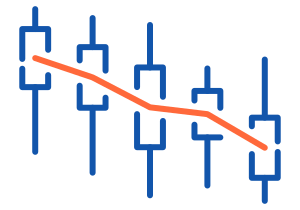 When volume dries up during a downtrend, it implies that sellers are less anxious to go short while buyers are no longer looking to exit the market. Experienced buyers have already closed their positions and smaller buyers have been flushed out. Lower volume also indicates that the remaining buyers probably have a higher tolerance for losses, perhaps because they went long later in the move. Declining volume outlines an area where the bear trend may reverse.
High volume and low volume
For any market, if volume is 25% or more higher than the average volume during the past two weeks, it is considered ‘high volume’. If volume is 25% or more lower than the average volume over the same period, it is considered ‘low volume’.
High volume provides confirmation that a trend is still active. If the market reaches a new peak and volume increases to a new high, it is likely that the market will test or surpass that peak again.
If the market reaches a new bottom and volume spikes to a new high, it is likely that the market will test or surpass that bottom. A climax low is usually retested when volume is low, giving a trader the opportunity to go long.
If volume declines while the trend continues, this trend is probably set for a reversal. If the market reaches a new peak on lower volume than the previous peak, a trader will usually look for an opportunity to go short.
Volume during reactions against the underlying trend also needs to be examined. When a bull trend is followed by a drop, volume usually increases as market players take profits. If the drop in prices continues but volume also falls, this indicates that buyers are no longer active or that selling pressure is exhausted. When volume dries up, the market reaction is almost over and the bull trend is poised to resume, giving a trader an opportunity to go long.