| Updated:
 Forex trading strategy – a combination of RSI, EMA and candlestick setups
You will learn about the following concepts
- Indicators used with this strategy
- Signals to look for
- Entry point
- Stop-loss
- Profit target
This strategy can be applied to any time frame. Let us examine a 1-hour chart of USD/JPY. We will use the following indicators: a 5-period Exponential Moving Average (EMA) (yellow on the chart below); a 12-period EMA (green); the Relative Strength Index (RSI) set to 21, with overbought and oversold levels at 70 and 30 respectively; and candlestick patterns such as Hammer, Hanging Man, Inverted Hammer, Shooting Star and a Bullish or Bearish Engulfing formation.
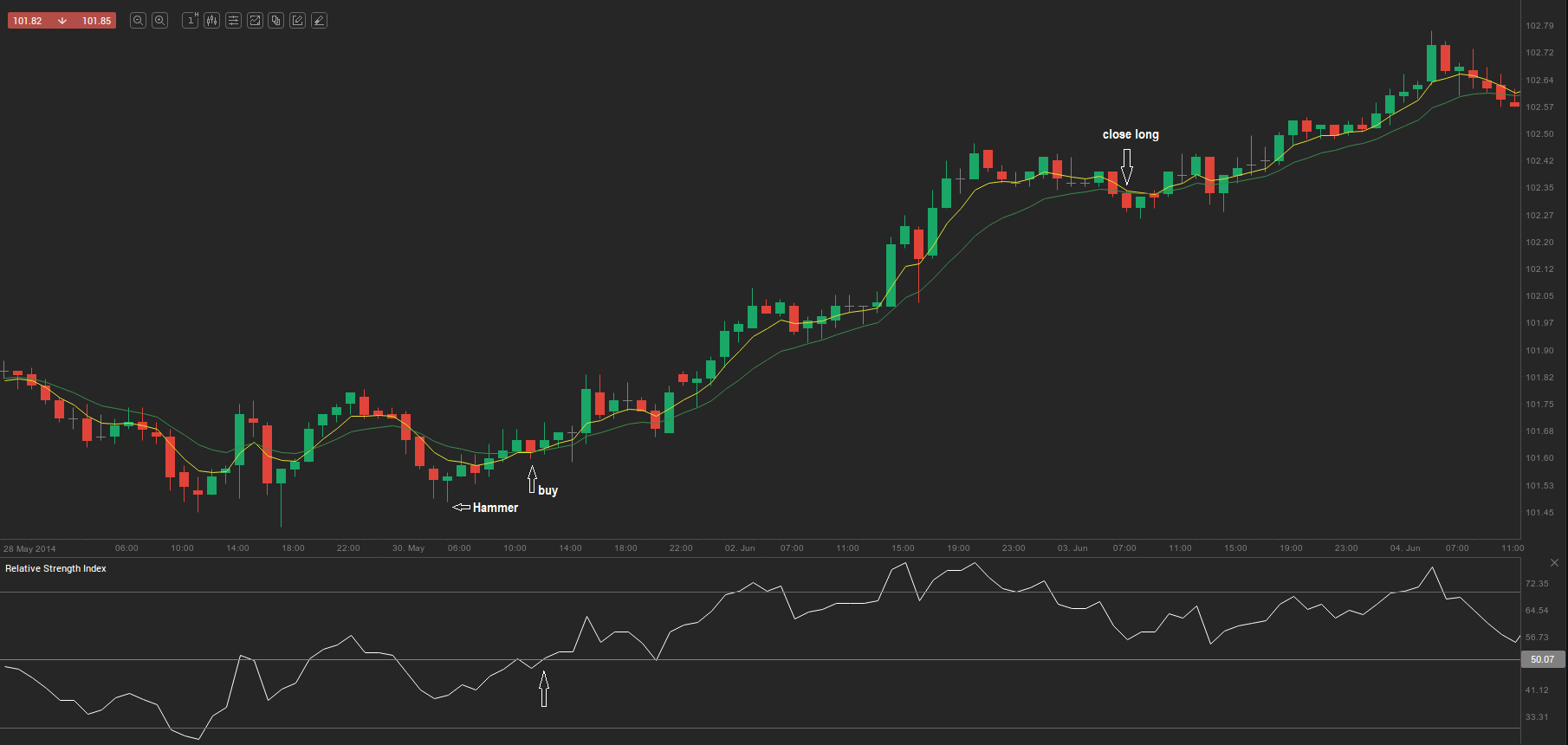
A trader should go long when, first, the 5-period EMA crosses above the 12-period EMA while the RSI is above 50.00, and second, a candlestick pattern such as a Hammer or Bullish Engulfing formation confirms the upward move. The protective stop should be placed at the nearest support level.

- Trade Forex
- Trade Crypto
- Trade Stocks
- Regulation: NFA
- Leverage: Day Margin
- Min Deposit: $100
The long position should be closed when the 5-period EMA crosses below the 12-period EMA, the RSI falls below 50.00, the market reaches and stalls at a major level of resistance, trend line or other significant level, or when a Shooting Star or Bearish Engulfing formation appears.
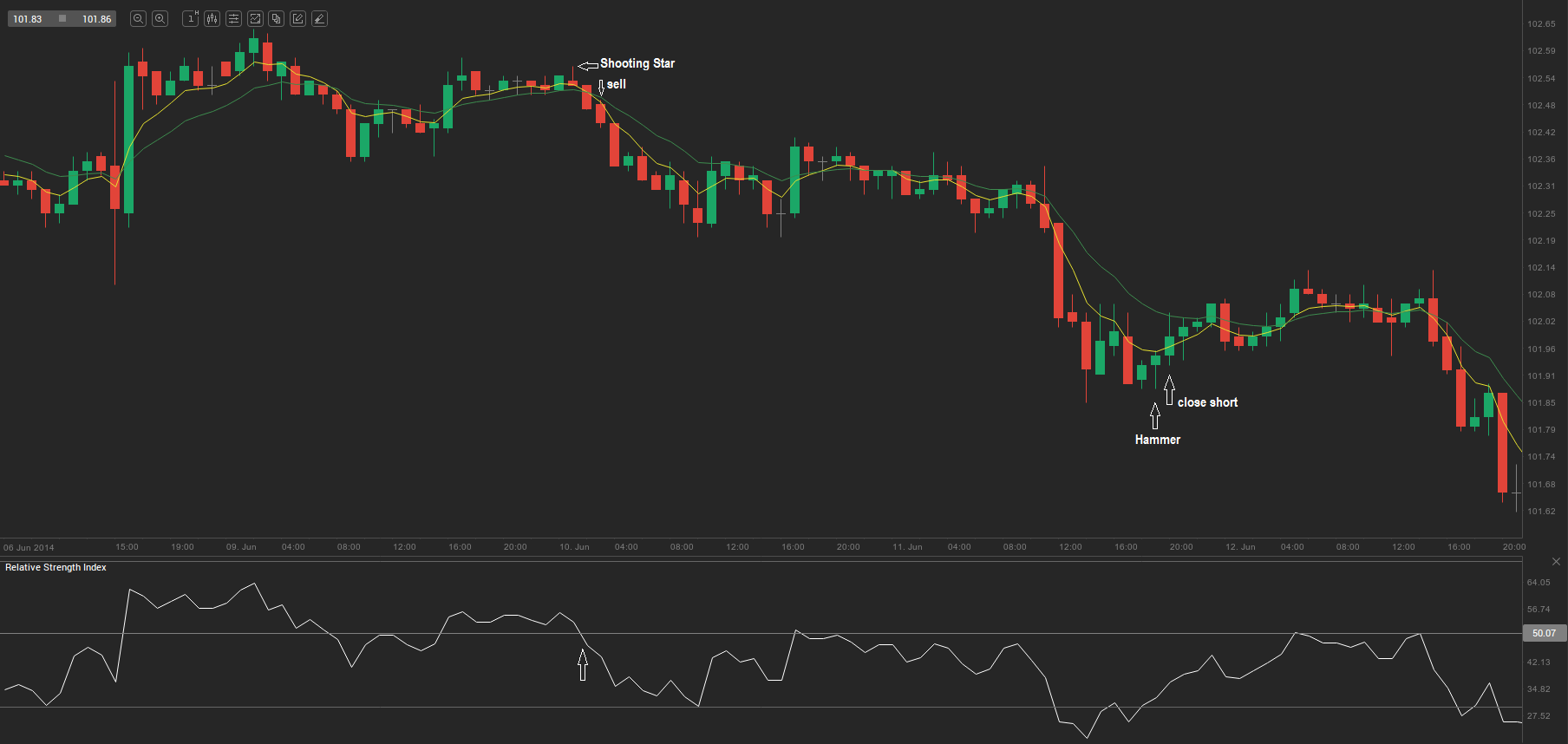
A trader should go short when, first, the 5-period EMA crosses below the 12-period EMA while the RSI is below 50.00, and second, a candlestick pattern such as a Shooting Star or Bearish Engulfing formation confirms the downward move. The protective stop should be placed at the nearest resistance level.
The short position should be closed when the 5-period EMA crosses above the 12-period EMA, the RSI rises above 50.00, the market reaches and stalls at a major level of support, trend line or other significant level, or when a Hammer or Bullish Engulfing formation appears.
Below we have visualised a short trade and a long trade based on this strategy.