Key Moments
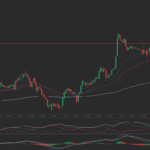
- EUR/USD trades around 1.1740 in Asian dealings, marking a second straight session of subdued price action.
- Heightened caution linked to Middle East tensions and a continued US-led maritime blockade underpins US Dollar strength.
- Strong US Retail Sales data contrasts with Eurozone uncertainty ahead of Thursday’s preliminary HCOB PMI readings.
EUR/USD Holds Soft Tone as Risk Sentiment Weakens
EUR/USD remained under pressure for a second consecutive session, hovering near 1.1740 during Asian trading on Wednesday. The pair showed modest losses as the US Dollar (USD) found support from risk-averse flows, with investors reacting to ongoing uncertainty around the conflict in the Middle East.
According to Bloomberg, US President Donald Trump extended the ceasefire until negotiators from both sides make headway. At the same time, a US blockade of Iranian vessels stayed in place following the collapse of a second round of talks. Iran’s military warned of powerful strikes on preselected targets after repeated threats from Trump.
Geopolitical Developments and Maritime Blockade
US Treasury Secretary Scott Bessent said Wednesday that the Navy will keep enforcing its blockade of Iranian ports, focusing on restricting Tehran’s main revenue streams by limiting maritime trade. In a related move, the UK Defence Ministry announced that military planners from more than 30 countries would gather in London for two days from Wednesday to push forward plans to reopen the Strait of Hormuz and finalize detailed strategies.
European Central Bank (ECB) President Christine Lagarde on Tuesday underscored that the Eurozone outlook remains highly uncertain amid what she described as a major energy supply shock tied to Middle East tensions and the Strait of Hormuz blockade. She noted that, although energy prices have not yet reached worst-case scenarios, the overall outlook is still fragile.
Data Highlights: Strong US Retail Sales, Eurozone PMIs Ahead
On the macroeconomic side, US Retail Sales increased 1.7% month-over-month (MoM) in March, beating market expectations of 1.4%. This followed a 0.7% rise in February, revised up from 0.6%. On a year-over-year (YoY) basis, Retail Sales climbed 4.0% in March, the same pace recorded in February.
In the Eurozone, attention will turn to the preliminary HCOB Purchasing Managers’ Index (PMI) readings on Thursday, which are likely to be monitored closely for further signals on growth momentum in the bloc.
| Indicator | Period | Latest Reading | Previous Reading | Market Expectation |
|---|---|---|---|---|
| US Retail Sales MoM | March | 1.7% | 0.7% (revised from 0.6%) | 1.4% |
| US Retail Sales YoY | March | 4.0% | 4.0% | n/a |
Background on the Euro and Key Drivers
The Euro is the currency used by 20 European Union member states that form the Eurozone. It is the second most heavily traded currency globally after the US Dollar. In 2022, it represented 31% of all foreign exchange transactions, with an average daily turnover of over $2.2 trillion a day.
The EUR/USD pair is the most actively traded currency pair worldwide, accounting for an estimated 30% off all transactions. Other major Euro pairs include EUR/JPY at 4%, EUR/GBP at 3% and EUR/AUD at 2%.
Role of the ECB in Shaping Euro Dynamics
The European Central Bank (ECB), headquartered in Frankfurt, Germany, serves as the reserve bank for the Eurozone and is responsible for setting interest rates and managing monetary policy. Its primary mandate is to maintain price stability, which involves controlling inflation or supporting growth.
The ECB’s main policy lever is interest rates. Relatively high interest rates – or expectations of higher rates – typically support the Euro, while relatively low rates can weigh on the currency. Monetary policy decisions are taken by the ECB Governing Council at meetings held eight times a year, with participation from the heads of Eurozone national central banks and six permanent members, including ECB President Christine Lagarde.
Impact of Inflation, Economic Data, and Trade on the Euro
Inflation in the Eurozone is tracked by the Harmonized Index of Consumer Prices (HICP). When inflation rises more than anticipated, particularly above the ECB’s 2% target, it can push the central bank toward raising interest rates. Higher interest rates relative to other economies usually benefit the Euro by making Eurozone assets more attractive to global investors.
Economic indicators such as GDP, Manufacturing and Services PMIs, employment figures, and consumer sentiment surveys also influence the Euro’s performance. Strong data tends to support the currency by attracting investment and potentially prompting tighter monetary policy, whereas weak data often pressures the Euro lower. Data from Germany, France, Italy and Spain carry particular weight, as these four economies make up 75% of the Eurozone’s output.
The Trade Balance is another key metric for the Euro. It measures the gap between export earnings and import spending over a given period. A positive Trade Balance, where exports exceed imports, generally strengthens a currency due to increased foreign demand for domestic goods and, by extension, the currency itself. Conversely, a negative Trade Balance can have the opposite effect.
 TradingPedia.com is a financial media specialized in providing daily news and education covering Forex, equities and commodities. Our academies for traders cover