Key Moments
- USD/JPY dipped to around 158.25 during the Asian session before rebounding toward 158.70, down over 0.15% on the day.
- Comments from Japan’s Finance Minister on foreign-exchange discussions and softer Federal Reserve expectations pressured the US Dollar against the Yen.
- The 200-period EMA on the 4-hour chart and the 158.25 area remain critical support within the current short-term trading range.
Spot Action and Intraday Context
USD/JPY came under renewed selling pressure in the Asian session, erasing the prior day’s modest advance and sliding to an intraday trough just above a one-week low near the 158.25 level. The pair then staged a mild rebound in recent trading, last changing hands close to 158.70, still more than 0.15% lower on the day.
Drivers: Intervention Concerns and Softer USD Tone
The move lower in USD/JPY followed remarks from Japan’s Finance Minister, Satsuki Katayama, who said that she discussed foreign exchange with Treasury Secretary Scott Bessent. Those comments rekindled worries about potential official action in the currency market and lent support to the Japanese Yen.
At the same time, optimism around diplomacy involving Iran and diminishing expectations for a more aggressive US Federal Reserve stance pushed the US Dollar down to its weakest level since late February. This combination further weighed on the USD/JPY pair.
Risk Backdrop and Support Zone
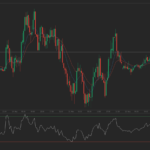
Concerns about economic risks tied to instability in the Strait of Hormuz helped limit further Yen gains, allowing USD/JPY to find support near the 200-period Exponential Moving Average on the 4-hour chart. This technical level coincides with the lower boundary of a short-term consolidation range.
A sustained break beneath this area would be viewed as a significant bearish signal for USD/JPY and could open the door to a deeper corrective phase. Until that support gives way, the pair continues to oscillate within its established range.
Technical Indicators: Momentum Losing Steam
The Moving Average Convergence Divergence indicator on the 4-hour chart has moved into negative territory and is drifting lower, signaling weakening upside momentum. Meanwhile, the Relative Strength Index sits near 41, in neutral-to-bearish territory, suggesting that buying conviction is fading.
Given these conditions, market participants are likely to look for a clear breakdown of the current structure before increasing short exposure in USD/JPY. A firm move and acceptance below the 200-period EMA – where buyers have recently been defending the consolidation floor – would signal greater downside risk.
As long as the pair holds above that moving average, however, the broader technical bias remains modestly constructive. In that scenario, rebounds from current levels would more likely be interpreted as continuity of the prevailing uptrend rather than the start of a durable bearish reversal.
(The technical analysis of this story was written with the help of an AI tool.)
Japanese Yen Performance Against Majors
The following table shows the percentage change of the Japanese Yen against major currencies today. The data indicate that the Yen has been strongest versus the US Dollar.
| USD | EUR | GBP | JPY | CAD | AUD | NZD | CHF | |
|---|---|---|---|---|---|---|---|---|
| USD | -0.09% | -0.11% | -0.17% | -0.16% | -0.26% | -0.01% | -0.14% | |
| EUR | 0.09% | -0.03% | -0.07% | -0.07% | -0.17% | 0.05% | -0.05% | |
| GBP | 0.11% | 0.03% | -0.04% | -0.06% | -0.15% | 0.08% | -0.03% | |
| JPY | 0.17% | 0.07% | 0.04% | -0.00% | -0.09% | 0.10% | 0.03% | |
| CAD | 0.16% | 0.07% | 0.06% | 0.00% | -0.09% | 0.13% | -0.00% | |
| AUD | 0.26% | 0.17% | 0.15% | 0.09% | 0.09% | 0.22% | 0.14% | |
| NZD | 0.00% | -0.05% | -0.08% | -0.10% | -0.13% | -0.22% | -0.10% | |
| CHF | 0.14% | 0.05% | 0.03% | -0.03% | 0.00% | -0.14% | 0.10% |
The heat map shows percentage moves of the major currencies relative to each other. The base currency is taken from the left column, and the quote currency from the top row. For instance, choosing the Japanese Yen as the base on the left and moving across to the US Dollar column gives the percentage change for JPY (base) / USD (quote).
 TradingPedia.com is a financial media specialized in providing daily news and education covering Forex, equities and commodities. Our academies for traders cover