Key Moments
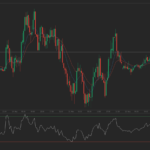
- USD/CHF trades near 0.7890 in early Monday European dealings, supported by a hawkish Fed hold.
- The Fed kept rates at 3.50% to 3.75% in an 11-1 vote at its March meeting after prior cuts in late 2025.
- Middle East tensions and Iran’s threat to close the Strait of Hormuz inject additional safe-haven demand dynamics for CHF.
USD/CHF Supported by Fed’s Hawkish Hold
The USD/CHF pair is edging higher around 0.7890 in early European trading on Monday, as the US Dollar finds support from a firm policy stance at the US Federal Reserve. The pair is “gathering strength” near this level against the Swiss Franc, with investors digesting the Fed’s latest signals alongside intensifying geopolitical risks.
At its March policy meeting last week, the Fed voted 11-1 to maintain the federal funds target range at 3.50% to 3.75%. This was the second straight meeting in which the central bank left rates unchanged after a sequence of cuts in late 2025, reinforcing a hawkish tone that has underpinned the Dollar.
Inflation Concerns and Fed Rate Expectations
Rising crude oil and energy prices, driven by the escalating US-Israeli war with Iran, have reignited concerns about inflation. In response, market participants have scaled back expectations for near-term easing by the Fed.
According to the CME FedWatch tool, futures markets have assigned a nearly 85% probability that the Fed will refrain from cutting rates at its April policy meeting. This repricing has contributed to the Dollar’s resilience against the Swiss Franc.
| Event / Metric | Detail |
|---|---|
| USD/CHF level (early Monday, European session) | Around 0.7890 |
| Fed March rate decision | 11-1 vote to hold |
| Fed funds target range | 3.50% – 3.75% |
| Market-implied probability of no April rate cut | Nearly 85% |
Geopolitical Tensions and Safe-Haven Flows
While the Fed’s stance is lending support to the Dollar, the evolving situation in the Middle East is also shaping flows into traditional safe-haven assets such as the Swiss Franc. Traders are closely tracking developments in the region as a potential catalyst for further volatility in USD/CHF.
The Iranian military has warned it will fully close the Strait of Hormuz if US President Donald Trump follows through on threats to strike Iranian energy infrastructure. This came after Trump on Sunday warned he would “obliterate” Iranian power plants if the Strait of Hormuz were not opened within 48 hours.
Such rhetoric heightens the risk of disruption in a key global shipping chokepoint and may bolster demand for the CHF, given its reputation as a safe-haven currency during periods of market stress.
Swiss Franc: Structure, Safe-Haven Role, and Drivers
The Swiss Franc (CHF) is Switzerland’s official currency and is among the ten most heavily traded currencies worldwide, with turnover that far exceeds the size of the domestic economy. Its valuation is influenced by broad risk sentiment, Switzerland’s economic fundamentals, and decisions by the Swiss National Bank (SNB), among other drivers.
Between 2011 and 2015, the CHF was pegged to the Euro (EUR). The abrupt removal of this peg led to an appreciation of more than 20% in the Franc, triggering significant market turmoil. Although the peg is no longer in place, the Swiss currency’s performance remains closely tied to that of the Euro, reflecting Switzerland’s deep economic reliance on the neighboring Eurozone.
Why the Swiss Franc Is Viewed as a Safe Haven
Investors typically classify the Swiss Franc as a safe-haven asset, favoring it during episodes of elevated risk. This status reflects the perception of Switzerland as a country with a stable economy, a strong export sector, sizable central bank reserves, and a longstanding policy of political neutrality in international conflicts. As a result, turbulent periods in markets often see CHF strengthen against currencies regarded as riskier.
Swiss National Bank Policy and CHF
The Swiss National Bank sets monetary policy at quarterly meetings, convening four times a year, which is less frequent than many other major central banks. The SNB targets annual inflation of less than 2%. When inflation is at or projected to move above this threshold, the bank can respond by raising its policy rate to curb price pressures.
Higher interest rates are generally supportive of the Swiss Franc, as they can increase yields and enhance Switzerland’s attractiveness for investors. Conversely, when the SNB cuts rates, it tends to weaken the currency.
Economic Data and Eurozone Linkages
Macroeconomic releases from Switzerland serve as important indicators for the Franc. While the economy is broadly stable, shifts in growth, inflation, the current account, or the SNB’s foreign currency reserves can all trigger moves in CHF. Strong growth, low unemployment, and robust confidence generally favor appreciation, while signs of slowing momentum can weigh on the currency.
Switzerland’s small, open economy is heavily reliant on the Eurozone. The broader European Union is its primary economic partner and a key political counterpart, making monetary and macroeconomic stability in the Euro area crucial for Switzerland and, by extension, the Swiss Franc. Some models indicate that the correlation between EUR and CHF performance exceeds 90%, reflecting this tight integration.
 TradingPedia.com is a financial media specialized in providing daily news and education covering Forex, equities and commodities. Our academies for traders cover