Key Moments
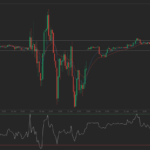
- NZD/USD traded near 0.5690 during European hours on Tuesday after recovering from modest prior-session losses.
- Traders expected the RBNZ to raise its policy rate by 25 basis points to 3% on Wednesday, following earlier moves in July and September.
- Fed funds futures, via the CME FedWatch Tool, showed an 89.5% probability of an October pause and an 82.3% chance of a December hike.
NZD/USD Firms as RBNZ Tightening Bets Build
NZD/USD edged higher during European trading on Tuesday, with the pair changing hands around 0.5690 after recording modest declines the previous day. The move reflected renewed strength in the New Zealand Dollar as market participants anticipated another rate increase from the Reserve Bank of New Zealand (RBNZ).
Traders were looking for a 25 basis point hike to 3% at the RBNZ decision on Wednesday, extending the tightening cycle that included rate increases in July and September. Expectations for further policy tightening have been supported by persistently elevated inflation pressures, which have been exacerbated by higher oil prices.
Fed Outlook Limits NZD Upside
Despite the firmer Kiwi, gains in NZD/USD appeared constrained by a still-resilient US Dollar. Market caution ahead of this week’s Federal Reserve policy announcement on Wednesday continued to underpin the greenback and limited the pair’s upside momentum.
Pricing in interest-rate derivatives indicated that investors broadly expected the Federal Reserve to keep rates unchanged at its upcoming October meeting, while still leaving the door open to additional tightening later in the year. According to the CME FedWatch Tool, current market estimates pointed to an 89.5% likelihood of a pause in October, paired with an 82.3% probability of a rate increase in December.
| Event | Timing | Market-implied probability | Expected action |
|---|---|---|---|
| RBNZ policy decision | Wednesday | Not specified | 25 bps hike to 3% |
| Fed policy decision – October meeting | October | 89.5% | Rate hold |
| Fed policy decision – December meeting | December | 82.3% | Rate hike |
Inflation Concerns and Fed Timing
Persistent price pressures remained a central theme in the US outlook. Heather Long, chief economist at Navy Federal Credit Union, said that “Inflation is still the No. 1 problem in the US economy, and there are a lot of signs it is getting more broad-based.” “For consumers, it means really high borrowing costs for the foreseeable future.” However, “given that it’s right before an election,” Heather added, “they won’t hike in October.”
Her comments echoed broader expectations that, while inflation remains problematic, political and timing considerations might discourage an October move, with any further tightening more likely deferred to later in the year.
Pre-FOMC Dollar Support
Strategists at ING highlighted the role of positioning ahead of the Federal Open Market Committee decision, noting that “pre-FOMC positioning may also be kicking in,” with the forward-looking FX market interpreting Chair Kevin Warsh’s reiteration of inflation commitments as “reinforcing the structural floor for the Dollar.” They further remarked that, “as discussed in our preview, we sympathise with this view and expect a broadly supported Dollar this week,” indicating that the US currency was likely to stay broadly underpinned going into the Fed announcement.
Fundamental Drivers of the New Zealand Dollar
The New Zealand Dollar, commonly referred to as the Kiwi, is described as a widely traded currency whose value is largely shaped by domestic economic performance and monetary policy. The article also notes several distinctive factors that can influence NZD beyond the broader macro backdrop.
Role of China and Dairy Prices in NZD Performance
According to the FAQ section, developments in the Chinese economy are particularly important for NZD because China is New Zealand’s largest trading partner. Negative news from China can point to reduced demand for New Zealand exports, weighing on economic activity and the currency.
Dairy markets are also highlighted as a key driver, as dairy products are New Zealand’s main export. Elevated dairy prices tend to bolster export revenues, supporting growth and, in turn, the New Zealand Dollar.
Impact of RBNZ Policy on NZD
The RBNZ is described as targeting inflation between 1% and 3% over the medium term, with an emphasis on keeping it near 2%. To pursue this objective, the central bank adjusts interest rates, which directly influences bond yields and capital flows.
When inflation runs too hot, higher policy rates can cool the economy while simultaneously lifting yields, making New Zealand assets more attractive and typically supporting NZD. Conversely, lower rates generally act as a headwind for the currency. The relative level of New Zealand interest rates versus those in the United States – the rate differential – is cited as a key influence on NZD/USD.
Economic Data and Risk Sentiment Effects
Macroeconomic indicators such as growth, employment, and confidence are portrayed as critical for assessing New Zealand’s economic strength and, therefore, the valuation of NZD. Strong data can draw foreign investment and potentially encourage further RBNZ tightening if accompanied by elevated inflation, while weaker releases are seen as negative for the currency.
Broader market risk sentiment is also highlighted as a major factor. The New Zealand Dollar tends to appreciate in risk-on environments, when investors are more optimistic about global growth and more favorable toward commodities and so-called commodity currencies. In contrast, during periods of market stress or uncertainty, investors may rotate out of higher-risk assets like NZD and into perceived safe havens, leading to Kiwi weakness.
 TradingPedia.com is a financial media specialized in providing daily news and education covering Forex, equities and commodities. Our academies for traders cover