Key Moments
- XAG/USD has risen for six consecutive sessions, trading near $86.80 per troy ounce during Asian hours on Wednesday.
- Persistent tensions around the Strait of Hormuz and elevated oil prices threaten to lift inflation and pressure Silver as a non-yielding asset.
- Stronger April CPI data at 0.6% month-on-month and 3.8% year-on-year has reinforced expectations that the Federal Reserve will keep rates elevated.
Industrial Demand Drives Silver Higher
Silver (XAG/USD) is extending its advance for a sixth straight session, with prices hovering around $86.80 per troy ounce in Asian trading on Wednesday. The metal is drawing support from robust industrial consumption, reflecting its central role in manufacturing solar panels, electronic devices, and automotive components.
The appeal of Silver as an industrial input continues to underpin its price outlook, with its use spanning key segments of the global manufacturing supply chain.
Geopolitical Tensions and Oil Prices Weigh on Outlook
Despite the ongoing upswing, Silver’s upward trajectory is facing notable macro headwinds. Heightened geopolitical uncertainty, particularly the risk of an extended closure of the Strait of Hormuz, is stoking concerns over persistently high oil prices and, in turn, stronger inflationary pressures.
A scenario in which energy costs remain elevated increases the likelihood that global interest rates stay “higher-for-longer.” That environment generally undermines non-interest-bearing assets such as Silver, as investors gravitate toward instruments offering more attractive yields.
Middle East Dynamics Add to Market Uncertainty
The backdrop in the Middle East remains unsettled following recent remarks by US President Donald Trump, who stated that Iran is “under control” but warned that the situation could result in either a new agreement or complete “decimation.” In a reply, Iranian Deputy Foreign Minister Kazem Gharibabadi insisted that any acceptable peace framework must include reparations, recognition of Iranian sovereignty over the Strait of Hormuz, and the full removal of U.S. sanctions.
These opposing positions add another layer of uncertainty for markets already sensitive to potential disruptions in a critical global shipping artery.
Hotter US Inflation Supports Hawkish Fed Expectations
Macroeconomic data from the United States have further complicated the outlook for Silver. On Tuesday, the Bureau of Labor Statistics reported that the Consumer Price Index (CPI) for April increased by 0.6% on a monthly basis. That pushed annual headline inflation to 3.8%, the highest reading since May 2023.
Core CPI, which excludes food and energy, also moved higher, registering a 2.8% annual gain. Together, these readings have reinforced a hawkish stance among market participants, indicating that the Federal Reserve is likely to keep interest rates elevated as it continues to address persistent inflation.
| Indicator | Period | Value | Notes |
|---|---|---|---|
| Silver price (XAG/USD) | Asian hours, Wednesday | around $86.80 per troy ounce | Sixth consecutive daily gain |
| US CPI (headline) | April, month-on-month | 0.6% | Hotter-than-expected |
| US CPI (headline) | April, year-on-year | 3.8% | Highest since May 2023 |
| US Core CPI | April, year-on-year | 2.8% | Excludes food and energy |
Silver as an Investment Asset
Silver is a widely traded precious metal that investors use as a store of value and a tool for portfolio diversification. Although it typically receives less attention than Gold, market participants turn to Silver for its intrinsic value and potential role as a hedge during periods of elevated inflation.
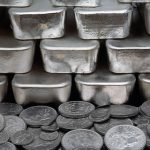
Exposure to Silver can be obtained through physical holdings such as coins and bars, or via financial instruments like Exchange Traded Funds that mirror its international market price.
Key Drivers of Silver Prices
Silver prices are sensitive to a broad mix of factors. Periods of geopolitical stress or concerns about severe economic downturns can lift Silver due to its safe-haven appeal, though generally to a lesser degree than Gold. As a yieldless asset, Silver tends to benefit from lower interest rate environments.
Movements in the US Dollar (USD) are also critical, given that Silver is denominated in dollars (XAG/USD). A firm USD often restrains Silver prices, whereas a weaker USD typically offers support. Additional influences include investment flows, mining output – with Silver being more plentiful than Gold – and recycling activity.
Industrial Uses and Global Demand Patterns
Industrial consumption is a major component of Silver demand, especially in electronics and solar energy, where Silver is valued for having one of the highest levels of electrical conductivity among metals, surpassing Copper and Gold. Rising industrial usage can push prices higher, while a slowdown tends to have the opposite effect.
Economic trends in the United States, China, and India can also sway Silver prices. Broad industrial activity in the US and China drives demand through manufacturing applications, while in India, consumer appetite for Silver jewelry plays a meaningful role in shaping overall demand.
Relationship Between Silver and Gold
Silver often trades directionally in line with Gold, reflecting their shared reputation as safe-haven assets. When Gold prices increase, Silver frequently moves higher as well.
The Gold/Silver ratio – which measures how many ounces of Silver equate to the value of one ounce of Gold – is used by some investors to gauge relative value between the two metals. A higher ratio can be interpreted by some as a sign that Silver is undervalued or that Gold is expensive, while a lower ratio may suggest the opposite assessment.
 TradingPedia.com is a financial media specialized in providing daily news and education covering Forex, equities and commodities. Our academies for traders cover