Key Moments
- EUR/USD trades around 1.1680-1.1675, hovering just above a nearly two-week low after a recent decline.
- Heightened Iran-related tensions, higher Crude Oil prices, and revived hawkish Fed expectations have supported the USD and weighed on the pair.
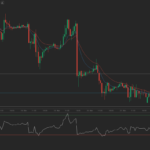
- Technical signals – including a break below the 38.2% Fibonacci level and an RSI near 32 – point to a bias toward further downside.
EUR/USD Holds Weak Tone as Dollar Strength Persists
The EUR/USD pair remains under sustained selling pressure during the Asian session on Friday, trading in a narrow band around the 1.1680-1.1675 area. This keeps the pair only marginally above the nearly two-week trough it reached in the prior session, as buyers struggle to stage any meaningful rebound.
Market sentiment is being constrained by ongoing geopolitical concerns. Although a ceasefire has been temporarily extended, the lack of tangible progress in peace negotiations – attributed to the US naval blockade of Iranian ports – has limited hopes for a lasting easing of tensions and maintained a cautious tone among investors. At the same time, elevated Crude Oil prices have reinforced inflation worries and bolstered expectations for a more hawkish stance from the US Federal Reserve (Fed). These factors have helped the US Dollar (USD) retain the gains accumulated over the last three days, keeping a lid on EUR/USD.
Technical Picture Favors Sellers Despite 200-EMA Support
From a technical standpoint, spot EUR/USD is currently oscillating around the 200-period Exponential Moving Average (EMA) on the 4-hour chart. This positioning offers some near-term support and leaves the very short-term tone neutral following the recent pullback from higher levels.
However, the price action on Thursday, which saw the pair fall through the 38.2% Fibonacci retracement of the latest rally from the March swing low, tilts the balance in favor of sellers. The Relative Strength Index (RSI) hovering near 32 underscores ongoing downside pressure and signals that bullish momentum remains fragile.
The Moving Average Convergence Divergence (MACD) indicator is slightly negative, reinforcing the impression that upward momentum is lacking even as the 200-period EMA offers some technical support. Overall, the combination of these indicators suggests that the broader directional bias continues to lean to the downside.
Key Levels: Support and Resistance in Focus
On the downside, immediate support is seen near the 50.0% Fibonacci retracement level at 1.1648. A decisive drop below this area would expose deeper retracement objectives at 1.1600 and 1.1532, with the cycle low located further down at 1.1445.
On the topside, initial resistance is aligned with the 38.2% Fibonacci retracement at 1.1696. A clear move above that threshold would open the door for a test of the next resistance zone at the 23.6% retracement, situated at 1.1755.
Even so, the broader configuration suggests that rallies are likely to encounter supply, with any significant recovery attempt seen as vulnerable to renewed selling interest.
(The technical analysis of this story was written with the help of an AI tool.)
US Dollar Performance Against Major Currencies This Week
The table below details this week’s percentage changes in the US Dollar (USD) against a basket of major currencies. Over the period, the USD has shown the strongest performance versus the Swiss Franc (CHF).
| Currency | USD | EUR | GBP | JPY | CAD | AUD | NZD | CHF |
|---|---|---|---|---|---|---|---|---|
| USD | 0.52% | 0.18% | 0.61% | 0.18% | -0.01% | 0.14% | 0.70% | |
| EUR | -0.52% | -0.33% | 0.00% | -0.32% | -0.49% | -0.42% | 0.18% | |
| GBP | -0.18% | 0.33% | 2.17% | 0.02% | -0.17% | -0.09% | 0.52% | |
| JPY | -0.61% | 0.00% | -2.17% | -0.43% | -0.54% | -0.49% | 0.11% | |
| CAD | -0.18% | 0.32% | -0.02% | 0.43% | -0.08% | -0.07% | 0.51% | |
| AUD | 0.01% | 0.49% | 0.17% | 0.54% | 0.08% | 0.15% | 0.68% | |
| NZD | -0.14% | 0.42% | 0.09% | 0.49% | 0.07% | -0.15% | 0.57% | |
| CHF | -0.70% | -0.18% | -0.52% | -0.11% | -0.51% | -0.68% | -0.57% |
The heat map illustrates how each major currency has moved relative to the others. The base currency is listed in the left-hand column, and the quote currency is shown along the top row. For instance, selecting the US Dollar from the left and moving across to the Japanese Yen cell reveals the percentage change for USD (base)/JPY (quote) over the week.
 TradingPedia.com is a financial media specialized in providing daily news and education covering Forex, equities and commodities. Our academies for traders cover