Key Moments
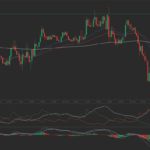
- USD/CHF traded around 0.7890 in Asian hours on Monday after declining following four consecutive sessions of gains.
- Market risk aversion eased on reports the US may form a coalition to escort ships through the Strait of Hormuz.
- The Swiss Franc drew support from lingering geopolitical uncertainty, even as the Swiss National Bank signaled greater willingness to intervene in FX markets.
Dollar Weakens as Risk Sentiment Improves
USD/CHF gave back ground after four straight days of advances, changing hands near 0.7890 during Asian trading on Monday. The US Dollar (USD) softened against major counterparts as risk aversion subsided amid reports that the United States (US) may be preparing to announce a coalition to protect shipping traffic through the Strait of Hormuz.
US Energy Secretary Chris Wright stated that he expects the US-Israel conflict with Iran to conclude within “the next few weeks,” which market participants viewed as a potential catalyst for a rebound in oil supply and a pullback in energy prices.
Middle East Tensions Remain in Focus
Despite a partial improvement in risk appetite, traders continued to closely track developments in the Middle East. Over the weekend, US forces reportedly struck every military installation on Kharg Island, a key hub that processes nearly 90% of Iran’s oil exports. US President Donald Trump said that oil infrastructure was not targeted, but Iran has warned that it could respond against any oil facilities in the region linked to the US.
President Trump also urged allied countries – including the UK, France, China, and Japan – to participate in efforts to secure the Strait of Hormuz, with indications that a formal White House announcement could follow in the days ahead. At the same time, European Union (EU) foreign ministers were gathering in Brussels to consider a possible naval response to what has been described as the effective closure of the Strait.
Fed Decision and Policy Outlook in Focus
The US Federal Reserve (Fed) is expected to leave interest rates unchanged on Wednesday. Market participants will be watching the accompanying guidance for clues on policymakers’ outlook for the rest of the year, especially in relation to inflation risks that could arise from the recent jump in energy prices.
Swiss Franc Dynamics and Policy Backdrop
The USD/CHF pair may face additional downside pressure as the Swiss Franc (CHF) could continue to draw safe-haven demand while geopolitical risks persist. However, any substantial appreciation in CHF may be constrained after the Swiss National Bank (SNB) signaled an increased readiness to step into the foreign exchange market.
Key USD/CHF and Policy Drivers
| Factor | Relevance to USD/CHF |
|---|---|
| USD/CHF level | Traded around 0.7890 during Asian hours on Monday after four days of gains |
| Geopolitical developments | Reports of a potential US-led coalition to escort ships and US strikes on Kharg Island influencing risk sentiment and safe-haven flows |
| Energy and oil outlook | Expectation that the US-Israel conflict with Iran could end within “the next few weeks,” potentially affecting oil supply and energy prices |
| Federal Reserve policy | Fed is expected to keep interest rates unchanged, with markets focused on inflation guidance and energy-price risks |
| Swiss National Bank stance | SNB’s greater willingness to intervene may limit CHF upside despite safe-haven support |
Swiss Franc FAQs
What key factors drive the Swiss Franc?
The Swiss Franc (CHF) is Switzerland’s official currency. It is among the top ten most traded currencies globally, reaching volumes that well exceed the size of the Swiss economy. Its value is determined by the broad market sentiment, the country’s economic health or action taken by the Swiss National Bank (SNB), among other factors. Between 2011 and 2015, the Swiss Franc was pegged to the Euro (EUR). The peg was abruptly removed, resulting in a more than 20% increase in the Franc’s value, causing a turmoil in markets. Even though the peg isn’t in force anymore, CHF fortunes tend to be highly correlated with the Euro ones due to the high dependency of the Swiss economy on the neighboring Eurozone.
Why is the Swiss Franc considered a safe-haven currency?
The Swiss Franc (CHF) is considered a safe-haven asset, or a currency that investors tend to buy in times of market stress. This is due to the perceived status of Switzerland in the world: a stable economy, a strong export sector, big central bank reserves or a longstanding political stance towards neutrality in global conflicts make the country’s currency a good choice for investors fleeing from risks. Turbulent times are likely to strengthen CHF value against other currencies that are seen as more risky to invest in.
How do decisions of the Swiss National Bank impact the Swiss Franc?
The Swiss National Bank (SNB) meets four times a year – once every quarter, less than other major central banks – to decide on monetary policy. The bank aims for an annual inflation rate of less than 2%. When inflation is above target or forecasted to be above target in the foreseeable future, the bank will attempt to tame price growth by raising its policy rate. Higher interest rates are generally positive for the Swiss Franc (CHF) as they lead to higher yields, making the country a more attractive place for investors. On the contrary, lower interest rates tend to weaken CHF.
How does economic data influence the value of the Swiss Franc?
Macroeconomic data releases in Switzerland are key to assessing the state of the economy and can impact the Swiss Franc’s (CHF) valuation. The Swiss economy is broadly stable, but any sudden change in economic growth, inflation, current account or the central bank’s currency reserves have the potential to trigger moves in CHF. Generally, high economic growth, low unemployment and high confidence are good for CHF. Conversely, if economic data points to weakening momentum, CHF is likely to depreciate.
How does the Eurozone monetary policy affect the Swiss Franc?
As a small and open economy, Switzerland is heavily dependent on the health of the neighboring Eurozone economies. The broader European Union is Switzerland’s main economic partner and a key political ally, so macroeconomic and monetary policy stability in the Eurozone is essential for Switzerland and, thus, for the Swiss Franc (CHF). With such dependency, some models suggest that the correlation between the fortunes of the Euro (EUR) and the CHF is more than 90%, or close to perfect.
 TradingPedia.com is a financial media specialized in providing daily news and education covering Forex, equities and commodities. Our academies for traders cover