Key Moments
- EUR/GBP recovered above 0.8700 after finding support near 0.8690 following Wednesday’s reversal.
- Market sentiment improved as tensions between the US and EU eased, lending support to the Euro.
- The constructive uptrend from mid-January lows remains intact, with resistance eyed at 0.8745.
Price Action and Market Context
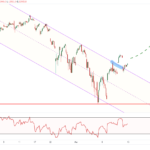
EUR/GBP pared back losses from Wednesday’s sharp pullback, with the cross climbing back above 0.8700 on Thursday. The move followed a bounce from a former resistance zone around 0.8790, which is now acting as support, and has encouraged buyers to reenter the market.
Improved risk appetite is helping the Euro regain ground against the British Pound, with bullish traders now targeting the resistance region at 0.8745. The pair’s constructive trajectory that began from the mid-January lows remains in place.
US President Trump’s softer tone toward Europe, along with “his refusal to use military action against a NATO member to take control of Greenland,” has eased some market concerns. In the absence of significant macroeconomic releases from either the UK or the Eurozone, this shift in sentiment is providing a supportive backdrop for the Euro against the Pound.
Technical Overview
From a technical standpoint, EUR/GBP attracted bids around the 0.8690 zone and has since moved back above the 0.8700 handle. Signals from key indicators are mixed. The Moving Average Convergence Divergence (MACD) remains below the zero line, indicating that bullish momentum is still fragile. In contrast, the Relative Strength Index (RSI) stands at 57, pointing to a moderately positive bias.
For buyers, a confirmed hold above the prior intraday support at 0.8710 would open the door for another attempt at the 0.8745 barrier, which previously halted advances on December 31 and January 21.
On the downside, immediate support lies at Wednesday’s low of 0.8695. Below that, additional backing is provided by an ascending trendline drawn from the mid-January troughs, currently located around 0.8685.
| Level / Indicator | Value / Description |
|---|---|
| Current zone | Above 0.8700 |
| Immediate resistance | 0.8745 |
| Key intraday support to reclaim | 0.8710 |
| Support – Wednesday’s low | 0.8695 |
| Trendline support (from mid-January lows) | Approximately 0.8685 |
| MACD | Negative territory – weak bullish momentum |
| RSI | 57 – moderate positive bias |
(The technical analysis of this story was written with the help of an AI tool.)
Euro Fundamentals: Key Background Concepts
What Is the Euro?
The Euro is the common currency used by 20 European Union countries that make up the Eurozone. It is the second most actively traded currency globally after the US Dollar. In 2022, it represented 31% of all foreign exchange transactions, with an average daily turnover of over $2.2 trillion a day. The most actively traded pair is EUR/USD, accounting for an estimated 30% of all FX transactions, followed by EUR/JPY (4%), EUR/GBP (3%) and EUR/AUD (2%).
The Role of the ECB
The European Central Bank (ECB), headquartered in Frankfurt, Germany, serves as the central bank for the Eurozone and is responsible for setting interest rates and overseeing monetary policy. The ECB’s main mandate is to ensure price stability by either containing inflation or fostering growth. Its primary tool is the adjustment of interest rates. Higher interest rates – or expectations of rate hikes – typically support the Euro, while lower rates tend to weigh on it.
The ECB Governing Council meets eight times per year to decide on monetary policy. The body consists of the heads of the Eurozone national central banks and six permanent members, including the President of the ECB, Christine Lagarde.
Impact of Inflation on the Euro
Inflation across the Eurozone is tracked by the Harmonized Index of Consumer Prices (HICP), a key metric for Euro traders. When inflation rises more than anticipated, especially above the ECB’s 2% objective, the central bank is compelled to raise interest rates to keep price growth in check. Higher interest rates relative to other economies usually bolster the Euro, as they can make Eurozone assets more attractive to global investors.
Economic Data and the Euro
Macroeconomic indicators play a significant role in shaping expectations for the Euro. Data such as GDP, Manufacturing and Services PMIs, labor market figures, and consumer confidence surveys all influence perceptions of economic strength. A robust economic backdrop tends to support the Euro, both by drawing foreign capital and by increasing the likelihood of tighter monetary policy. Conversely, soft data generally weighs on the currency.
Releases from the four largest Euro area economies – Germany, France, Italy and Spain – are particularly important, as they account for 75% of the Eurozone’s total output.
Trade Balance Considerations
The Trade Balance is another key data point for assessing the Euro. It captures the gap between export earnings and import expenditures over a given period. When a country or region exports significantly more than it imports, demand for its currency tends to rise, as foreign buyers need that currency to pay for goods. A positive Trade Balance therefore usually supports the currency, while a negative balance can have the opposite effect.
 TradingPedia.com is a financial media specialized in providing daily news and education covering Forex, equities and commodities. Our academies for traders cover