Key Moments:
- May saw Germany’s Composite PMI Output Index drop to 48.6.
- Manufacturing PMI reached a 33-month high at 48.8, despite remaining below the growth threshold of 50.
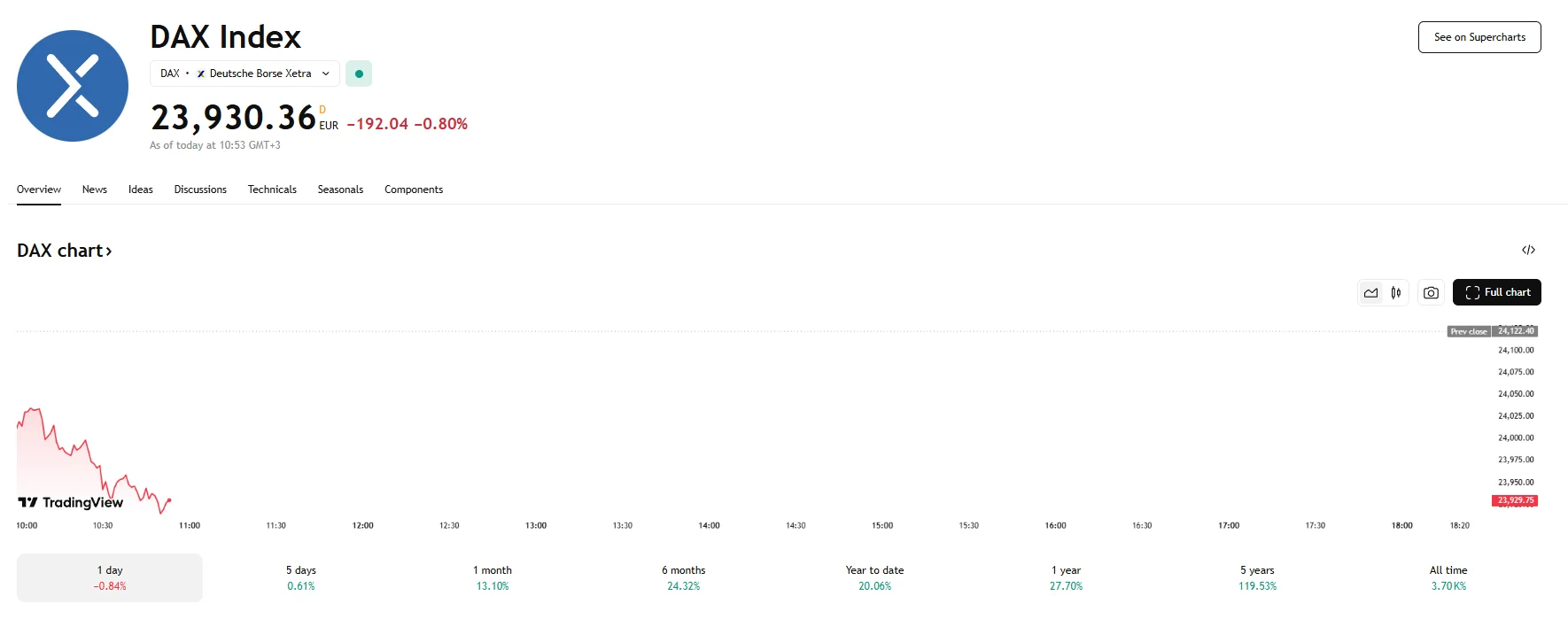
- The DAX Index slipped by almost 200 basis points on Thursday.
Services Contraction Drags Germany’s Economy
Germany’s private sector economy fell back into contraction territory in May, weighed down by a sharper downturn in services activity that offset manufacturing’s modest rebound. According to flash estimates from S&P Global and Hamburg Commercial Bank, the HCOB Flash Germany Composite PMI Output Index declined to 48.6 in May, 1.5 lower than April’s 50.1 and below the anticipated 50.4.
Manufacturing Shows Resilience as Services Falter
The country’s manufacturing sector displayed relative strength, with its PMI rising to 48.8, marking the highest figure in almost three years. Although the measure remains below the growth-neutral 50 mark, it managed to overtake the 48.4 reported last month and was just short of the forecasted 48.9.
In contrast, the services PMI fell sharply to 47.2, the lowest reading in 30 months. This represents a decline from the 49 PMI of April and a failure to hit the projected 49.5.
DAX Declines Amid Sector Worries
The news exerted pressure on German stocks, with the DAX dropping by 192 basis points (0.8%). The majority of the index’s components suffered a loss in share prices, which lowered the index to 23,930.36.
Porsche AG Vz sank to the bottom after shedding 5.52% of its stock value, while Deutsche Bank, Brenntag, Siemens AG, Heidelberg Materials, and Mercedes-Benz Group were among the many companies whose shares fell by over 1%. Meanwhile, Bayer and Siemens Energy were among the few stocks to edge higher, with the former rising by 0.95%, while the latter ticked up by around 0.5%.
 TradingPedia.com is a financial media specialized in providing daily news and education covering Forex, equities and commodities. Our academies for traders cover