Key Moments
- WTI trades just above $72.00, consolidating near a two-week high after an earlier Asian session advance.
- Escalating US-Iran tensions and concerns over potential disruptions in the Strait of Hormuz support crude prices.
- OPEC+ plans to raise output from August and Saudi Arabia’s $11 per barrel August price cut to Asia limit further upside.
WTI Consolidates Near Recent Highs
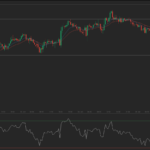
West Texas Intermediate (WTI), the benchmark US crude oil contract, is pausing after a strong prior-session rally, moving into a bullish consolidation phase near a two-week peak reached during Asian trading on Wednesday. The contract is changing hands just above the $72.00 level, as market participants monitor whether buyers can secure a sustained break above the key 200-day Simple Moving Average (SMA) amid renewed hostilities between the United States and Iran.
US-Iran Confrontation Fuels Risk Premium
Fresh geopolitical tensions are underpinning crude prices. The US military launched a new round of strikes against Iran on Tuesday following reports of attacks on three oil tankers in the Strait of Hormuz, threatening an already fragile ceasefire. In response, the Iranian Islamic Revolutionary Guards Corps (IRGC) stated that it targeted 85 US military locations in Bahrain and Kuwait after what it described as a US ceasefire violation, and further claimed it had downed a US MQ9 drone in southern Iran.
These developments heighten the risk of further escalation in the region and are encouraging traders to factor in a geopolitical risk premium, providing a tailwind for WTI and broader crude benchmarks.
Strait of Hormuz and US Policy Actions Add Support
In parallel, the United States has moved to rescind a key concession that had allowed Iran to sell oil into global markets. The ongoing standoff between Washington and Tehran is intensifying worries about possible supply disruptions through the Strait of Hormuz, a critical transit route for seaborne oil flows, offering additional price support for the “black liquid.”
OPEC+ Output Hike and Saudi Price Cut Cap Upside
Despite the geopolitical boost, crude oil’s gains remain constrained by supply-side decisions from major producers. OPEC+ has agreed to another increase in its production target starting in August, adding to expectations of higher future supply.
At the same time, Saudi Arabia has reduced its August official selling price to Asia by an unprecedented $11 per barrel. This aggressive pricing step is contributing to a ceiling on WTI and broader crude benchmarks, as it intensifies competitive pressures and tempers bullish momentum.
| Factor | Direction for WTI | Key Detail |
|---|---|---|
| Geopolitical tensions (US-Iran) | Supportive | US strikes, IRGC response, drone claim, tanker attacks |
| Strait of Hormuz supply risk | Supportive | Concerns over disruption to oil flows |
| OPEC+ production decision | Limiting upside | Another output target increase from August |
| Saudi OSP to Asia | Limiting upside | August official selling price cut by $11 per barrel |
Fed Minutes and Middle East Developments in Focus
Attention now turns to the release of the Minutes from the June FOMC meeting, which is expected to be an important driver for the US Dollar (USD). Any significant moves in the USD could in turn influence USD-denominated commodities such as crude oil. Alongside monetary policy signals, further news from the Middle East crisis is likely to remain a key source of volatility for WTI prices.
WTI Oil: Key Characteristics and Price Drivers
WTI Oil is a grade of crude traded on international markets. The term WTI refers to West Texas Intermediate, one of three main crude benchmarks alongside Brent and Dubai Crude. It is described as “light” and “sweet” due to its relatively low gravity and sulfur content, characteristics that make it a high-quality crude that is comparatively easy to refine.
WTI is produced in the United States and distributed through the Cushing hub, often referred to as “The Pipeline Crossroads of the World.” It serves as a key benchmark in the oil market, and its price is widely cited in financial media.
Core Influences on WTI Pricing
As with other assets, supply and demand are central to WTI price formation. Strong global economic activity can boost demand, while weaker growth can depress it. Political instability, conflict, and sanctions can constrain supply and influence prices. Decisions by OPEC, a group of major oil-producing nations, are another crucial factor, as changes in production targets can tighten or loosen global supply.
Because crude oil is predominantly priced in US Dollars, the value of the USD is also important: a weaker dollar can make oil cheaper for buyers using other currencies, while a stronger dollar can have the opposite effect on demand and prices.
Impact of Inventory Data on WTI
Weekly inventory reports from the American Petroleum Institute (API) and the Energy Information Agency (EIA) are closely watched indicators for WTI traders. Shifts in reported stockpiles reflect changing supply-demand dynamics. Inventory declines can signal stronger demand and support higher prices, whereas inventory builds can indicate increased supply and weigh on prices.
API’s report is released every Tuesday, followed by EIA data the next day. The two series typically show similar results, with outcomes falling within 1% of each other 75% of the time. EIA figures are generally seen as more dependable because the agency is part of the US government.
Role of OPEC and OPEC+ in WTI Markets
OPEC (Organization of the Petroleum Exporting Countries) is a coalition of 12 oil-producing states that collectively set production quotas at twice-yearly meetings. These decisions can be pivotal for WTI prices. Lowering quotas usually tightens supply and supports higher prices, while raising production tends to have a dampening effect.
OPEC+ refers to a broader grouping that includes 10 additional non-OPEC producers, with Russia being the most prominent among them. Coordinated actions by OPEC+ extend the influence of this alliance on global crude supply and, by extension, on WTI pricing.
 TradingPedia.com is a financial media specialized in providing daily news and education covering Forex, equities and commodities. Our academies for traders cover