Key Moments
- XAG/USD trades near $58.80 per troy ounce after two sessions of gains, pressured by renewed tensions in the Strait of Hormuz.
- US-Iran hostilities pause ahead of peace talks in Doha, helping limit the downside for silver prices.
- Market pricing from the CME FedWatch Tool reflects a 59.7% probability of a Federal Reserve rate hike in September 2026.
Middle East Tensions Knock Silver Off Recent Highs
XAG/USD moves lower during Asian trading on Monday, giving back part of its recent advance and hovering around $58.80 per troy ounce. The pullback comes after renewed military confrontations between the United States and Iran in the Strait of Hormuz, which lift oil prices and revive concerns over inflation. Market participants remain highly attuned to developments in the region as they evaluate the implications for global risk appetite.
The latest escalation follows days of retaliatory actions after an Iranian projectile struck a cargo ship on Thursday. That incident prompted both the US and Iran to accuse each other of breaching an interim ceasefire that had been in place since June 17. Heightened uncertainty around the security of a key energy chokepoint has reinforced worries about potential price shocks and their impact on inflation dynamics.
Temporary Halt in Strikes Ahead of Doha Peace Talks
Despite the renewed clashes, Washington and Tehran have agreed to suspend attacks against one another in the run-up to planned peace discussions in Doha this week. This pause in hostilities has helped contain further losses in silver, as investors weigh the possibility of a diplomatic breakthrough.
Official delegations from both countries are scheduled to convene in Qatar on Tuesday to seek a resolution to the conflict. The outcome of these talks is likely to influence broader market sentiment and could shape near-term moves in risk assets and safe-haven instruments, including precious metals.
Fed Rate Expectations Present a Headwind for Non-Yielding Silver
Beyond geopolitics, silver continues to face pressure from expectations that the Federal Reserve will maintain a hawkish stance. As a non-yielding asset, silver tends to struggle when investors anticipate higher interest rates, which can boost returns on interest-bearing instruments relative to precious metals.
Data from the CME FedWatch Tool indicate that traders currently assign a 59.7% probability to a rate hike as early as September 2026. This pricing underscores persistent expectations for tighter policy, reinforcing a challenging backdrop for silver despite ongoing safe-haven demand linked to geopolitical risk.
Labor Market Data in Focus for Policy Outlook
Market attention is also turning to a series of labor market releases this week, culminating in Thursday’s Nonfarm Payrolls report. These data are expected to be pivotal for refining expectations around the Fed’s policy path.
Current forecasts point to June job creation of 114,000, while the Unemployment Rate is projected to hold steady at 4.3%. Any significant deviation from these figures could prompt a reassessment of the rate outlook, with potential knock-on effects for the US Dollar and precious metals, including silver.
| Indicator / Factor | Current Detail |
|---|---|
| XAG/USD price (Asian hours, Monday) | Around $58.80 per troy ounce |
| Fed hike probability (CME FedWatch Tool) | 59.7% for September 2026 |
| Forecast June Nonfarm Payrolls | 114,000 |
| Forecast Unemployment Rate | 4.3% (expected unchanged) |
Silver as an Investment: Key Characteristics
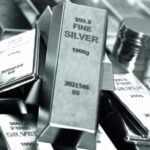
Silver is widely traded as a precious metal and has long been used both as a store of value and a medium of exchange. While it generally attracts less attention than gold, investors often incorporate silver into portfolios for diversification, its intrinsic value, or as a potential hedge in periods of elevated inflation.
Exposure to silver can be obtained through physical holdings such as coins and bars or via financial instruments like Exchange Traded Funds that mirror its international market price.
Drivers of Silver Price Movements
Silver prices react to a broad spectrum of influences. Periods of geopolitical stress or mounting concerns about a deep economic downturn can support silver due to its safe-haven role, though typically with less intensity than gold. Because silver does not generate yield, it tends to benefit from lower interest rate environments.
The behavior of the US Dollar is another crucial factor, as silver is priced in USD (XAG/USD). A stronger dollar often restrains silver prices, while a weaker dollar can provide upward momentum. Investor demand, mining output – with silver being more plentiful than gold – and recycling volumes also play important roles in shaping price trends.
Industrial Demand and Economic Cycles
Industrial usage is a major component of overall silver demand. The metal is heavily utilized in electronics and solar energy applications, supported by its status as one of the most conductive metals electrically, surpassing both copper and gold. Rising industrial demand can lift prices, while slowing consumption tends to have the opposite effect.
Economic conditions in the US, China, and India can be particularly influential. The sizable industrial bases in the US and especially China consume significant amounts of silver, while in India, jewelry demand is an important determinant of the metal’s pricing.
Relationship Between Silver and Gold
Silver frequently tracks movements in gold, as both are viewed as safe-haven assets. When gold prices advance, silver commonly moves higher as well. The Gold/Silver ratio – which measures how many ounces of silver are needed to equal the value of one ounce of gold – is often monitored to assess their relative valuations.
Some market participants interpret a high Gold/Silver ratio as a sign that silver may be undervalued or that gold is overvalued, while a low ratio can be taken to mean the opposite. Shifts in this ratio can therefore influence strategic positioning between the two metals.
 TradingPedia.com is a financial media specialized in providing daily news and education covering Forex, equities and commodities. Our academies for traders cover