Key Moments
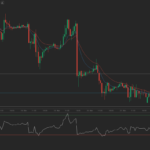
- GBP/USD trades with modest gains near 1.3560 during early Asian hours on Friday.
- Improved sentiment around a possible US-Iran peace arrangement weighs on the US Dollar’s safe-haven appeal.
- Markets look ahead to US April Nonfarm Payrolls, with consensus calling for 62,000 new jobs and a 4.3% Unemployment Rate.
Sterling Advances Modestly Against the Dollar
GBP/USD is posting slight gains around 1.3560 in early Asian trade on Friday, as the pair inches higher amid shifting geopolitical and macroeconomic drivers. The move comes as the US Dollar (USD) loses some of its safe-haven support on hopes that tensions in the Middle East may ease.
Market participants are positioning ahead of the upcoming US April employment report, with the data release expected to be a key catalyst for the next leg in the pair’s direction.
Iran Ceasefire Comments Temper Dollar Safe-Haven Demand
US President Donald Trump stated that a ceasefire with Iran remains in place despite renewed military confrontations in and around the Strait of Hormuz. He cautioned that any end to the ceasefire would be clear, according to CNN.
The administration has been awaiting Iran’s reaction to its initiative to reopen the strategically important waterway and halt the conflict. Rising confidence that a peace arrangement between the US and Iran can be reached is dampening demand for the USD as a refuge asset, providing a supportive backdrop for GBP/USD in the near term.
Markets Await US Nonfarm Payrolls
Attention now turns to the US labor market report, with traders closely monitoring the Nonfarm Payrolls (NFP) release. Consensus expectations point to an increase of 62,000 jobs in April, a substantial slowdown compared with the 178,000 positions added in March.
At the same time, the Unemployment Rate is forecast to hold at 4.3%. The data could influence expectations around US monetary policy and thereby impact the Dollar’s trajectory against major counterparts, including the Pound.
| US Labor Market Indicator | Period | Market Expectation | Previous Reading |
|---|---|---|---|
| Nonfarm Payrolls | April | 62,000 jobs | 178,000 jobs (March) |
| Unemployment Rate | April | 4.3% | 4.3% |
BoE Policy Stance and Inflation Risks
On the monetary policy front, the Bank of England (BoE) chose to keep its benchmark rate unchanged at 3.75% at its most recent meeting, in line with expectations. Policymakers presented a scenario framework indicating that further rate increases could be warranted, though they refrained from offering any firm guidance.
BoE Governor Andrew Bailey warned of “forceful tightening” if energy cost shocks stemming from the Middle East conflict continue to fuel inflation pressures. Such comments underscore the central bank’s readiness to respond should price dynamics deteriorate further.
Understanding the Pound Sterling
The Pound Sterling (GBP) is the oldest currency in the world (886 AD) and the official currency of the United Kingdom. It is the fourth most traded unit for foreign exchange (FX) in the world, accounting for 12% of all transactions, averaging $630 billion a day, according to 2022 data.
Its key trading pairs are GBP/USD, also known as ‘Cable’, which accounts for 11% of FX, GBP/JPY, or the ‘Dragon’ as it is known by traders (3%), and EUR/GBP (2%). The Pound Sterling is issued by the Bank of England (BoE).
BoE Decisions and Their Impact on Sterling
The single most important factor influencing the value of the Pound Sterling is monetary policy decided by the Bank of England. The BoE bases its decisions on whether it has achieved its primary goal of “price stability” – a steady inflation rate of around 2%. Its primary tool for achieving this is the adjustment of interest rates.
When inflation is too high, the BoE will try to rein it in by raising interest rates, making it more expensive for people and businesses to access credit. This is generally positive for GBP, as higher interest rates make the UK a more attractive place for global investors to park their money.
When inflation falls too low it is a sign economic growth is slowing. In this scenario, the BoE will consider lowering interest rates to cheapen credit so businesses will borrow more to invest in growth-generating projects.
Role of Economic Data in GBP Valuation
Data releases gauge the health of the economy and can impact the value of the Pound Sterling. Indicators such as GDP, Manufacturing and Services PMIs, and employment can all influence the direction of the GBP.
A strong economy is good for Sterling. Not only does it attract more foreign investment but it may encourage the BoE to put up interest rates, which will directly strengthen GBP. Otherwise, if economic data is weak, the Pound Sterling is likely to fall.
Trade Balance and Its Effect on the Pound
Another significant data release for the Pound Sterling is the Trade Balance. This indicator measures the difference between what a country earns from its exports and what it spends on imports over a given period.
If a country produces highly sought-after exports, its currency will benefit purely from the extra demand created from foreign buyers seeking to purchase these goods. Therefore, a positive net Trade Balance strengthens a currency and vice versa for a negative balance.
 TradingPedia.com is a financial media specialized in providing daily news and education covering Forex, equities and commodities. Our academies for traders cover