Key Moments:
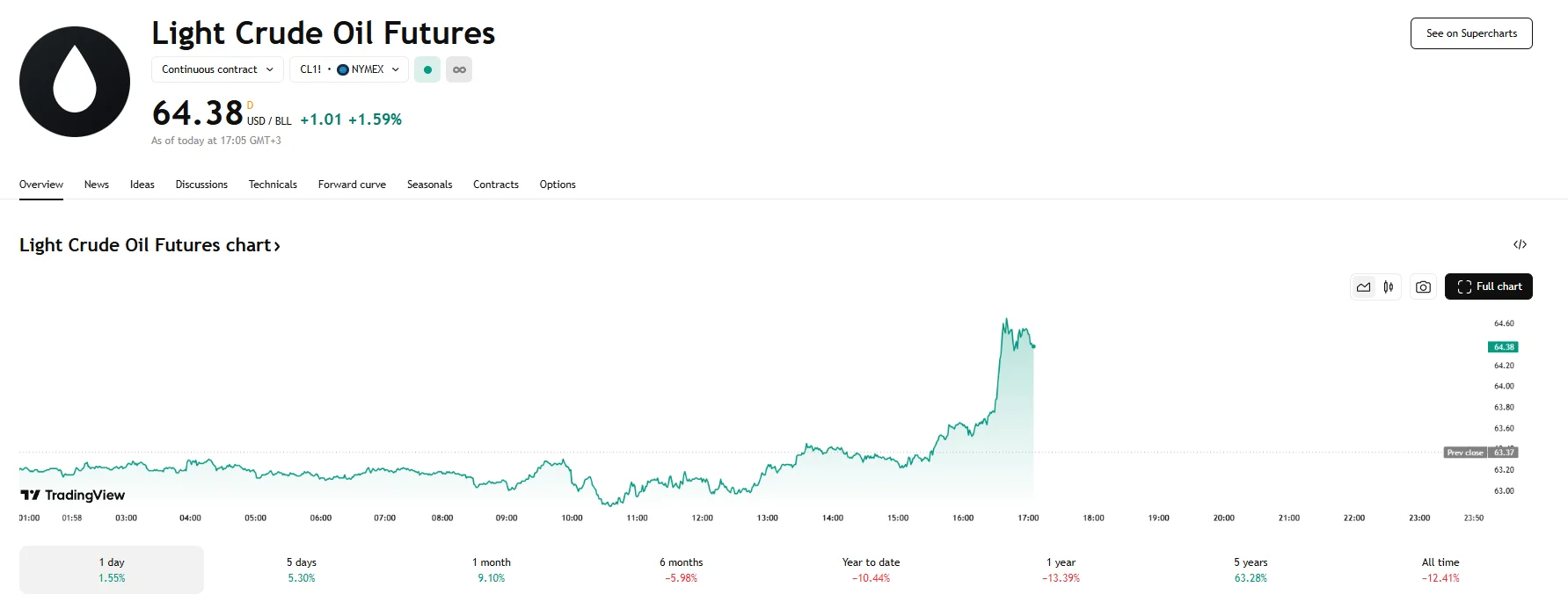
- Today’s trading saw Brent crude futures advance 1.35% to $66.22 per barrel, while WTI jumped 1.6% to $64.38.
- Oil benchmarks were poised for weekly gains of nearly 6% amid optimism over US-China trade prospects.
- Wildfires in Canada added to the momentum of crude prices.
Oil Markets Rebound on Trade Negotiation Optimism
Crude oil futures climbed significantly on Friday, driven by renewed investor confidence in the progress of US-China trade talks. Brent crude rose 1.35%, with the figure reaching $66.22 per barrel. The West Texas Intermediate (WTI) benchmark, meanwhile, gained 1.6% to $64.38 a barrel.
Both contracts were on pace to log weekly gains of nearly 6% following news that President Trump and China’s President Xi Jinping had spoken by phone and agreed to hold a meeting in the near future. The prospect of de-escalation in the ongoing tariff dispute helped alleviate concerns over global oil demand.
Macro Data and Supply Constraints Support Prices
Crude prices received further support from the latest US employment data. The US economy added 139,000 jobs in May, a slowdown compared to the previous month. The data nonetheless exceeded forecast, however, and served to soothe fears of a sharper economic downturn that would have exerted pressure on oil demand.
In parallel, volatility in oil supply also aided crude prices, seeing as around 7% of Canada’s oil production has been put on halt due to local wildfires. While recent rainfall improved the situation, the disruption highlighted the market’s sensitivity to unexpected supply hits.
Saudi Arabia Eyes Production Increase Amid Seasonal Demand
Also shaping market sentiment was Saudi Arabia’s recent decision to advocate for a sizable boost to output within OPEC+. Should the kingdom be successful, global markets could see a rise of no less than 411,000 barrels per day in August and potentially again in September. The goal of this potential hike has to do with rising fuel demand during the summer months.
In addition, diplomatic tensions between the US and Iran appeared to worsen, as Iran reportedly imported thousands of tons of Chinese ballistic missile components. This development dimmed any near-term prospects for a breakthrough in negotiations between Tehran and Washington.
 TradingPedia.com is a financial media specialized in providing daily news and education covering Forex, equities and commodities. Our academies for traders cover