Key Moments:
- Nvidia posted record Q1 revenue of $44.1 billion, reflecting a 69% year-on-year increase.
- The company projected an $8 billion revenue hit in Q2 due to tightened US export restrictions on AI chips to China.
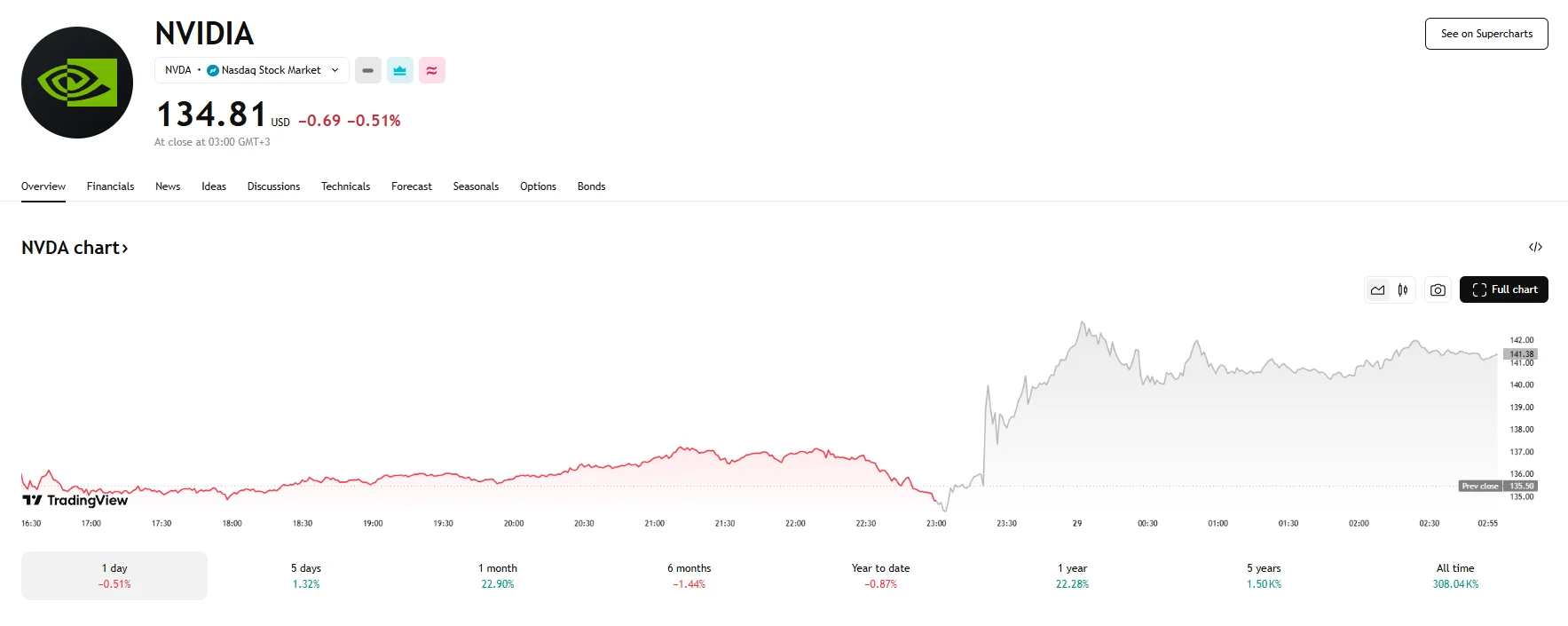
- Shares jumped almost 5% in after-hours trading.
Quarterly Results Exceed Expectations
Nvidia delivered stronger-than-expected earnings for 2025’s first quarter, reporting revenue of $44.1 billion. This reflects a rise of 12% from the previous quarter and a 69% surge from the same period last year. The impressive results, driven by surging demand for AI infrastructure, sent the stock up 4.89% in after-hours trading.
H20 Export Restrictions Weigh on Outlook
Despite the strong start to the fiscal year, the company warned that newly imposed US export regulations would dent sales of its H20 chips to Chinese buyers. These limitations are expected to reduce second-quarter revenue by $8 billion. Nvidia had previously anticipated even steeper losses, with a $5.5 billion charge expected in April. However, the actual charge came in $1 billion lower due to the company’s ability to repurpose certain materials.
China Revenue Shifted to Q1
Analysts noted that Chinese customers appeared to front-load purchases of H20 chips ahead of the export curbs. Nvidia booked $4.6 billion in H20 sales during Q1, though it still lost $2.5 billion in related revenue. China accounted for 12.5% of total revenue in the three-month period.
According to Gil Luria of D.A. Davidson, China-related revenue was removed from the guidance for the July quarter, but he also noted that some Chinese revenue had been pulled into the first quarter due to buyers stockpiling H20 in anticipation of new restrictions.
Blackwell Chips Spark Optimism
Despite geopolitical challenges, Nvidia projected sustained high demand for its next-generation Blackwell chips. On a call with analysts, CEO Jensen Huang highlighted strong interest from major customers like Microsoft. CFO Colette Kress emphasized that Nvidia foresaw projects in the relatively near future that would demand tens of gigawatts of its AI infrastructure.
 TradingPedia.com is a financial media specialized in providing daily news and education covering Forex, equities and commodities. Our academies for traders cover