Key Moments:
- US egg prices declined 12.7% in April, dropping for the first time in months.
- Prices in April were still 79% higher year-over-year.
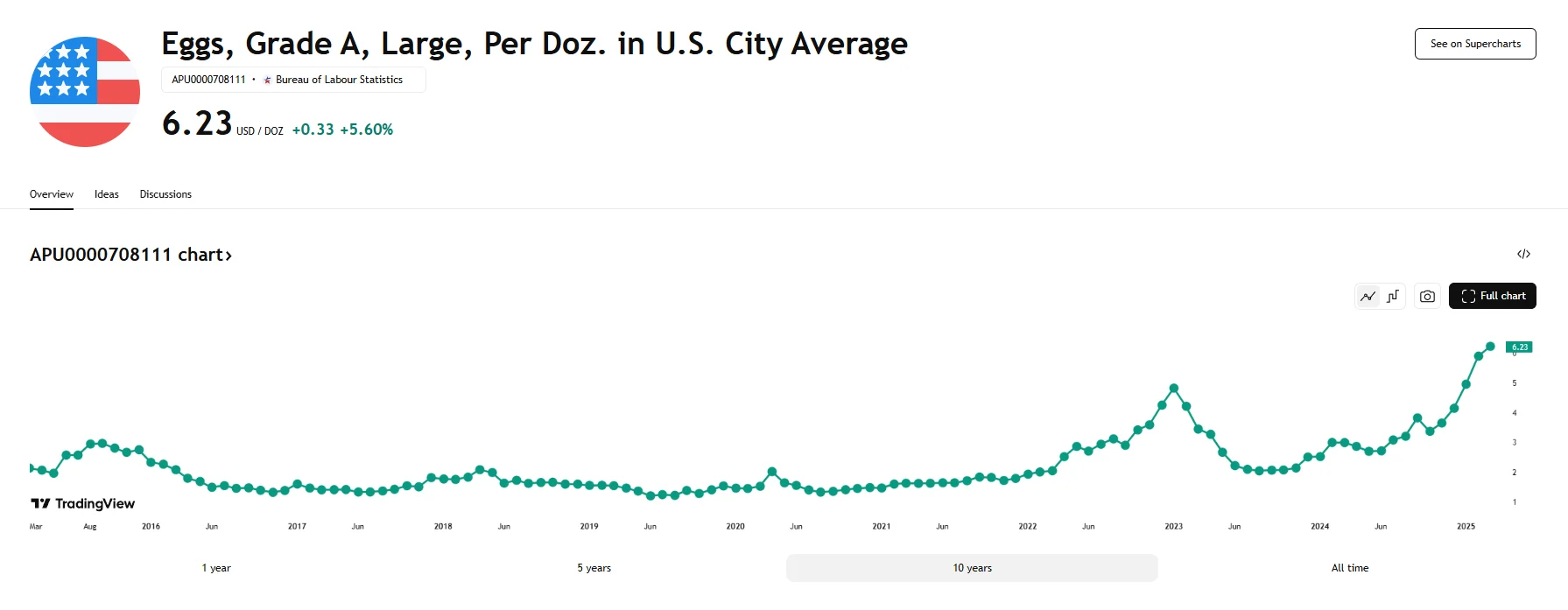
- April’s decline followed two consecutive record-breaking months, with prices peaking at $6.23 per dozen in March.
Prices Ease but Remain Elevated
Retail egg prices in the United States dropped in April after hitting all-time highs earlier in the year, as newly released government data showed some relief for consumers. As revealed by the Consumer Price Index, the average price for a dozen Grade A eggs fell 12.7% from the prior month, totaling $5.12 per 10-egg carton. This marked the first monthly decrease since last October, snapping a two-month streak of record-setting levels. The monthly drop in the broader egg price index was the steepest since 1984 and helped to temper overall consumer price inflation during the month.
Despite the decline, costs remain significantly above typical levels. Compared to the same month last year, April’s average price represented a 79% increase from $2.86 per dozen. As seen below, March had seen prices reach a record $6.23, making this pullback in April notable, though not yet a sign of full recovery.
High Seasonal Demand and Disease Outbreaks Continue to Influence Supply
It was uncertain whether prices would fall significantly in April due to strong seasonal demand during Easter and Passover. Historically, consumer purchases of eggs rise during these holidays, often impacting pricing dynamics.
Contributing to ongoing supply pressures is the widespread outbreak of bird flu, which has decimated flocks across the US in the last several years, with more than 169 million birds having been lost. Infected birds are culled to prevent the virus from spreading, a precaution that disproportionately affects industrial egg farms housing millions of hens. In April alone, two separate outbreaks in Ohio and South Dakota impacted over 927,000 egg-laying hens, compounding inventory constraints.
 TradingPedia.com is a financial media specialized in providing daily news and education covering Forex, equities and commodities. Our academies for traders cover