Key moments
- Brent crude futures saw a sharp decrease of 7.44% on Friday.
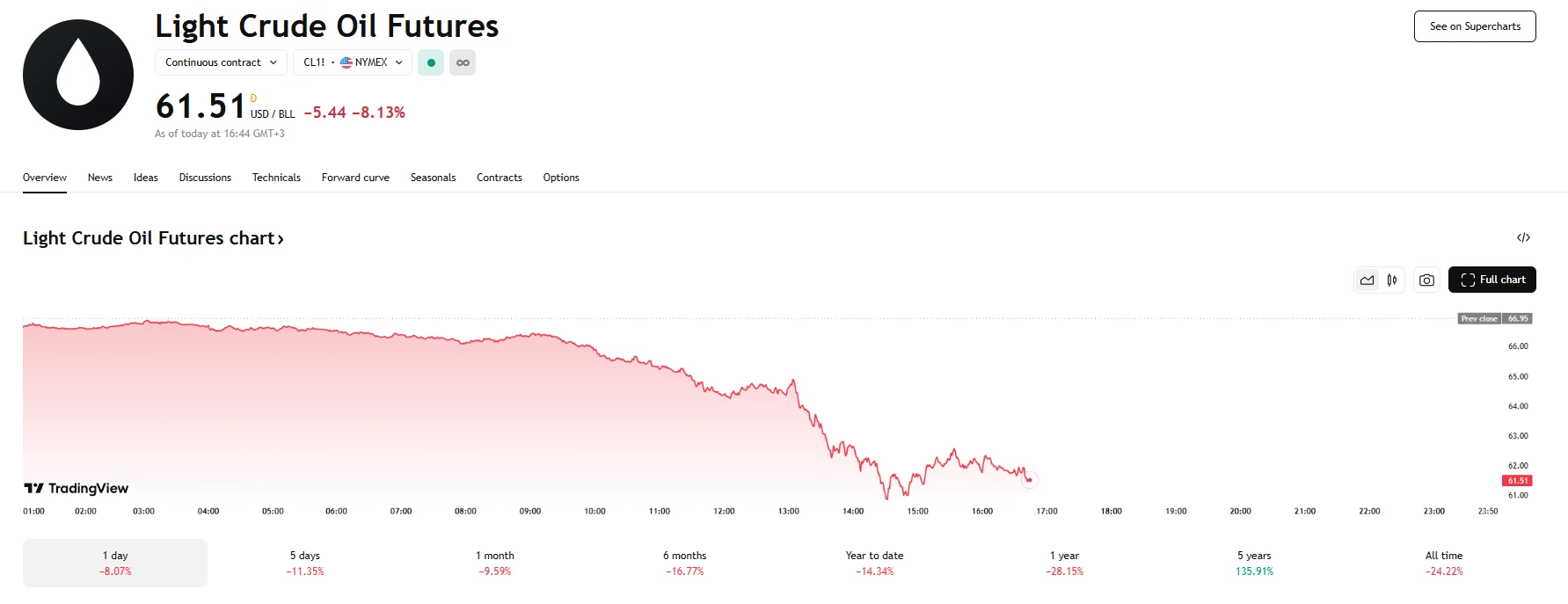
- WTI crude futures sank 8.13%, with the price reaching $61.51.
- Oil prices were affected by the recent decision of OPEC+ to hasten supply growth along with China’s new tariffs on US imports.
Crude Oil Futures in Freefall as Market Turmoil Mounts
Brent crude futures witnessed a substantial erosion of value on Friday, plummeting by 7.44% to $64.82. Similarly, West Texas Intermediate (WTI) crude futures also suffered a sharp downturn, falling by 8.13% to $61.51.
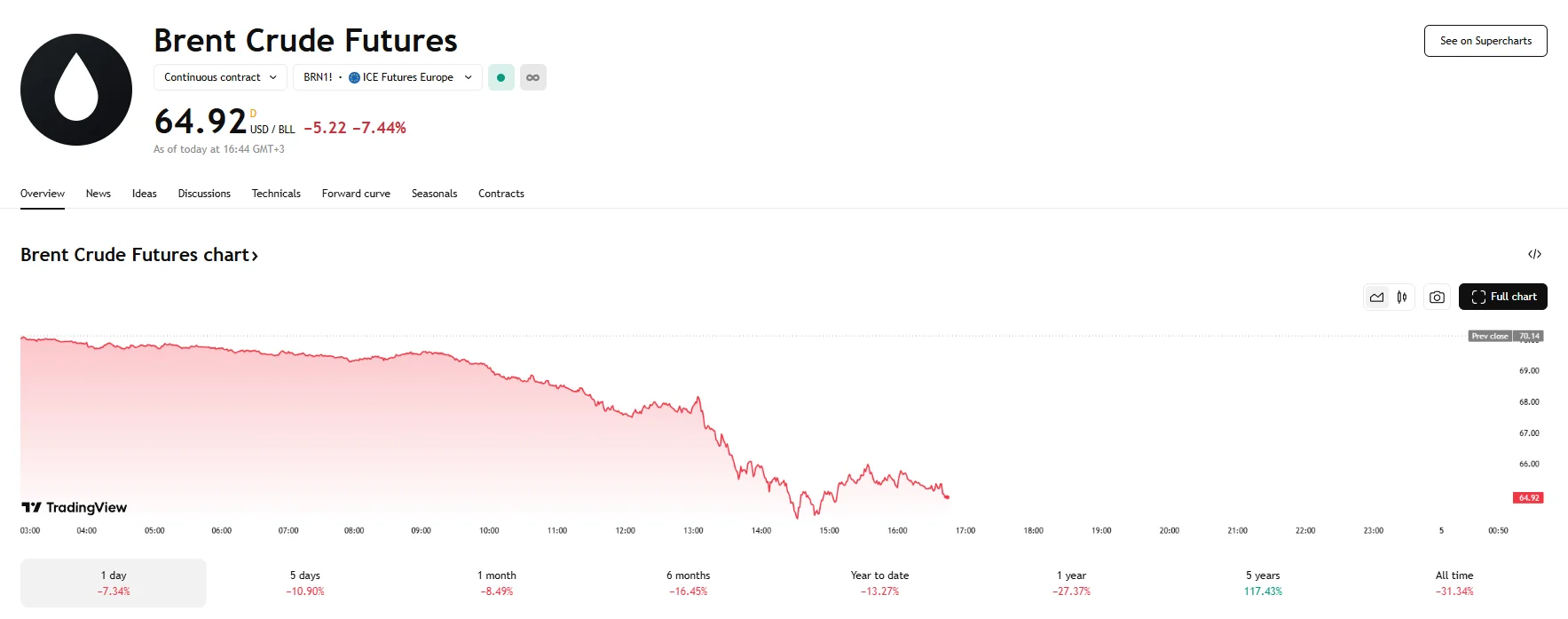
This synchronized collapse represents crude oil’s steepest decline in the past three years. The current slump is the result of China’s decisive response to US trade policies and an unforeseen adjustment in oil supply strategy by the Organization of the Petroleum Exporting Countries and its allies, collectively known as OPEC+.
In response to the levies imposed by the Trump administration, China declared its intention to apply a 34% tariff on all goods entering the country from the US. This assertive countermeasure ignited fears of a full-blown trade war between the two largest economies globally. Such a conflict is widely anticipated to negatively impact global economic growth, leading to reduced demand for energy commodities, including crude oil. The prospect of diminished economic activity and curtailed trade flows triggered widespread pessimism among oil traders, prompting a rapid unwinding of long positions.
Adding further downward pressure on crude oil benchmarks was the unexpected decision by OPEC+ to increase oil production. As previously reported by TradingPedia, the group announced that it will boost output by 411,000 barrels per day in May, around three times more than what was previously anticipated. This likely aimed to address consumer pressure along with fears centered around inflation.
Crude oil was among the exemptions from US President Donald Trump’s tariffs on exports, but concerns remain that the sector will be affected by the broader trade policies, nonetheless. The potential for increased inflation, slower economic growth, and intensified trade disputes could indirectly weigh on oil demand and market sentiment. Several banks have already revised their oil price targets downwards, with Goldman Sachs’ Daan Struyven citing the growing recession risks as a factor.
 TradingPedia.com is a financial media specialized in providing daily news and education covering Forex, equities and commodities. Our academies for traders cover