The London Stock Exchange has a long and successful history behind it and today is one of the most respected and successful exchanges in the world. In fact, its origins go back as far as the reign of Queen Elizabeth I who opened the so-called Royal Exchange in 1571.
At the time of its opening the stockbrokers who operated from the Exchange were found to have “rude manners” and so initially they were banned from entering the building and had to relocate their own personal businesses to a nearby coffee house in the City of London. In its earliest days trading was carried out on just a few commodities including salt, paper and coal but over time these gradually grew.
The original Royal Exchange building fell victim to the Great Fire of London in 1666 and it was on its rebuilding in 1669 that the first truly regulated stock market in Britain was born. As time moved on an increasing number of rules and restrictions were introduced including, in 1812, the first regulations regarding settlements of payment and defaults and by 1914 it was the financial centre of the world.
One of the next major milestones in its history was the opening of a new 26 storey headquarters for the LSE in 1972 and 14 years later the so-called “Big Bang” brought about widespread deregulation of a number of markets ushering in the modern era. In this the trades which formerly were done in the old fashioned way of exchanging physical documents could now be done remotely and electronically reducing the need for all the brokers and traders to be in one place. The Exchange moved into its current Paternoster Square offices in 2004 and three years later, in 2007, it merged with the Borsa Italiana to for the London Stock Exchange Group.
The LSE today
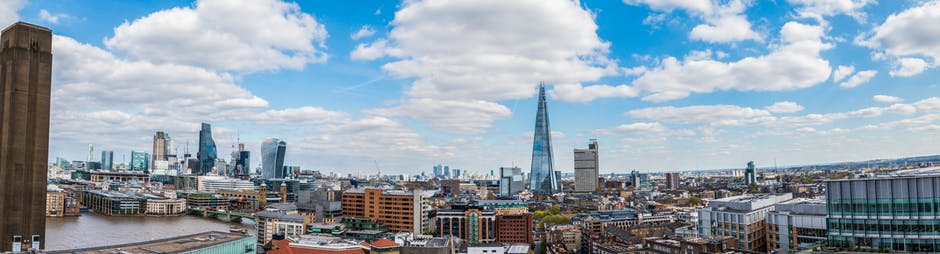
Today all forms of businesses trade their shares through the LSE from big industrials to service industries as well as banks, insurance companies and media organisations to name but a few. The biggest companies are on the Premium Listed Market with smaller ones being traded on the Alternative Investment Market (AIM).
At the moment the LSE is the sixth largest in the world after New York’s two exchanges, Japan’s Nikkei, Shanghai and the Europe-wide Euronext market. In the latest full figures released total income for 2016 was £1.657 million with an operating profit of £426.8 million and, on average, around 1 million trades are carried out through it every working day.
The gambling sector
One sector that has been particularly active within the LSE over recent years has been gambling and gaming. The huge growth of online gambling has fuelled this interest along with the gradual expansion of the industry in general following The Gambling Act 2005 which started to take effect in 2007. This liberalised the industry, for example by allowing companies to advertise on TV. According to Gambling Commission statistics in 2008 the Gross Gambling Yield for companies was £8.36 billion but by September 2016 this figure had risen by 65% to £13.8 billion. Of this, £4.7 billion, or 34% of the total, was generated by the remote gambling sector making it the single biggest contributor to income.
Naturally, such a lucrative and buoyant sector has also made it a very competitive one and recent times have seen a number of the biggest companies either merge or acquire other smaller businesses in order to create mega-companies that hope to see off the competition. Now the trend has been established it’s likely to continue making gambling companies an increasingly attractive investment opportunity. And with the growth in revenues from gamblers showing no signs of slowing down this may only increase. One source believes growth in the online gambling market could even be as much as 7.9% between 2017 and 2020.
An example of success
One publically quoted company that has so far continued to go it alone, despite nearly being involved in a couple of these megamergers, is 888 Holdings. The company was first formed in 1997 making it one of the very first dedicated online operators and today it has under its umbrella a number of different divisions including two separate online casinos, bingo, sports betting and even a dedicated poker site.
The company was first listed on the FTSE 250 in October 2005 and has risen to be one of the most significant companies in the sector with a market capitalisation, as of March 2018, of around £1billion.
Its continued growth and success, and therefore its appeal to investors, has been driven by two key considerations. The first is that over the years it has continued to acquire other niche online gaming companies including Globalcom’s bingo business in 2007 and Wink Bingo in 2009. By acquiring businesses which already had a great track record these proved to be successful moves right from the start.
The second important feature of 888 Holdings’ continued success has been the company’s dedication to exceeding customers’ expectations through creating and providing innovative games that are also market leading. With such a positive approach and a clear corporate mission it’s not surprising that the company is so appealing to investors.
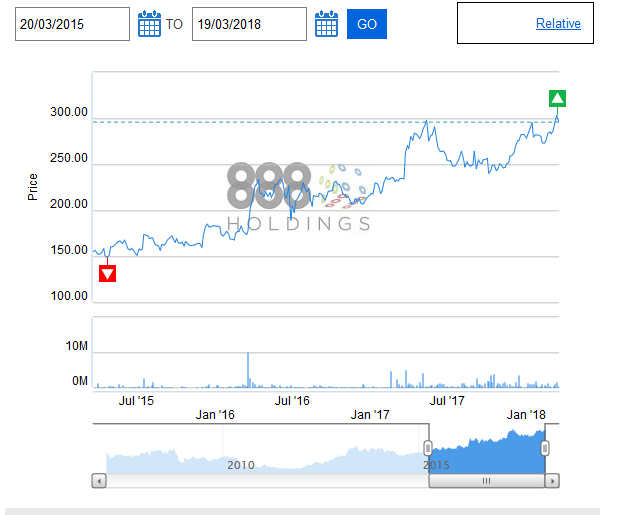
It’s also a company with a good track record in terms of the dividends that it pays to investors. The most recent was in September 2017 of 3.09p per share which made the year’s total 8.09p per share. These have been thanks to very strong financials from the business which in 2017 had a £521 million turnover of which nearly 10% of this made up their profits of £52 million. The share price has also shown a steady rise, standing at around 300p in March 2018, well over the price at one of its lowest points of 130p back in 2014.
So with an optimistic outlook for the future of gambling in general, and the online version in particular, investing in the sector looks like a potentially good move for anyone wanting to speculate on the London Stock Exchange. After all, when you’re wagering on a company to do well what could be better than one which is involved in the gambling business itself!
 TradingPedia.com is a financial media specialized in providing daily news and education covering Forex, equities and commodities. Our academies for traders cover