The yen was poised for the biggest five-day increase against the US dollar in seven weeks, as rising tension in Ukraine, ahead of a referendum in Crimea on splitting to join Russia, boosted demand for haven assets.
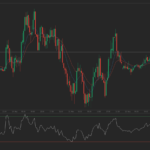
USD/JPY touched a session low at 101.50 at 06:25 GMT, after which the pair consolidated at 101.60, losing 0.2% for the day. Support was likely to be received at March 4th low, 101.42, while resistance was to be encountered at March 13th high, 102.86. The yen headed for a 1.6% weekly increase, the biggest since the five days through January 24.
The sales-tax increase and BoJs monetary policy stance
The Bank of Japan, maintained record stimulus this week, keeping its pledge to expand the money supply by an annual pace of 60 trillion to 70 trillion yen per year, in line with analysts’ forecasts. In addition, the central lowered its forecasts of exports, but raised its assessments of industrial output and investment.
While economic growth is forecast to surge in this quarter ahead of the sales-tax increase in April, data from a sentiment survey released earlier this week, showed respondents expected a sharp pullback when consumers and companies face the higher levy. The New-York based bank, Goldman Sachs Group Inc. forecast that additional easing by BoJ will drive the yen to a six-year low by mid-2014.
The sales-tax increase seems to undermine the BoJ Governor Haruhiko Kuroda’s efforts to achieve 2% inflation target, as Japanese economy is projected to contract 3.9% in the three months from April, according to a Bloomberg survey of economists, ending a projected six straight quarters of expansion.
However, today, minutes of the Bank of Japan meeting in February showed many officials saw the nation’s economy moving toward the 2 percent target for price increases.
Effective from April, the sales-tax will rise to 8% from the current level of 5%. This will be the first increase of of the levy in 17 years. The Japanese government already addressed the problem, by approving 5.5 trillion yen budget increase in December to offset the higher sales burden, but efforts seem insufficient as the Prime Minister Shinzo Abe is also expected to detail further growth measures in June to sustain momentum.
Crimean referendum
At the same time, the parliament of Crimea voted on Tuesday that the Black Sea peninsula will declare itself an independent state if its residents approve a March 16 referendum on splitting from Ukraine and joining the Russian Federation. US President Barack Obama and German Chancellor Angela Merkel have stated the vote has no international legitimacy and warned Russia to retreat from plans to annex Crimea, with Merkel even threatening “massive” political and economic sanctions.
“Yen strength across the board has been exerting itself as the best way to play risk aversion,” said Daniel Been, a Sydney-based senior foreign-exchange strategist at Australia & New Zealand Banking Group Ltd, cited by Bloomberg. “We are watching very closely the referendum over the weekend,” he referred to the Crimea vote on splitting from Ukraine for signs of a deterioration in market sentiment.
The MSCI Asia Pacific Index of equities has tumbled 3.7% this week, poised for the biggest drop since May 2012, while the MSCI World Index of developed stocks has declined 2.2% since March 7th, also boosting demand for the yen as a safe-haven.
The Japanese currency has risen 3.2 percent this year, according to a Bloomberg Correlation Weighted Indexes which track 10 developed nation currencies, while at the same time the US dollar has fallen 0.7 percent.
US economic data
Meanwhile, the US Census Bureau reported yesterday that retail sales in the US increased 0.3% in February, exceeding analysts’ expectations of a 0.2% gain and after a 0.6% drop in January that was larger than the 0.4% decline reported earlier. Core retail sales, which exclude the volatile automobile sales, rose 0.3% in February, above analysts’ projections for a 0.1% gain and after a 0.3% drop in the previous month, that was larger than initially reported. Retail spending is regarded as a key economic indicator as it accounts for almost 70% of the US economy.
“Consumer confidence has been pretty resilient throughout this entire period,” Guy Berger, an economist at RBS Securities Inc. in Stamford, Connecticut, said before the report, cited by Bloomberg. “Equities have been up a little bit for the year, so the wealth effects are still relatively favorable.”
A separate report showed the number of people filing for unemployment benefits unexpectedly declined last week, reaching the weakest level since late November. Initial jobless claims dropped to 315 000 from 324 000 a week ago, compared to analysts’ projections of an increase to 330 000.
Elsewhere, AUD/USD touched a session low at 0.8997 at 5:20 GMT, after which consolidation followed at 0.9005, losing 0.29% for the day. The pair was poised to register a 0.72% weekly decline. Support was likely to be found at March 12th low, 0.8924, while resistance was to be encountered at March 13th high, 0.9104.
 TradingPedia.com is a financial media specialized in providing daily news and education covering Forex, equities and commodities. Our academies for traders cover