Key Moments
- NZD/USD trades around 0.5690 in Friday’s Asian session, supported by expectations of further RBNZ rate hikes.
- Markets price roughly 85% odds of an RBNZ hike to 3.0% in October and see scope for rates to reach 3.75% over the next year.
- Fed pricing points to a 92.8% probability of no move at the next meeting, with an 80.5% chance of a December hike.
RBNZ Expectations Bolster NZD Despite Softer Inflation Print
The New Zealand Dollar gained ground against the US Dollar during Asian trading on Friday, with NZD/USD advancing to around 0.5690. The move comes as markets increasingly anticipate more aggressive policy tightening from the Reserve Bank of New Zealand (RBNZ), lending support to the Kiwi even in the face of softer Consumer Price Index (CPI) data.
Despite the recent moderation in inflation figures, many analysts anticipate price growth to accelerate well above 4% in the fourth quarter and to remain outside the RBNZ’s 1-3% target band for longer than previously projected by the central bank.
Market pricing now reflects about an 85% probability that the RBNZ will lift the Official Cash Rate (OCR) by 25 basis points to 3.0% at its October meeting, with close to a 50% chance of a further move to 3.25% in December, according to Bloomberg.
“Higher for longer inflation is a major headache for the RBNZ,” said Mark Smith, senior economist at ASB Bank in Auckland, who sees inflation above 3% until the fourth quarter next year and tips a rate hike on October 28. “We expect the RBNZ to acknowledge that they have more work to do and to maintain a conditional tightening bias,” Mark added.
Later on Friday, traders will monitor the preliminary October reading of the US S&P Global Purchasing Managers Index (PMI) for further direction on the US Dollar and broader risk sentiment.
Fed Outlook: High Odds of Near-Term Pause, December Hike Still in Play
While RBNZ expectations have turned more hawkish, positioning in US rates has shifted toward a more cautious stance on additional Federal Reserve tightening in the near term. Traders scaled back the probability of a near-term US rate increase after Federal Reserve Chair Kevin Warsh declined to provide clear guidance on the timing of any next move.
According to the CME FedWatch Tool, markets currently assign a 92.8% probability that the Fed will keep rates unchanged at its policy meeting next week, while still pricing in an 80.5% chance of a rate hike in December.
RBNZ Hawkish Path Meets Fed Tightening Headwinds for NZD
Strategists at Brown Brothers Harriman highlight that New Zealand’s inflation profile and commodity backdrop continue to justify a hawkish stance from the RBNZ. They cite “above target inflation and still elevated oil prices” as key arguments for further policy tightening.
The strategists note that “the swaps curve price in 85% odds of a 25bps RBNZ rate hike to 3.00% on October 28 and more than 100bps of tightening over the next twelve months to 3.75% – near the upper end of the RBNZ’s estimated neutral range of 2.20%-4.10%.”
However, Brown Brothers Harriman also emphasize that the currency impact may be muted, warning that “nonetheless, NZD/USD upside is constrained because Fed tightening curbs the scope for policy convergence.”
Fed Communication: Warsh Emphasizes Caution and Data Dependence
Fed Chair Warsh’s latest speech was assessed at 5.6/10 by the FXS Speechtracker, slightly below the historical average score of 6.1/10. This suggests the remarks were somewhat less impactful than typical communications, even though they were broadly constructive on structural growth and investment trends.
Warsh acknowledged being “over-scarred from the global financial crisis,” underscoring a persistent cautious bias. He indicated that global developments have generally aligned with the Fed’s expectations and highlighted the strength in policy-driven investment, while consistently avoiding any explicit signals on the October and December policy decisions. This reinforced the Fed’s data-dependent stance and limited immediate guidance for the US Dollar.
Warsh also focused on artificial intelligence as a demand-side force with unclear implications for employment. His references to upcoming field hearings and task forces suggested a forward-looking but exploratory approach to assessing technology-related risks and opportunities for monetary policy and financial stability.
The FXS Fed Sentiment Index was unchanged, moving 0.00 points to 127.51, a level described as still elevated and consistent with a firmly hawkish overall policy tone. The lack of movement implied that Warsh’s remarks, despite their cautious and non-committal nature on the rate path, did not significantly alter market views on the Fed’s hawkish stance or its support for the Dollar.
NZD/USD Technical Picture: Bearish Bias Persists Below 100-Day SMA
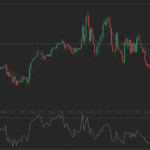
From a technical standpoint, NZD/USD retains a negative near-term configuration on the daily chart as it continues to trade beneath the 100-day simple moving average (SMA). While the pair is holding above the 20-day mid-line of the Bollinger Bands, indicating some short-term stabilization after its recent decline, the upper band is already acting as nearby resistance.
The 14-day Relative Strength Index (RSI) has climbed to 52.8, back in neutral territory. This reflects an easing of prior oversold conditions rather than a clear shift into a bullish trend.
| Level | Indicator / Zone | Approximate Price |
|---|---|---|
| Resistance 1 | Bollinger upper band | 0.5705 |
| Resistance 2 | 100-day SMA | 0.5770 |
| Support 1 | Bollinger middle band | 0.5635 |
| Support 2 | Bollinger lower band | 0.5565 |
On the upside, initial resistance is located near the Bollinger upper band around 0.5705, followed by the 100-day SMA at 0.5770, where selling interest is expected to reappear as long as price remains below these barriers. On the downside, first support is aligned with the Bollinger middle band around 0.5635, with a more significant base at the lower band near 0.5565. A sustained break below this latter region would reopen the broader downtrend and expose the pair to new lows.
 TradingPedia.com is a financial media specialized in providing daily news and education covering Forex, equities and commodities. Our academies for traders cover