Key Moments
- Amazon’s Leo satellite unit agreed to equip 500 Delta Air Lines aircraft with in-flight Wi-Fi starting in 2028, its second major airline partnership.
- Amazon has launched 214 Leo satellites since April 2025, with more than 20 additional launches planned over the next 12 months as it targets global service.
- Delta currently uses Viasat and Hughes on roughly 1,200 aircraft, with about 163 million SkyMiles members having accessed its existing Wi-Fi offering.
Delta Picks Amazon for Next-Generation Onboard Connectivity
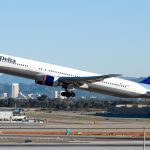
Amazon’s Leo satellite internet business has entered into an agreement with Delta Air Lines to deliver in-flight Wi-Fi across 500 aircraft, with service scheduled to begin in 2028. The arrangement marks Amazon’s second significant move into airline connectivity as it accelerates satellite deployments and positions itself against Elon Musk’s Starlink service.
The partnership raises the stakes in the contest for airline Wi-Fi customers, pitting Amazon’s developing low Earth orbit service directly against Starlink’s already extensive satellite network and existing global coverage. Financial terms of the Delta agreement were not disclosed.
Building on Earlier Airline and Satellite Commitments
Amazon previously secured its first commercial airline agreement with JetBlue, under which Leo connectivity is slated to roll out across a quarter of JetBlue’s fleet beginning in 2027. Airlines have been gravitating toward low-orbit satellite constellations in search of higher-speed onboard internet with fewer interruptions than legacy systems.
On the competing side, Southwest Airlines recently revealed a deal to adopt Starlink for onboard connectivity. Starlink has already signed arrangements with United Airlines, Alaska Airlines and Hawaiian Airlines, among others, highlighting the rapidly evolving competitive landscape.
Scope and Timing of the Delta Rollout
According to Ranjan Goswami, Delta’s chief marketing and product officer, Amazon’s Leo terminals are set to be installed on new Delta aircraft, with initial service targeting flights within the continental U.S. beginning in 2028. Details on pricing or the overall value of the agreement have not been made public.
Goswami indicated that Delta’s decision to select Leo over alternative providers was influenced by the airline’s broader relationship with Amazon Web Services, the company’s cloud computing arm.
Amazon’s Leo Constellation and Deployment Plans
Amazon has committed at least $10 billion to its Leo satellite network, which is designed to deliver satellite internet globally to both consumer and enterprise users. Since April 2025, the company has placed 214 satellites into orbit and is planning to more than double the cadence of launches, with over 20 missions scheduled in the coming 12 months, according to Chris Weber, vice president of the Leo business.
Weber said Amazon has been trialing the service with business customers since last year and is “months away” from initiating commercial operations. The rollout is expected to begin in limited geographic areas and expand as more satellites are added to the constellation.
Existing Delta Connectivity and Customer Usage
Delta currently relies on satellite capacity from Viasat and Hughes across its approximately 1,200 aircraft to offer Wi-Fi to passengers enrolled in its SkyMiles loyalty program. The airline reported that around 163 million members have used its existing in-flight connectivity to date.
Launch Contracts and Competitive Dynamics in Orbit
Weber said Amazon has roughly 100 contracted launches to place Leo satellites into orbit. These agreements, spanning multiple years, are with providers including Blue Origin and United Launch Alliance – the joint venture between Boeing and Lockheed Martin – and are collectively valued at several billion dollars. Amazon is also flying Leo satellites on SpaceX’s Falcon 9 rockets.
By comparison, SpaceX has deployed more than 10,000 satellites since 2019, establishing itself as the largest satellite operator globally. That rapid expansion has been supported by its internally developed, reusable Falcon 9 rockets, which provide a significant operational edge in scaling large satellite constellations.
Regulatory Pressure and Deployment Deadlines
Amazon requested a two-year extension from the Federal Communications Commission in January to meet a July 2026 requirement to place half of its planned 3,200-satellite tranche into orbit. The request has prompted criticism from SpaceX, and FCC Chair Brendan Carr has publicly questioned the pace of Amazon’s deployment efforts.
“We’re doing everything in our control to get the constellation deployed,” Weber said.
Key Data Overview
| Item | Detail |
|---|---|
| Delta – Amazon Leo aircraft covered | 500 planes |
| Delta Leo service start | 2028 (continental U.S. flights) |
| JetBlue Leo coverage | One quarter of fleet starting 2027 |
| Delta current fleet with Wi-Fi | Roughly 1,200 planes |
| SkyMiles members who have used Wi-Fi | Around 163 million |
| Amazon Leo satellites launched since April 2025 | 214 |
| Planned launches next 12 months (Leo) | Over 20 |
| Planned Leo satellite tranche | 3,200 satellites (FCC deadline for half by July 2026, extension requested) |
| Total launch contracts for Leo | Roughly 100 launches, valued at several billion dollars |
| Starlink satellites deployed since 2019 | Over 10,000 |
 TradingPedia.com is a financial media specialized in providing daily news and education covering Forex, equities and commodities. Our academies for traders cover