Europe’s Road to Electrification: The Countries Driving the EV Revolution in 2026
Europe entered 2026 deeper into its electric vehicle transition than ever before, but the shift away from petrol and diesel is anything but uniform. Across the continent, electric models are moving from the margins of the car market into the mainstream, supported by expanding charging networks, tighter emissions rules, and growing pressure on manufacturers to reduce their reliance on combustion engines.
However, the road ahead is also becoming more complicated. For now, only a few nations, led by the Nordics, are close to fully replacing hydrocarbon-based fuels with greener alternatives. Curious to track the global demand for electric cars, the team at Tradingpedia examined the sales and new registration figures for the first half of 2026 from the European Automobile Manufacturers’ Association (ACEA) to reveal which nations lead in EV adoption.
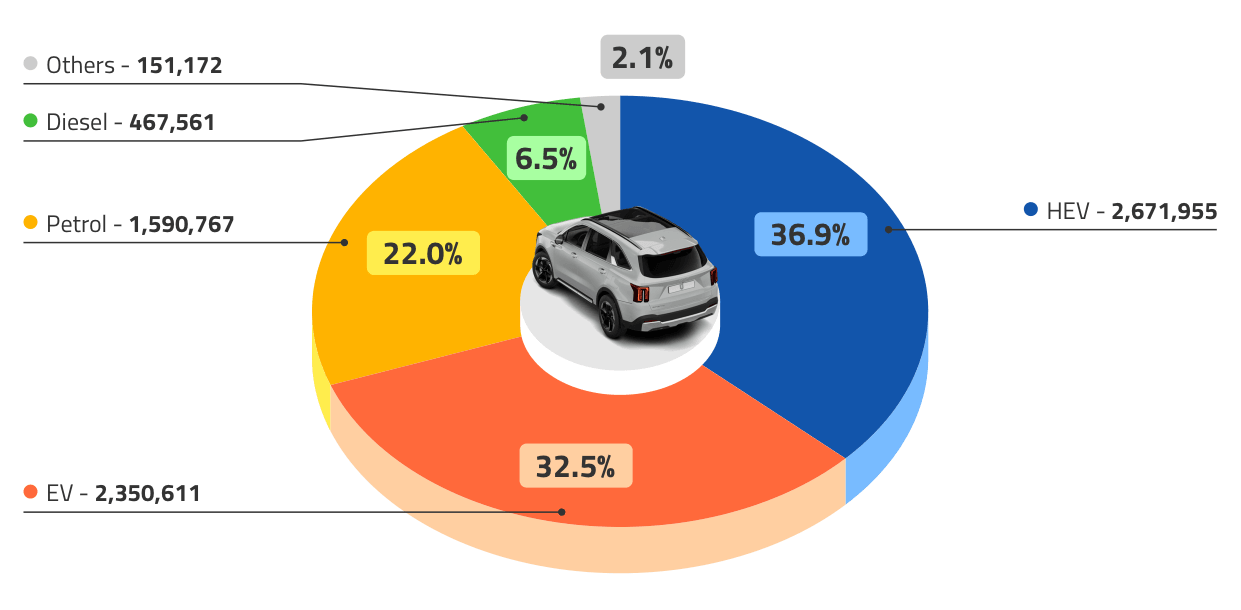
The European car market is changing shape rapidly. In the first half of 2026, hybrids were the most popular type of new car, accounting for 37% of registrations, while battery-electric and plug-in hybrid vehicles together captured another 32.5%. Petrol and diesel, by comparison, made up less than three in ten new cars, at 22% and 6.5% market shares, respectively. The figures point to a market increasingly dominated by electrified powertrains, although the transition is not a simple shift from combustion engines to fully electric cars. Hybrid technology currently sits at the centre of the transformation, while fully electric and plug-in hybrid models are rapidly expanding their combined footprint.
Key Highlights
- The largest number of EVs in the first half of 2026 was sold in Germany: 531,799 new vehicles were purchased, up 37.19% from the same period in 2025.
- The Nordics continue to lead Europe in the transition to electric mobility, with 98.29% of newly registered cars in Norway now fully electric.
- EVs account for 80.58% of new cars sold in Denmark, 66.08% in Sweden, and 63.74% in Iceland.
- Europe’s electric vehicle market expanded in the first half of 2026, with total sales rising 31.70% compared to the first half of 2025 to 2.35 million units.
Share of EVs Around the World
Share of BEVs and PHEVs in new car sales and registrations in 2026 (January – June)
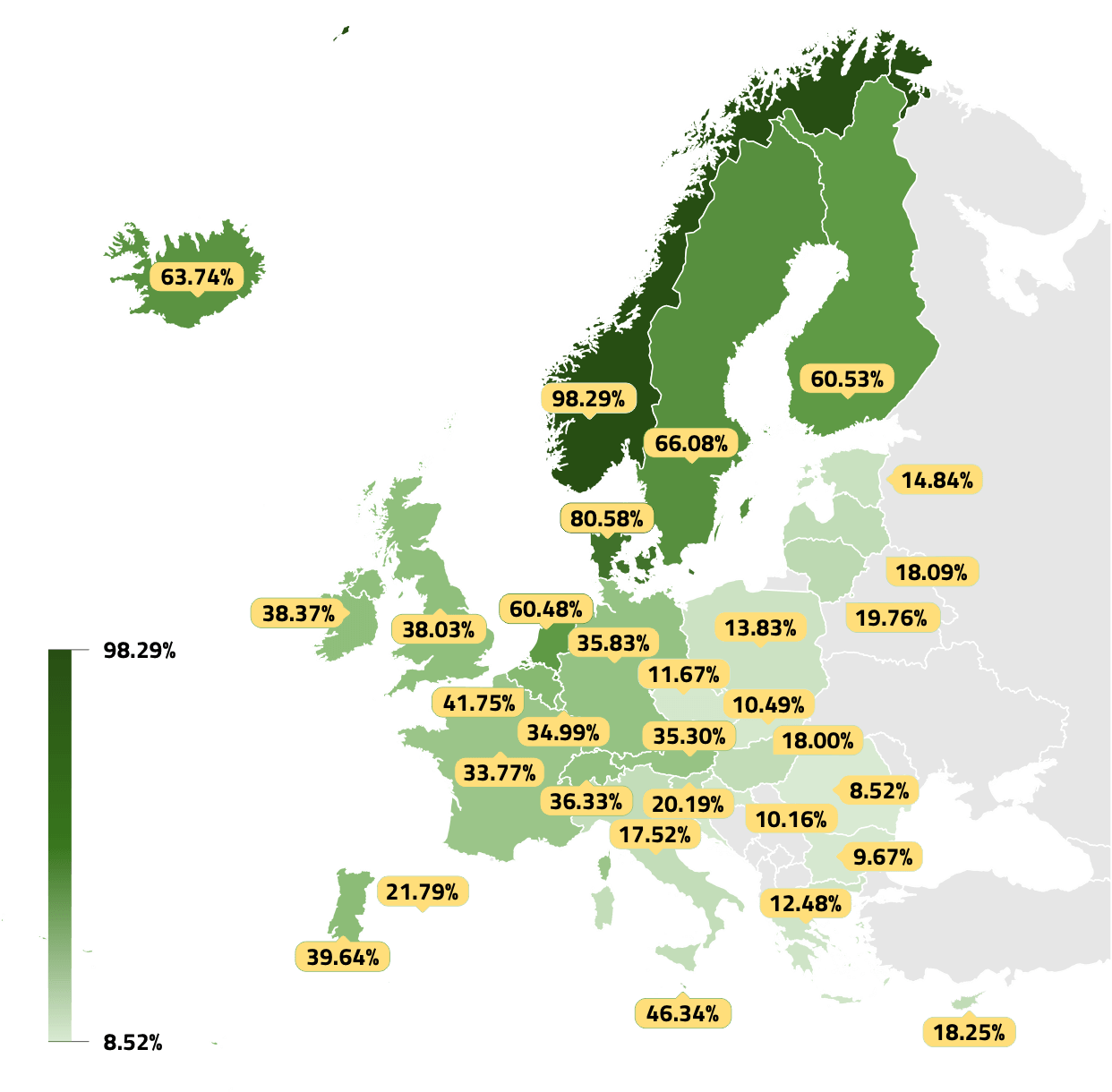
*EVs include battery electric and plug-in electric vehicles
**For Romania, only BEV sales are included, as PHEV data is not available in the source.
Are EVs Really Replacing ICE Cars?
Electric vehicles are steadily transforming Europe’s roads, but not at the same pace everywhere. In Norway, the shift is nearly complete: 98.29% of all new cars registered in the first half of 2026 were electric, leaving petrol and diesel models in sharp decline, down more than 58% and 35%, respectively. The rest of Europe is catching up fast. Bulgaria, Latvia, and Slovenia all saw sharp increases in EV adoption compared with last year. Bulgaria and Latvia saw increases of over 67%, while in Slovenia, the share rose 47.4% to 17,090 vehicles. These jumps show that even smaller markets are accelerating rapidly toward electric mobility.
However, this replacement effect is far from uniform. Despite Latvia’s electric vehicle share rising dramatically, petrol and diesel models still dominate the market, accounting for 79.29% of all new car registrations in the first half of 2026. The contrast is even starker in Bulgaria, where 84.03% of new vehicles purchased still run on conventional fuels, and diesel registrations have actually risen by 11.56% year-on-year. Factors such as income levels, charging infrastructure, and vehicle affordability continue to shape adoption rates, as consumers in lower-income markets remain more sensitive to upfront costs and limited charging networks.
In Germany, Europe’s largest auto market, battery-electric vehicle (BEV) registrations surged 47.96% in the first half of 2026, pushing fully electric cars to 24.79% of all new registrations. Plug-in hybrids, or PHEVs, also continued to grow, with registrations up 17.9% year-on-year, but their share remained much smaller at 11.0%. This is a notable shift from 2025, when PHEVs jumped 62.3% as buyers appeared to favour the flexibility of combining electric driving with a combustion engine amid the uncertainty surrounding the country’s EV transition. In 2026, however, fully electric cars appear to be capturing more of that momentum. The return of targeted EV purchase support, alongside a wider choice of more affordable electric models, has helped make BEVs increasingly competitive.
Norway and Belgium are the only markets to record a decline in combined BEV and PHEV registrations in the first half of 2026, down 1.79% and 1.30%, respectively. In both cases, the decline was driven by a sharp contraction in PHEV sales, which plunged 82.11% in Norway and 36.73% in Belgium. Yet the two markets tell very different stories. Norway remains Europe’s most electrified car market by a huge margin, meaning there is little room left for further growth in the overall EV category. Belgium, meanwhile, is seeing the opposite dynamic: BEV registrations increased by 8.19%, but this was more than offset by the collapse in PHEVs, whose share fell to just 5.65% of new sales.
Croatia is undergoing a rapid shift towards electric cars – BEV registrations surged 349.75% in the first half of 2026, while PHEVs climbed 151.58%, pushing combined EV registrations up 204.89% and taking their market share to 10.16% – more than twice last year’s level. Slovenia is following a similar trajectory, with its EV market almost doubling (+98.61%) and BEV registrations growing more than twice (+124.52%). Neither country is close to Europe’s most electrified markets yet, but the pace of change is striking: the EV transition is no longer confined to the continent’s established leaders, with adoption accelerating rapidly in markets where electric cars still have considerable room to grow.
Largest Sales of EVs in 2026 (January – June)
Countries with the largest number of EV sales in 2026
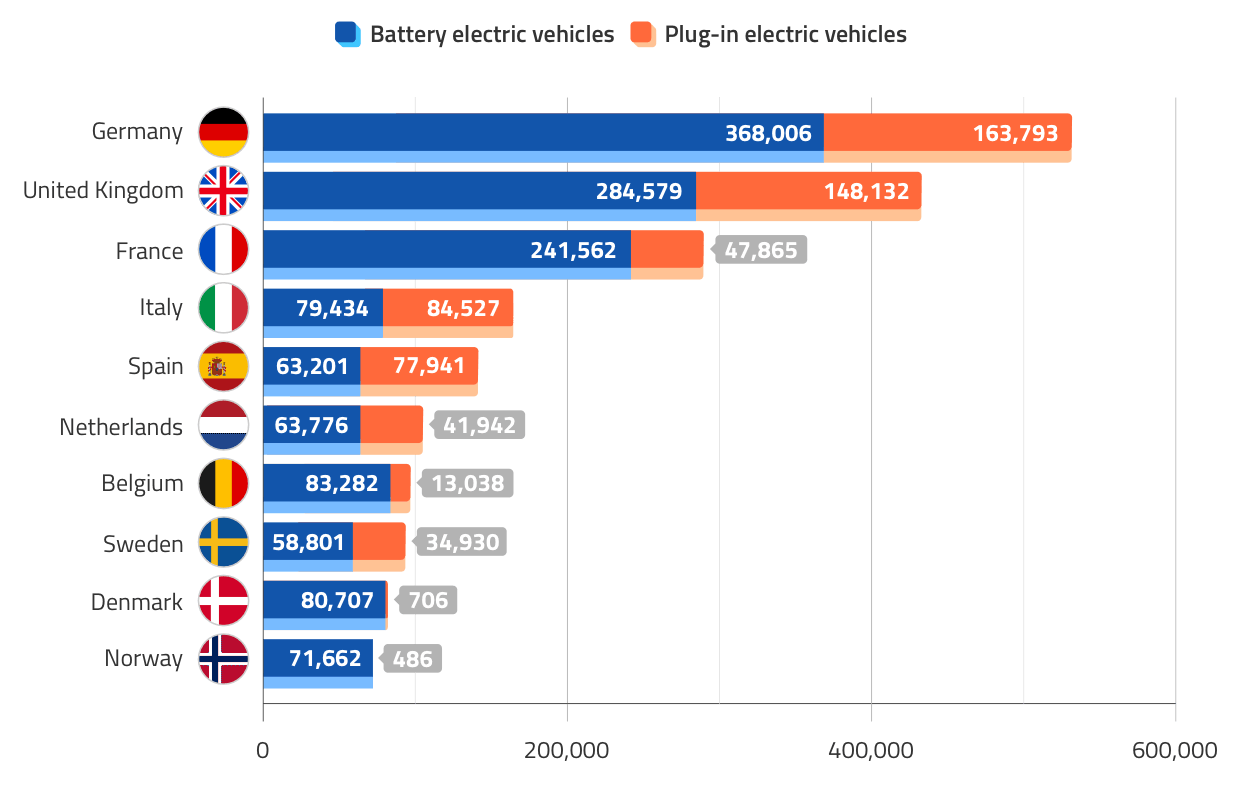
Europe’s electric vehicle market continued to expand rapidly in the first half of 2026, with both established automotive giants and larger emerging markets contributing to the growth. BEV registrations rose 35.13% year-on-year to 1.61 million units, while PHEV registrations increased 24.85% to 742,411.
Germany is leading the expansion in absolute numbers, registering 368,006 BEVs and 163,793 PHEVs during the first six months of the year. BEV registrations jumped 47.96%, while PHEVs grew 17.92%, pushing combined EV registrations up 37.19%. The scale of Germany’s market means that its shift towards electric models is increasingly influencing the direction of Europe’s wider transition.
The UK follows with 284,579 BEV and 148,132 PHEV registrations. Here, the balance is somewhat different: BEV registrations rose 26.57%, while PHEVs grew by a much stronger 38.44%, suggesting that British consumers are embracing electrification through a broader mix of powertrains rather than moving exclusively towards fully electric cars.
Southern Europe is beginning to close some of the gap with Europe’s more established EV markets. Spain registered 63,201 BEVs in the first half of 2026, up 36.69% year-on-year, while PHEVs climbed 38.99% to 77,941. Italy recorded an even sharper acceleration, with BEV registrations jumping 77.66% to 79,434 and PHEVs surging 84.26% to 84,527. Together, the two markets show how quickly electrification can gather pace once demand begins to shift, although much of the growth is still being shared between fully electric and plug-in hybrid models.
Elsewhere, the picture is less consistent. France recorded a 62.85% increase in BEV registrations, yet PHEVs slipped 2.61%, while Belgium saw BEVs rise 8.19% as PHEVs plunged 36.73%. The contrasting results underline just how fragmented Europe’s transition remains: while demand for fully electric cars is generally moving upwards, the fortunes of plug-in hybrids can change dramatically from one market to another, reflecting differences in taxation, incentives, company-car policies and consumer preferences.
Impressive Growth in EV Sales in Certain Markets
Countries where EV sales increased the most between 2025 and 2026 (January – June)
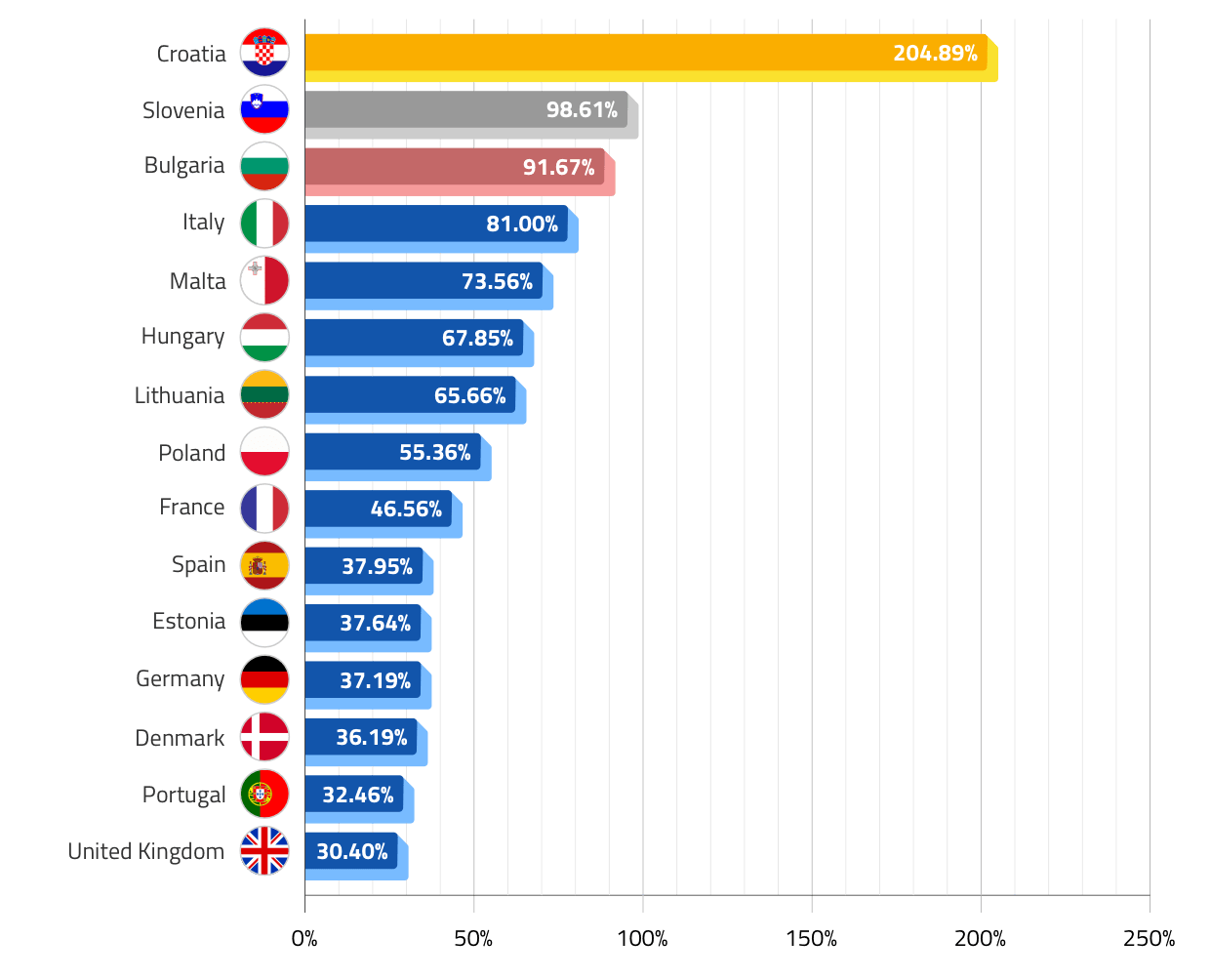
*EVs include battery electric and plug-in electric vehicles
Southern Europe is also gathering pace. Italy recorded an 81% increase in combined EV registrations, with BEVs (+77.66%) and PHEVs (+84.26%) growing almost in tandem. Malta (+73.56%), Spain (+37.95%), and Portugal (+32.46%) also posted substantial gains, suggesting that the shift towards electrification is gaining ground across markets that have traditionally trailed the Nordic leaders. Italy is particularly notable because EV growth is running far ahead of its overall car market, where registrations increased by just 9.53%.
At the other end of the spectrum, several established EV markets are showing much slower growth. Sweden recorded more modest EV growth of 8.47%, while the Netherlands rose just 6.22% and Switzerland 21.70%. In these markets, the story is shifting from rapid expansion to market saturation, where maintaining an already dominant electric share is arguably more significant than posting another large year-on-year increase.
Overall, Europe’s 31.70% growth in combined EV registrations masks two very different stages of the transition: smaller markets are still experiencing explosive percentage growth as electrification takes hold, while the continent’s established EV leaders are moving into a more mature phase where electric cars already command a substantial share of the market.
Countries with the Most EV Sales per Capita
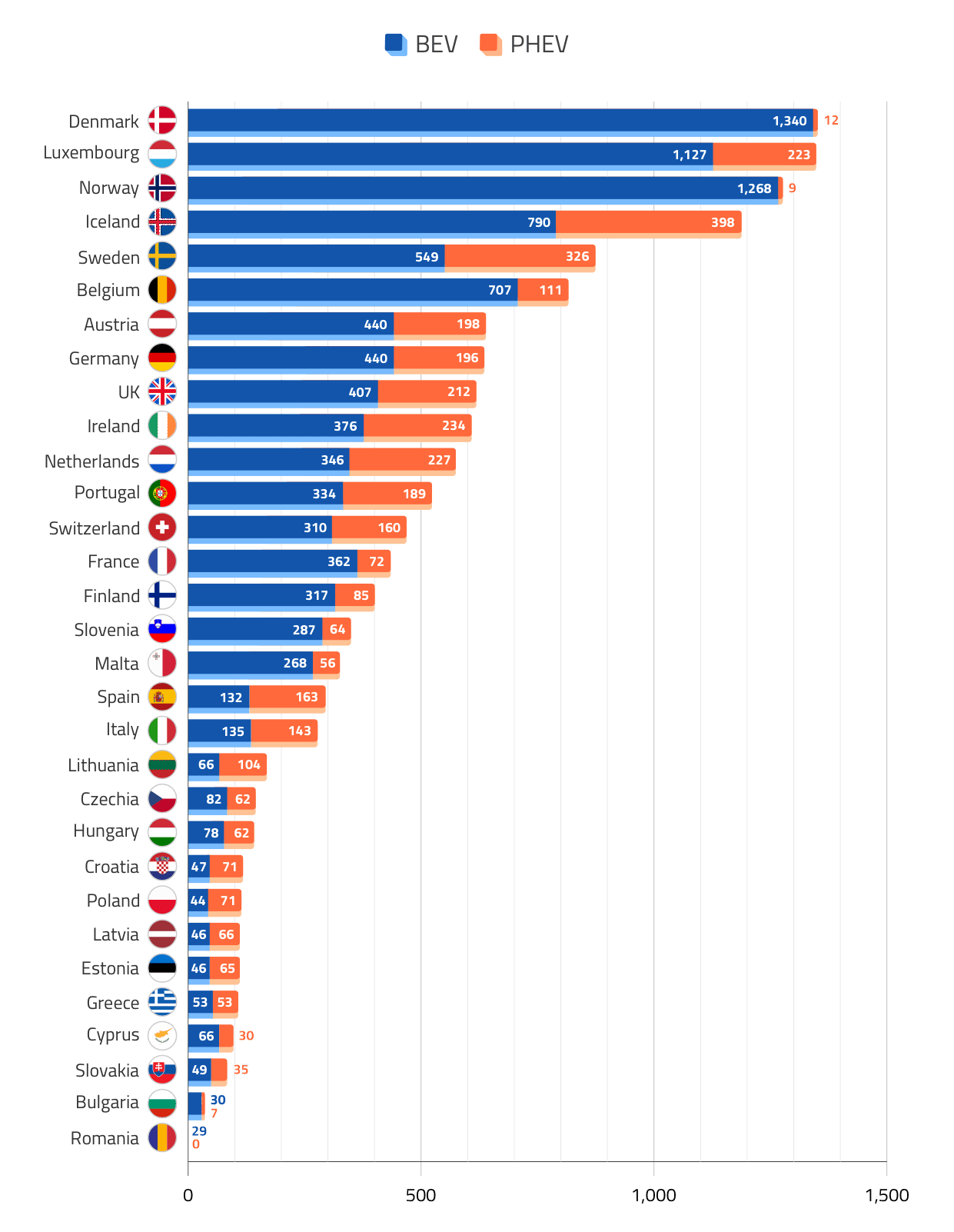
New BEV and PHEV registrations per 100,000 citizens
Data Source: ACEA, World Population Review
The BEV-PHEV Divide: What Europe’s EV Mix Reveals About Wealth, Policy, and Full Electrification Readiness
The ratio of battery electric vehicles (BEVs) to plug-in hybrids (PHEVs) is a strong indicator of a country’s EV maturity. A higher BEV share reflects advanced infrastructure, strong zero-emission policies, and higher incomes, while PHEV dominance points to transitional markets with weaker charging networks or affordability barriers. In essence, this balance captures both economic readiness and policy commitment to full electrification.
Among Europe’s wealthiest nations, Norway, Luxembourg, Iceland, and Denmark, BEVs now dominate the market, a pattern rooted in high disposable incomes, well-funded incentive schemes, and dense charging coverage. Together, these factors illustrate how economic strength and policy consistency translate into faster, deeper decarbonisation of road transport.
PHEV-heavy markets such as Spain and Italy highlight uneven infrastructure development and lingering consumer hesitation toward full electrification. Sweden stands out as a high-income exception, where PHEV adoption (326 per 100,000) is close to the BEV uptake (549 per 100,000), a balance shaped by generous company-car incentives and the practical advantages hybrids offer in colder climates.
In Southern and Eastern Europe, PHEVs are often viewed as a practical middle ground between traditional and fully electric vehicles. BEV adoption remains limited by price sensitivity, slower infrastructure rollout, and uneven policy support, underscoring the region’s more cautious and affordability-driven transition toward electrification.
Europe New Car Sales by Type in 2026
*EVs include battery electric and plug-in electric vehicles
Data Source: ACEA
Hybrids Claim Largest Slice of New Car Sales
Europe’s new car market is being reshaped by the surge of electrification. Hybrid electric vehicles (HEVs) claim the top spot, with 2.67 million units sold in the first half of 2026, capturing 36.95% of the market. Fully electric vehicles (BEVs) follow closely with 1.61 million registrations (22.24%), edging past conventional petrol cars, which accounted for 1.59 million units (22%), while plug-in hybrids stand at 742,411 units (10.27%). Diesel continues its long-term retreat, representing just 6.47% of sales, while alternative fuels remain niche at 2.09%.
These figures highlight a profound transformation in European motoring. Consumers are increasingly gravitating toward electrified options, with hybrids offering a pragmatic bridge between traditional engines and full electrification. Meanwhile, battery-electric and plug-in electric vehicles are rapidly encroaching on petrol’s territory, signalling that the continent is accelerating toward a future dominated by clean, sustainable mobility.
Countries’ New Car Registrations by Typе (January – June 2026)
**For Romania, only BEV sales are included, as PHEV data is not available in the source.
Data Source: ACEA
Europe’s Uneven Road to Electrification: From Norway’s EV Dominance to the Hybrid Hurdle in the East
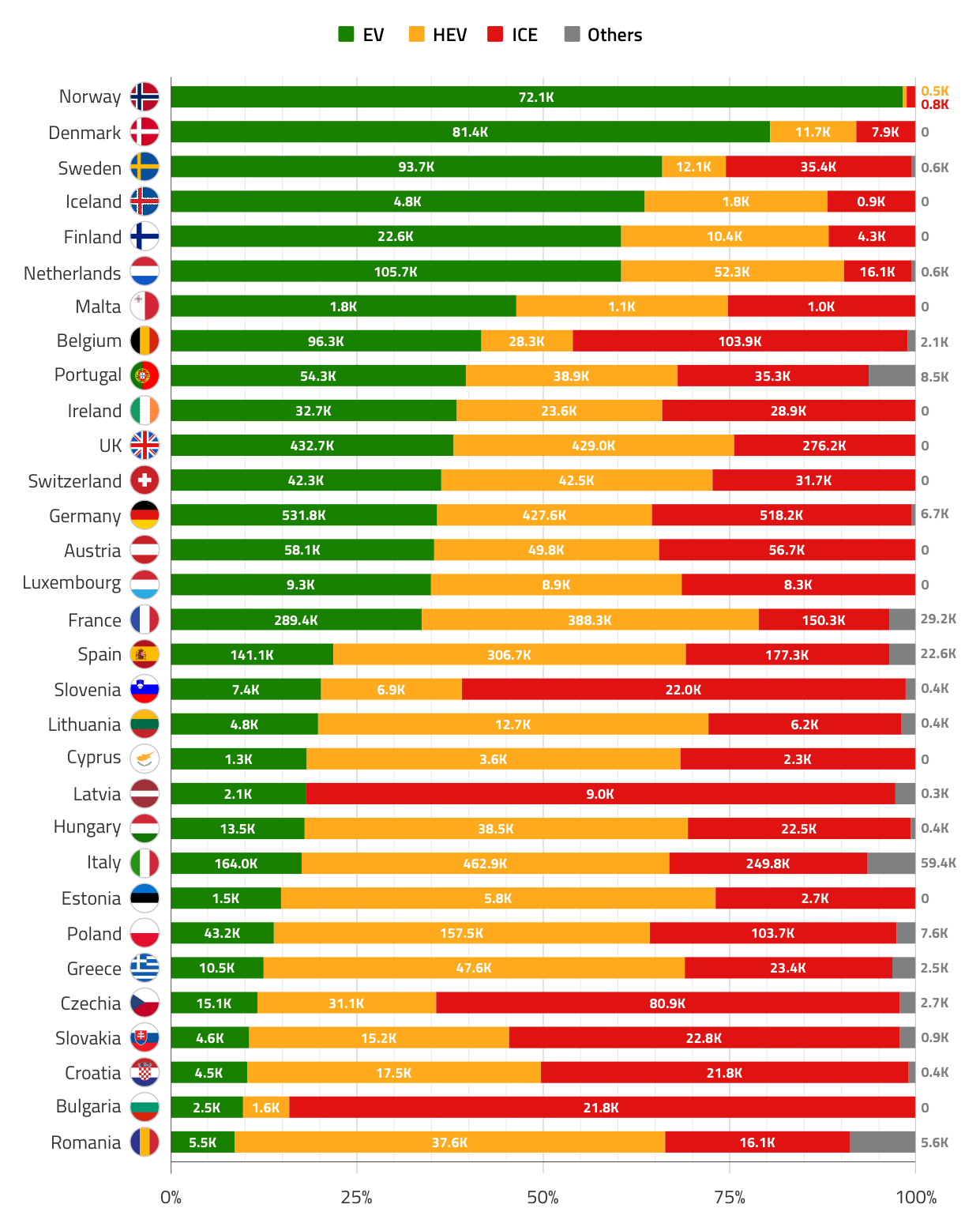
Norway remains the benchmark for full electrification, a model of policy consistency and consumer confidence. The Netherlands, Denmark, Luxembourg, and Sweden have also crossed a critical threshold where electric models now outpace both hybrids and combustion engines, while smaller markets such as Iceland and Malta are also seeing EV registrations surpass both alternatives.
Among Europe’s larger markets, the transition is taking different forms. Germany recorded 531,799 EVs versus 518,237 ICE vehicles, narrowly tipping the balance in favour of electric models, while the UK registered 432,711 EVs against 276,217 ICE cars, putting electrics firmly ahead. France followed a different path, with 388,283 hybrids exceeding both its 289,427 EVs and 150,282 ICE registrations, highlighting the country’s stronger reliance on hybrids as a transition technology.
Further south and east, the shift is more gradual. In markets such as Italy, Spain, Greece, and Hungary, hybrids dominate as consumers balance affordability with limited charging options. Poland follows a similar trajectory, with hybrids also leading new car registrations, while ICE vehicles remain a significant part of the market.
Countries like Bulgaria, Croatia, Slovakia, Romania, and Czechia remain largely ICE-dependent, with EVs still below 20% of registrations. Here, electrification advances at a measured pace, constrained by income disparities, infrastructure gaps, and weaker policy support.
The Car Models Driving the European EV Revolution
Data Source: CleanTechnica
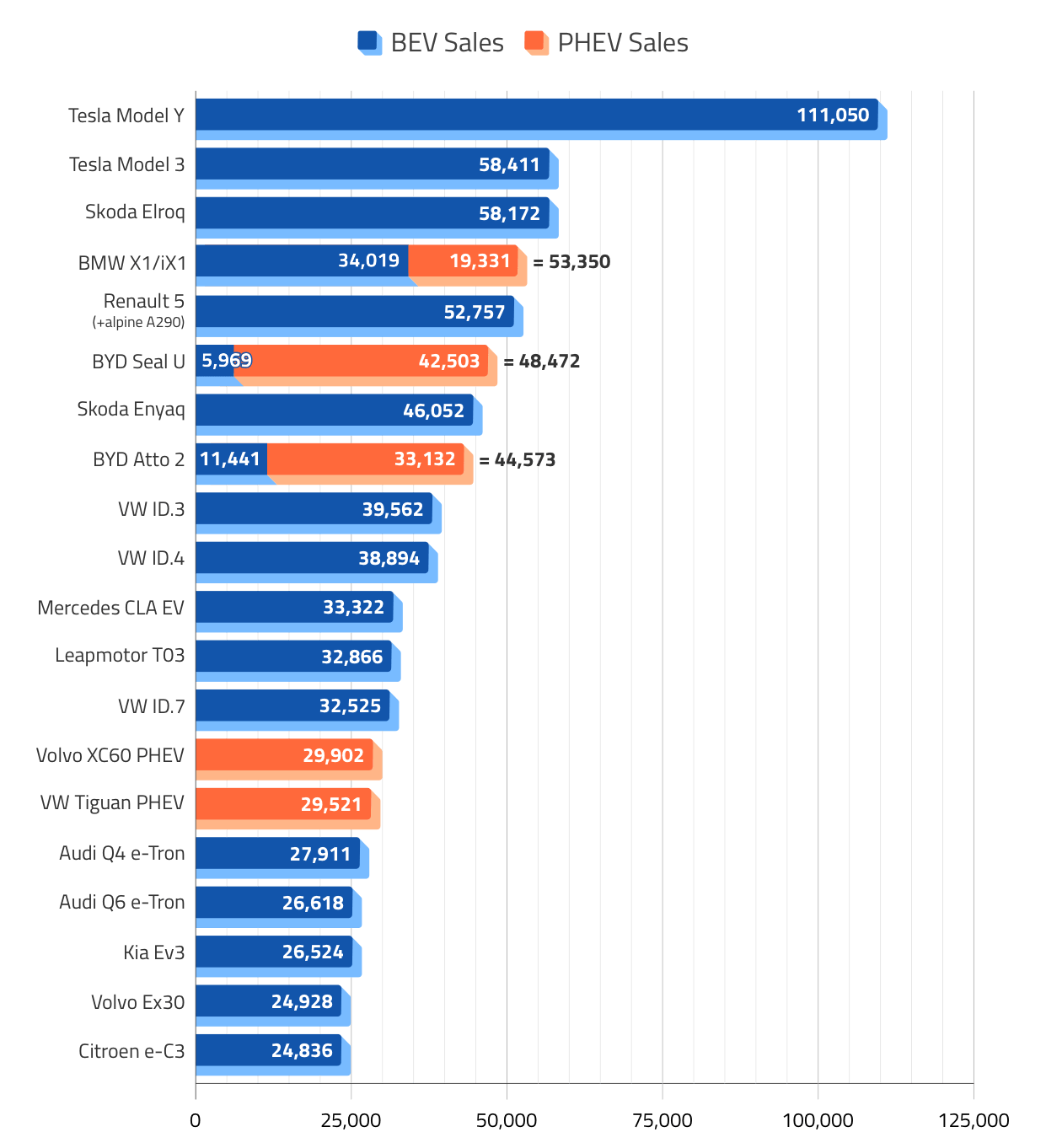
Tesla remains the biggest individual name in Europe’s EV market, with the Model Y selling 111,050 units in the first half of 2026, comfortably ahead of the Model 3 at 58,411. The result is notable given Tesla’s difficult 2025, when European sales fell sharply amid intensifying competition and a backlash against Elon Musk. By 2026, however, the story has shifted: Tesla has staged a significant European rebound, with the Model Y returning to the top of the rankings as the wider market accelerates.
Škoda is emerging as one of the strongest European challengers, with the Elroq selling 58,172 units and the Enyaq a further 46,052. The performance reflects a broader resurgence for the Czech brand: Škoda was Europe’s second-best-selling car brand in H1 2026, while its Elroq and Enyaq deliveries rose sharply year-on-year.
Chinese manufacturers are making their presence felt most clearly in the plug-in hybrid market. BYD’s Seal U recorded 42,503 PHEV sales, while the Atto 2 added 33,132, putting both among Europe’s strongest-selling plug-in hybrids. This is particularly significant as Chinese manufacturers increasingly use PHEVs to expand in Europe, where they currently face a different tariff environment from fully electric models.
Meanwhile, the model rankings show that Europe’s EV market is no longer dominated solely by premium or early-adopter cars. The Renault 5 (52,757), Leapmotor T03 (32,866), Kia EV3 (26,524) and Citroën e-C3 (24,836) point towards growing demand for smaller, more accessible electric models. That shift is becoming increasingly important as affordability emerges as one of the main drivers of Europe’s next phase of EV adoption.

To analyse global electric vehicle sales, we used new car registration data published by the European Automobile Manufacturers’ Association (ACEA) for the period January-June 2025 and 2026. Additional information on the electric models (BEV and PHEV) sold across Europe was sourced from CleanTechnica.
 TradingPedia.com is a financial media specialized in providing daily news and education covering Forex, equities and commodities. Our academies for traders cover